Antiques Know How Research
Old Baking Pans Value
Antique Know How’s research into recent eBay sales shows that old baking pans generally sell for $20 to $500, with rare pieces reaching $500 or more. The most desirable examples include early cast-iron pans and molds by Griswold and Wagner Ware, rare “End of Day” multicolor graniteware, iconic Pyrex baking pans, Nordic Ware Bundt designs, and hand-painted stoneware sets. Value depends on material, recognizable brands, maker marks, age, rarity (limited-run shapes or patterns), and condition.
Antiques Know How
Baking pans are common in every kitchen. And you may think they’re just a utility piece unless you’re looking at a pan that is 30 to 80 years old or older. Those pans are much more than just “bakeware.”
From Wagner Ware’s loaf pans to Griswold’s cast-iron molds, this guide will show you what makes some of these old cake, cookie, or bread baking pans valuable and some of the most valuable ones you should know about.
What Makes an Old Baking Pan Valuable?
Identifying a valuable old pan can be a bit tricky if you do not know the key things to look for. From the material used in the baking pan to its maker itself, there are several factors that can help you identify and value old baking pans.
Material
Baking pans have been made with many different materials. Among these, cast iron is consistently the most collectible material. It’s heavy, holds heat well, and the major American foundries that made it are long gone.
Early cast aluminum from companies like Wagner (Magnalite) and Nordic Ware also holds high collector value. Early enamelware, particularly “End of Day” multicolor patterns, is also actively collected for its artistic and labor-intensive production.
Brand / Maker Mark
The name on the baking pan matters the most for its value. Brands like Griswold, Wagner Ware, Pyrex, and Nordic Ware have higher collectability than other unbranded pieces.
So, flip the pan and check the base. Legitimate antique pans from major companies will have the brand name, a pattern number, and sometimes even the city of manufacture cast directly into the metal.
On enamelware and ceramic pans, look for paper labels (often long gone) or impressed marks fired into the glaze.
It is also worthwhile mentioning that not all unmarked ones are necessarily inexpensive. Antique cast-iron bakeware sometimes lacked brand names but is still desirable for its craftsmanship and design.
Age (Pre-1950)
Just like other antiques, the older the baking pan, the better.
For cast-iron baking pans, the most valuable examples generally come from before 1950. Griswold pieces marked with the “Erie” logo date to before 1907 and are among the most sought after.
Wagner Ware made at their Sidney, Ohio, foundry before 1959, when the company was acquired, and quality declined, are equally collectible. Similarly, pre-WWII enamelware (graniteware) is quite rare because many pieces were lost to wartime scrap metal drives.
Rarity
Rarity comes from factors like limited runs and unusual shapes. Novelty and figural molds, such as sunflowers, holiday forms, and branded advertising molds, fetch more than plain pans.
Limited production runs matter too. If a pattern was only made for a few years, or a specific color was discontinued, those pieces become rarer and more valuable over time.
Condition
Condition matters a great deal for the value of old baking pans. Usually, severe damage like major cracks, chips, broken handles, or holes can greatly reduce the value. But the standard is different for some materials.
For example, in cast-iron baking pans, surface rust can be cleaned and re-seasoned without affecting value, but cracks, warping, or pitting from severe rust are red flags.
Overall, check the pain inside out to assess the condition. Any damage that isn’t easy to fix needs to be checked and evaluated accordingly. And any sign that damage was fixed or repaired also needs inspection.
8 Examples of Valuable Old Baking Pans to Check!
1. Multicolor Graniteware End of the Day Baking Pan
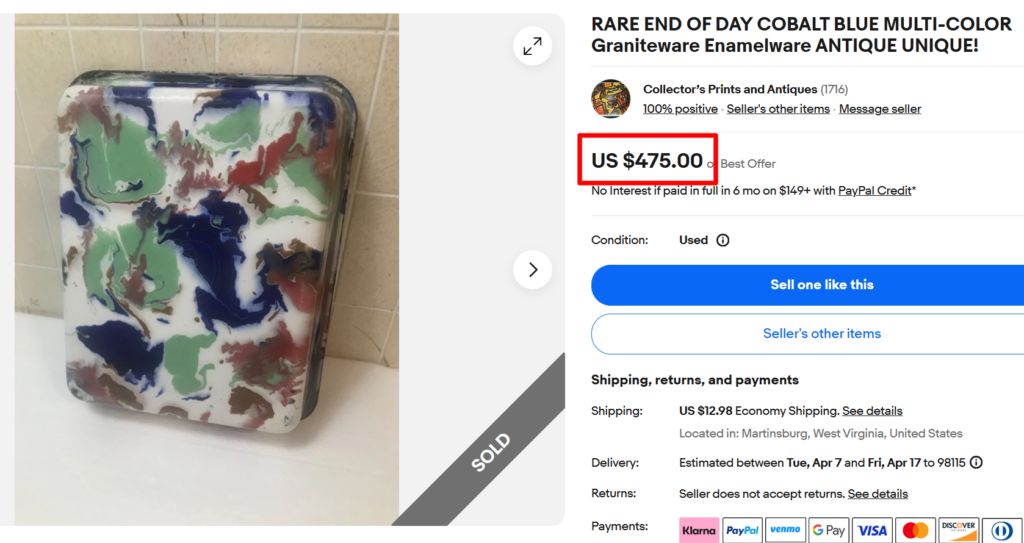
| Average Value | $200 – $500+ |
| Production Period | 1870s – 1930s (pre-WWII examples) |
| Key Features | Multicolored swirl, porcelain enamel over steel |
| Collectibility | Elite |
| Collector Notes | Heavy enamel loss reduces value. |
This is a rare Graniteware baking pan, also known as agateware or enamelware. Graniteware is essentially steel pans that are covered in a porcelain enamel finish and were made from the 1870s to the 1930s.
“End of Day” enamelware is very rare and special because it is made from leftover scraps of different colored glass or glazes. The result is a marbled effect of multiple colors.
Graniteware production slowed significantly in the late 1930s due to the rise of plastics, aluminum, and Pyrex. Most of the remaining ones were scrapped due to WWII metal drives, making the surviving pieces valuable.
2. Wagner Ware Sidney Magnalite Roast & Bake Pan
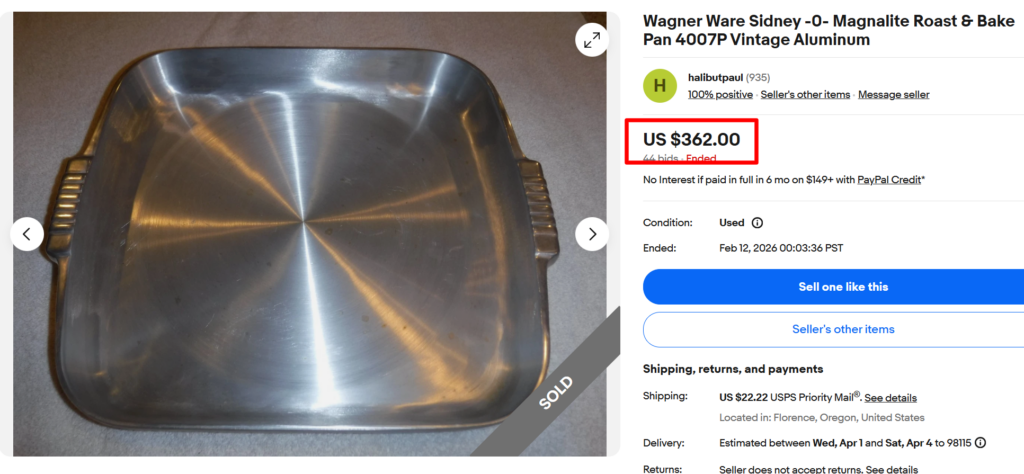
| Average Value | $250 – $400 |
| Production Period | 1930s – 1950s |
| Key Features | Cast aluminum, thick walls, Art Deco handles |
| Collectibility | High |
| Collector Notes | Look for the “Sidney -O-” logo stamp. |
This is a heavy-duty Magnalite baking pan from the Wagner Ware brand. Made from a unique aluminum-magnesium alloy, Magnalite is famous for its exceptional heat distribution.
The 4007P model is particularly desirable because of its versatile “Roast & Bake” design. In good condition, these pans can be worth up to $400 today.
3. Wagner Ware Bread Loaf Cast Iron Baking Pan
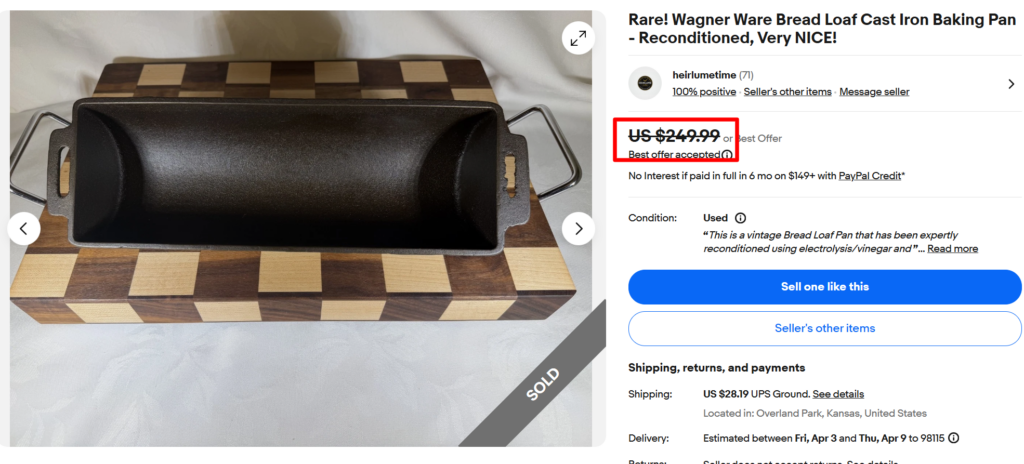
| Average Value | $200 – $250 |
| Production Period | Early 20th Century |
| Key Features | Smooth interior finish, dual side handles |
| Collectibility | Very High |
| Collector Notes | Only Pre-1959 pieces are valuable. |
Wagner Ware is known for its quality cast-iron cookware, and its specialized loaf pans are highly collectible. These pans were expertly machined to be smooth, ensuring your bread wouldn’t stick.
Also, cast-iron loaf pans are quite rarer than Wagner skillets or griddles, simply because fewer were made. And since most were lost to rust over the decades, finding an original Pre-1959 piece in excellent shape is rare.
To trace the date, check the backstamp. Pieces marked “Wagner Ware Sidney -O-” without “Made in USA” are pre-1959 and are the collectible examples.
4. Cast Iron Sun Flower Baking Mold Pan
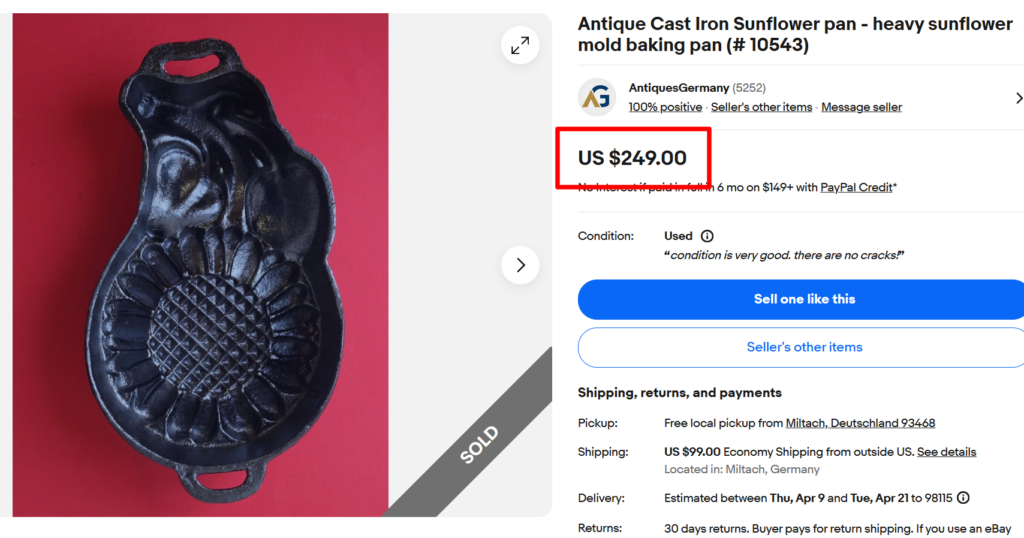
| Average Value | $150 – $300 |
| Production Period | Late 19th Century |
| Key Features | Detailed floral mold, heavy cast iron |
| Collectibility | High |
| Collector Notes | Most pieces are unmarked. |
Figural cast iron baking molds or pans shaped like animals, flowers, or other items were popular in Europe and America from the late 1800s through the early 1900s. These pans feature detailed molds that create 3D designs on the bread.
Sunflower pans in particular mostly came from German foundries. But most of these molds are unmarked, which makes attribution to a maker difficult. Still, unmarked pieces hold collector value due to the sturdy material and classic design.
5. Griswold Erie No. 12 Cast Iron Gem Pan (#951)
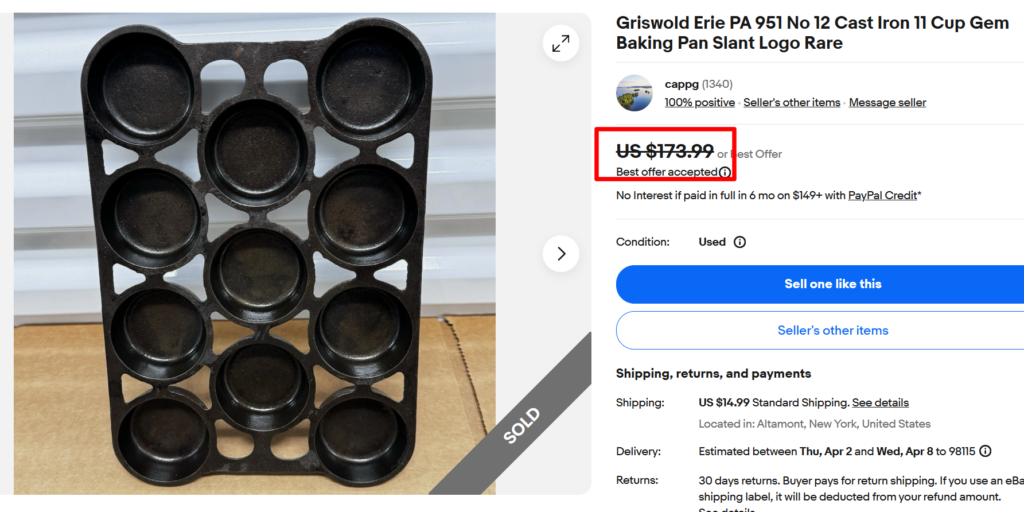
| Average Value | $125 – $200+ |
| Production Period | 1906 – 1912 |
| Key Features | 11-cup design, Slant Logo, rare No. 951 |
| Collectibility | Very High |
| Collector Notes | Verify the pattern number on the back. |
This is a multi-mold baking pan from Griswold Manufacturing Company, one of the most collected cast iron brands in America. The No. 12 Gem Pan (#951) is an 11-cup cast iron mold used for baking small rolls, muffins, or “gems.”
Gem pans, in general, are more collectible than plain loaf pans because of their unusual multi-cup design.
To make sure it’s authentic, check the logo. The “slant logo” (stylized cursive-style lettering) indicates the early Griswold era and commands a premium over the later block logo.
Note: Pieces marked with the Erie logo date to roughly 1880–1907, making them among the oldest and priciest Griswold pieces you’ll come across.
6. Pyrex Spring Blossom Green Lasagna Baking Pan
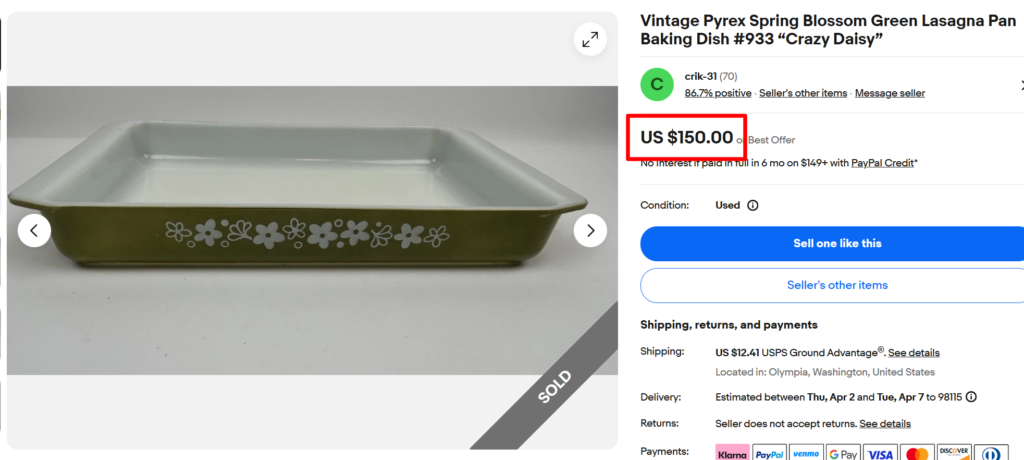
| Average Value | $50 – $150 (lasagna pan) |
| Production Period | 1972 – 1979 |
| Key Features | Opal glass, white floral on green |
| Collectibility | High |
| Collector Notes | Check the “Pyrex/Ovenware” stamp on the back. |
“Spring Blossom Green,” better known as “Crazy Daisy,” was introduced in 1972 as a Pyrex companion to the Corelle dinnerware of the same name.
The #933 baking pan is a larger piece and therefore less common than the mixing bowls, making it more valuable. Make sure to check the raised “Ovenware” stamp on the back for authenticity.
You may find this pan in two variations: an older version with four-leaf clusters in a fan shape, and a newer version with three-leaf clusters and single floating leaves. Both are equally collectible.
7. Nordic Ware Aloha Aluminum Bundt Pans
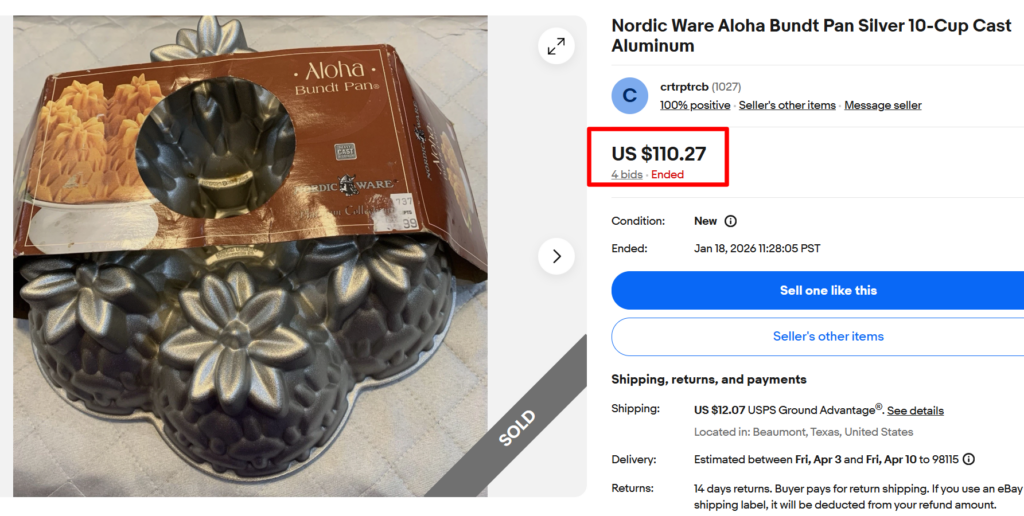
| Average Value | $90 – $120 |
| Production Period | Late 20th Century |
| Key Features | 10-cup capacity, cast aluminum, floral design |
| Collectibility | Moderate |
| Collector Notes | Check the “Nordic Ware” mark on the base |
Nordic Ware introduced the Bundt pan in 1950, when co-founder Dave Dalquist created the cast-aluminum fluted ring pan and trademarked the “Bundt” name. The company has since made dozens of Bundt pan designs, including “Aloha.”
The “Aloha” Bundt Pan features a tropical design with pineapples and flowers, is now discontinued, and is among the company’s most desirable pan designs.
Retired designs like this generally fetch more, especially if found with original packaging. often see price spikes when collectors try to complete their sets.
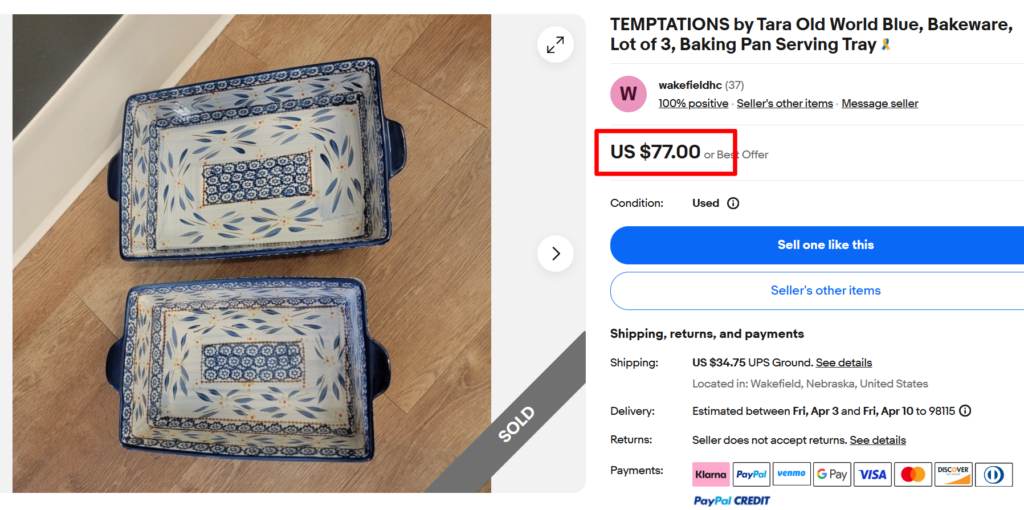
8. Temptations by Tara Old World Blue Baking Pan
| Average Value | $20 – $40 (single) $50 – $90+ (sets) |
| Production Period | 2000s – Present |
| Key Features | Hand-painted ceramic, floral “Old World” pattern |
| Collectibility | Moderate |
| Collector Notes | Check the printed stamp on the back. |
Temptations by Tara is a handcrafted ceramic bakeware brand founded by Tara Tesher. It’s known for its “oven-to-table” versatility. The hand-painted stoneware bakeware comes in many patterns, with the Old World patterns being the most recognizable.
This set of two baking pans features the Old World Blue pattern, identified by bright blue floral design with tiny yellow florals and accents, and brown bands. Each piece is hand-painted, so no two will look identical.
The earlier QVC items from the late 1990s to early 2000s, particularly those in sets with original racks and trivets, are more scarce.
Just like old baking pans, antique cast iron skillets are another popular kitchen collectible today. You can learn more about identifying and valuing old skillets here.
Note: This article is intended for informational, educational, and entertainment purposes only. Some images are illustrative and may not represent actual brands, products, or related entities. All trademarks, product names, brand logos, packaging, and other intellectual property referenced remain the exclusive property of their respective owners. Any brand mentions or references are provided solely for descriptive and educational context and do not imply any formal or commercial association.