Antiques Know How Research
Old Rolling Pins Value
A detailed research of recent eBay and market sales by our Antiques Know‑How team indicates that old rolling pins generally sell in the $25–$500 range, with extremely rare examples reaching $800 to $1,000. The most sought‑after pieces include Nailsea, uranium (vaseline), and Bristol‑style glass pins, premium‑wood rolling pins, and rare stoneware advertising pins. Key factors that drive value are the material, period‑appropriate construction, intact condition, and clear maker or merchant marks.
Antiques Know How
Most people have found old rolling pins at estate sales or in their own kitchen and had no idea what they were looking at. Most antique rolling pins appear to be common, but there are some rare ones that have actually sold for up to $1,000.
So, what makes rolling pins valuable? Let’s look at what makes rolling pins valuable and what to look for in terms of valuable rolling pins today.
Why Some Old Rolling Pins Are Valuable?
Generally, old rolling pins can be priced anywhere from $25 to as high as a thousand dollars. The price difference is due to many factors that play an important role in valuing these kitchen items. These include:
Material
The material of an old rolling pin is the most significant factor in determining its value. Various materials have been used to make these items, including glass, stoneware, ceramics, and wood, among others.
- Glass: As for glass pins, cobalt, Nailsea, vaseline, and milk glass pieces are consistently the most collected. They were never purely functional; many were made as gifts or decorative pieces, so they often survived in better condition.
- Stoneware and Ceramics: These pins were mostly made for promotion, featuring advertising text. These are fragile by nature, which means surviving pieces are scarce.
- Wood: Wooden rolling pins are the most common examples. They can still be valuable if made of premium wood species like tiger maple, rosewood, or lignum vitae, documented age (pre-1850s), or feature unique carved designs. Plain maple or pine pins from the 1900s are of the least value today.
Age
While age does not alone define a pin’s value, it does play a big role. For instance, a glass pin from the 1800s will be worth more than one from the 1940s. For wooden pins, age plays a big role because there are so many from later time periods.
The earliest glass rolling pins date back to glassworks in the Bristol area of England, dating from the 1790s. The stoneware advertising pins from America peaked from 1890 to 1915.
If you can establish that your item falls within that time range, that’s a great way to go for determining the best value.
Maker Marks and Brand Attribution
Identification marks are crucial for value because some names are more popular than others. For example, advertising pins from specific 19th-century grocers or marks from famous potteries like Western Stoneware add collector interest due to brand reputation and historical context.
You can find the marks in different forms. Glass pins may also have paper labels on the body or embossed marks near the end caps, and wooden pins may have carved initials.
For ceramic pieces such as stoneware, porcelain, and other ceramic pieces, look for impressed or stenciled marks on the barrel or base of the handles.
Decoration
Some rolling pins were never meant for daily baking. Most glass pins were historically given as sailors’ love tokens, hung on parlor walls, and filled with salt or spices.
Likewise, pins inscribed with phrases like “Be True to Me” or bearing hand-painted ship scenes hold more appeal than just material value.
Personalized or inscription rolling pins are also more like keepsakes than just kitchen items.
For stoneware, advertising text is the defining feature. It’s the name of the merchant, city, and state printed on the barrel that collectors are looking for. The more obscure and legible the ad, the more valuable the piece.
Condition
Condition matters more for some types than others. For example, a crack in a glass rolling pin is fatal to value because these pieces are collected for display, not use.
For stoneware, chips at the ends are common and somewhat acceptable, but cracks, crazing throughout the barrel, or missing handles significantly reduce value.
Wood pins are more forgiving. Some surface checking (small cracks from age) is expected and even desirable on truly old pieces, as it confirms authenticity. But splits, missing end pieces, or heavy warping are red flags.
Valuable Antique Rolling Pins Worth Looking at
Below are examples of high-value old rolling pins featuring different materials, designs, and eras.
1. Schoonover Bros Grocers Stoneware Pin
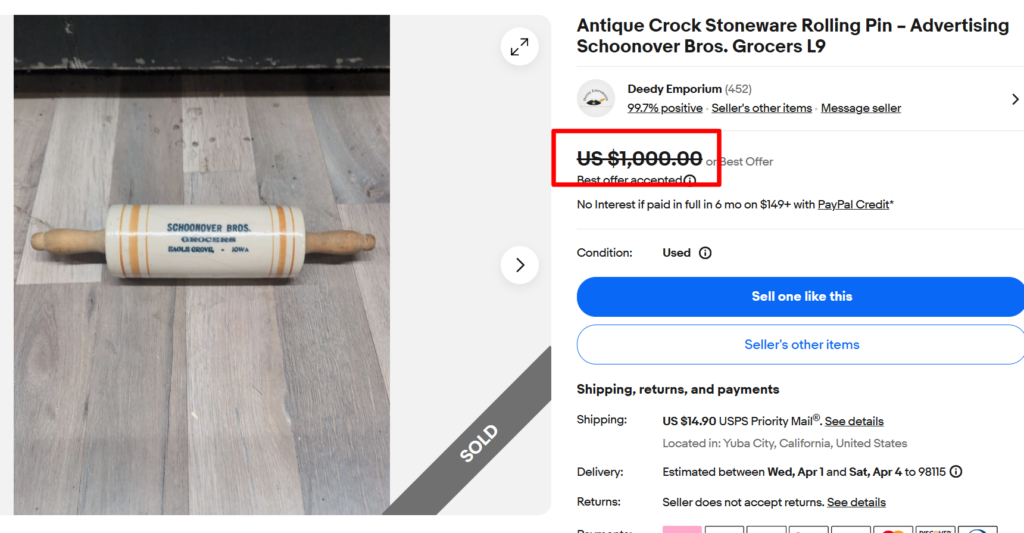
| Average Value | $500 – $1,000+ |
| Production Period | c. 1900 – 1915 |
| Key Features | Cream stoneware barrel with orange/brown stripes |
| Collectibility | Very High |
| Collector Notes | The rare color stripes add value. |
American stoneware advertising rolling pins were common from 1890 through the 1920s, made by Midwestern pottery companies, like Western Stoneware, Brush-McCoy, and Monmouth Pottery.
Businesses handed them out as promotional items, like a modern branded calendar or pen. This Schoonover Bros. rolling pin is a rare find for two reasons.
First, the decorative stripe rings at either end are orange-brown rather than the typical cobalt blue. Second, the Schoonover Bros. Grocers business in Eagle Grove, Iowa, would have had limited local distribution, resulting in low production.
Standard blue-stripe Iowa merchant pins in good condition are worth $200–$450 range, but the orange-stripe color variation is more valuable.
2. Fred Lukes & Son Stoneware Advertising Pin
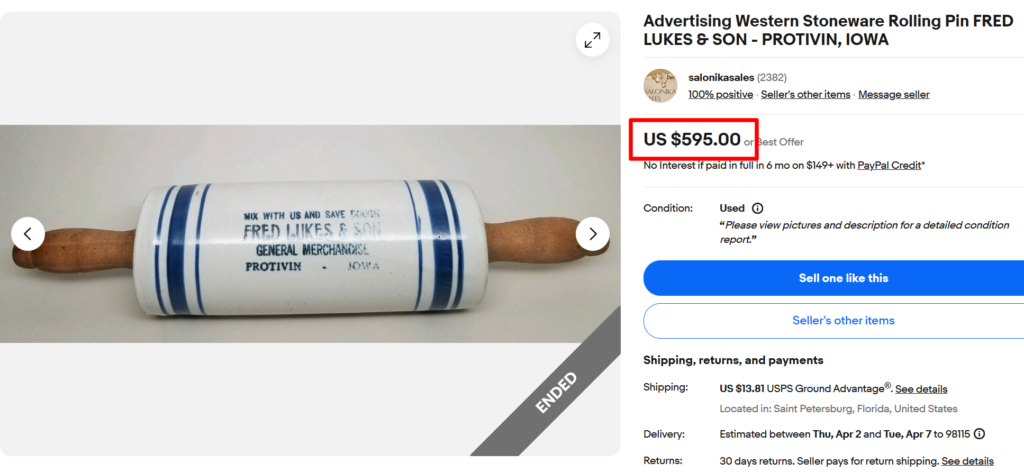
| Average Value | $300 – $600 |
| Production Period | c. 1900 – 1920 |
| Key Features | White stoneware barrel, Blue stenciled text, salt-glaze finish |
| Collectibility | High |
| Collector Notes | The value lies in the ad text & the merchant’s location. |
This Fred Lukes & Son piece is a standard example of stoneware crock rolling pins. It has a cream-white stoneware barrel with blue cobalt stripe rings on each end and stenciled advertising text in cobalt across the center.
The text reads “Mix With Us and Save Dough / Fred Lukes & Son / General Merchandise / Protivin, Iowa.”
The rarity of any specific advertising pin depends on how many were originally ordered. A large chain might have had thousands made, while a small-town grocer might have ordered a hundred. The fewer that were made, the fewer that survived, and the rarer and more valuable they are.
3. Uranium Glass Rolling Pin
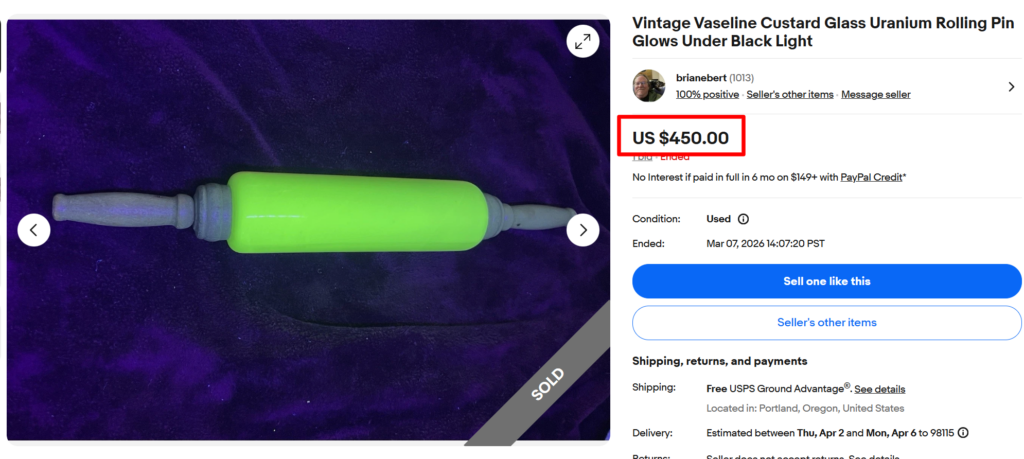
| Average Value | $200 – $500+ |
| Production Period | Late 1800s – mid-20th century |
| Key Features | Custard yellow color, glows under UV |
| Collectibility | Very High |
| Collector Notes | Always test the glow with a UV light. |
This is an example of rare vaseline glass rolling pins. It’s made of Custard glass (opaque pale yellow uranium glass), which uses a “fire test” for secondary identification; when held toward light, it shows a reddish opalescent sheen.
Rolling pins in uranium glass are uncommon, as most vaseline/uranium glass production focused on tableware, lamps, and decorative items, making them rare and valuable.
4. 19th Century American Tiger Maple Rolling Pin
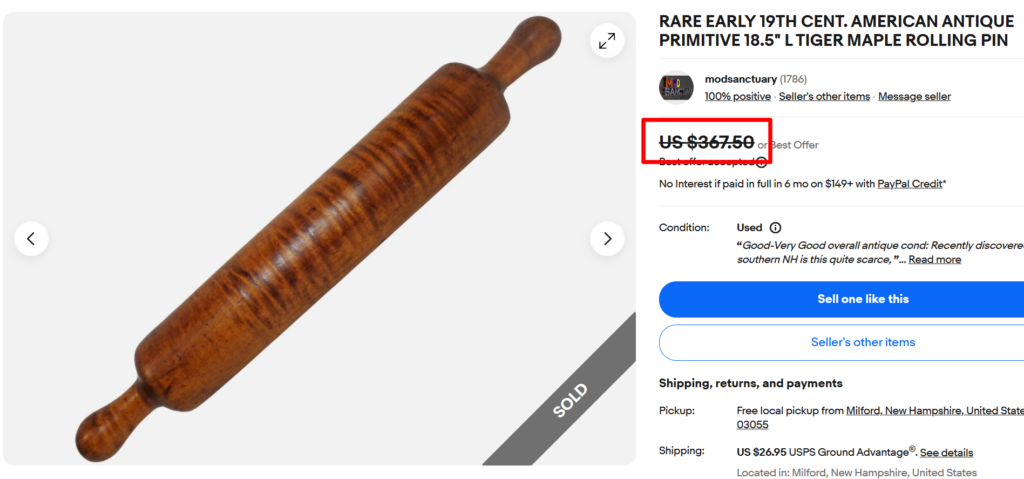
| Average Value | $150 – $400 |
| Production Period | Early 1800s |
| Key Features | “Tiger” striped grain, one-piece construction |
| Collectibility | High |
| Collector Notes | Tiger grain must be genuine, not paint or stain. |
This antique rolling pin is made of Tiger maple, also called curly or figured maple. It’s a naturally occurring grain variation in hard maple trees, in which the wood cells grow in a wavy, horizontal pattern.
When turned on a lathe, this creates a unique chatoyant “tiger stripe” effect across the surface. Rolling pins made from genuine tiger grain are valuable collectibles today.
Since 19th-century wood rolling pins were typically unmarked, age confirmation relies on overall patina, turning style, and surface wear.
5. Nailsea Cobalt White Glass Rolling Pin
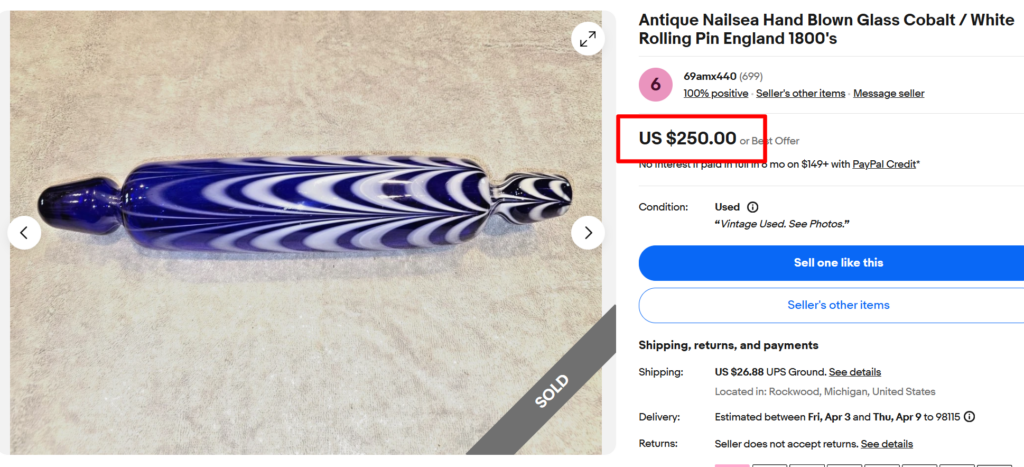
| Average Value | $150 – $350 (cobalt/white) |
| Production Period | Late 1700s – 1880s |
| Key Features | Cobalt blue with white loops/swirls |
| Collectibility | Very High |
| Collector Notes | Rare colors increase value. |
Nailsea glass rolling pins are among the most recognized antique kitchen collectibles. The Nailsea Glassworks near Bristol began making decorative glass rolling pins in the 1790s, using cheaper bottle glass decorated with opaque white glass to add color without incurring the heavy Flint glass tax.
The white glass was applied to the hot cobalt surface and then combed or pulled into looping, feathered designs before the piece was blown into shape.
Often hung in parlor windows or on kitchen walls, these pins were originally given by sailors to their sweethearts or wives as love tokens. One end always has a small hole, allowing the pin to be filled with cold water for baking use or hung by a cord.
6. Pioneer Woman Rose Shadow Ceramic Rolling Pin
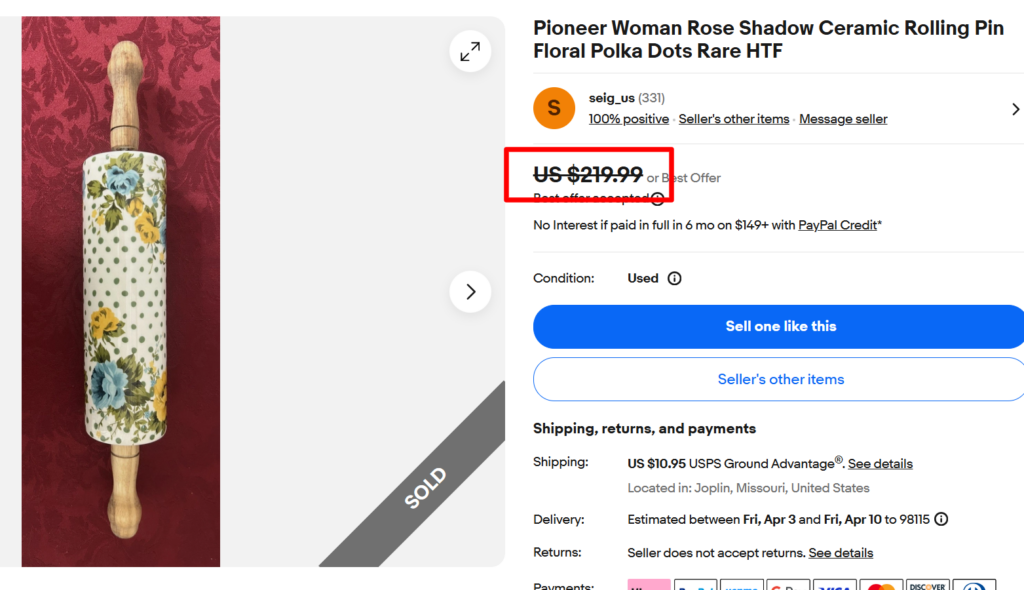
| Average Value | $100 – $220 |
| Production Period | 2010s |
| Key Features | Ceramic barrel, acacia wood handles |
| Collectibility | Niche / Modern |
| Collector Notes | Check the branding for authenticity. |
While Pioneer Woman ceramic rolling pins are not antiques, specific retired patterns are quite collectible today. This example shows the rare Rose Shadow design, with yellow and light blue roses with green florals and polka dots, plus wood handles.
Being among the rarest patterns, these pins can fetch $100–$250 in pristine condition. Make sure to check the “Pioneer Woman” branding on the pin’s side for authenticity.
7. Imperial Milk Glass Rolling Pin
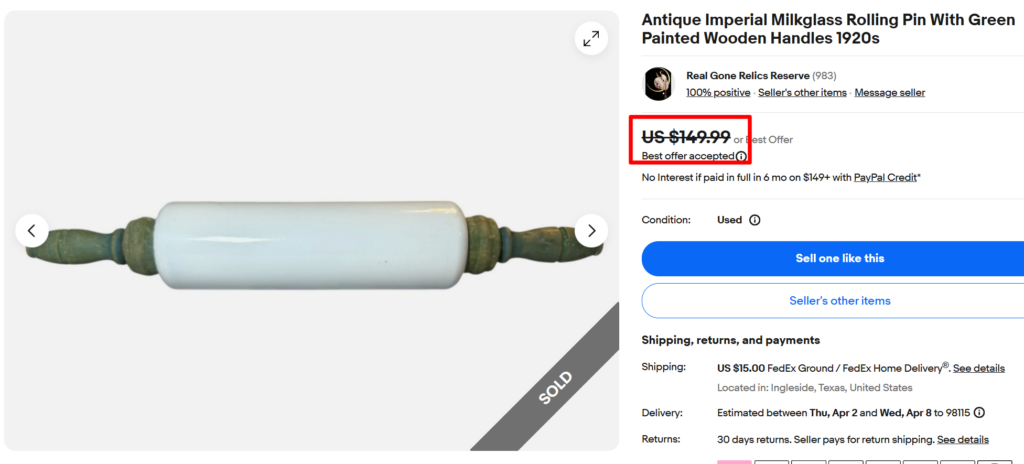
| Average Value | $75 – $175 |
| Production Period | Patented July 26, 1921 |
| Key Features | Opaque milk glass barrel; wooden handles |
| Collectibility | Moderate to High |
| Collector Notes | Check the patent mark on the barell. |
Imperial Manufacturing Co. of Cambridge, Ohio, patented this milk glass rolling pin in 1921. It features a solid opaque white milk glass barrel fitted with a wooden dowel and painted handles.
You should also see the raised “Imperial Mfg. Co. Cambridge, Ohio Pat. July 26, 1921” patent mark on one of the sides of the glass barrel. In good condition, these pins can easily fetch $100 or more.
8. Springerle Rolling Pin
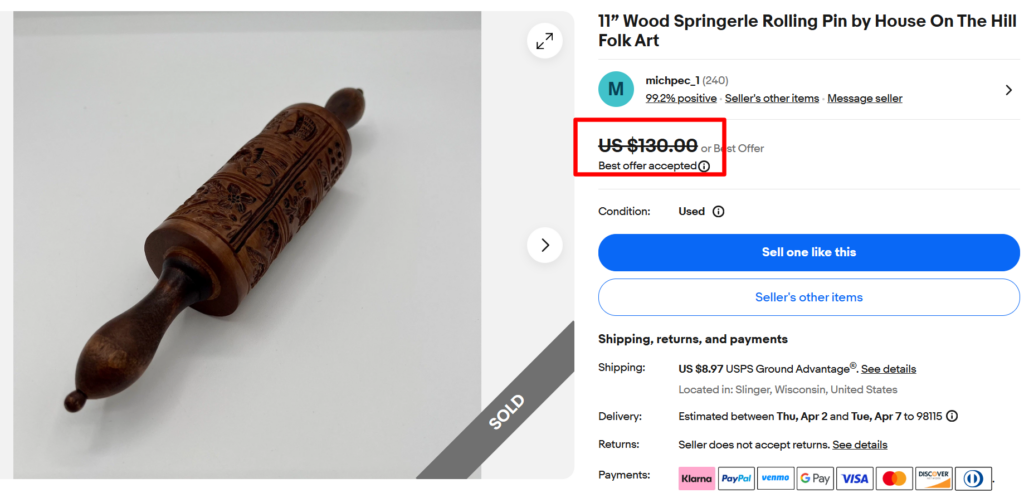
| Average Value | $75 – $200 |
| Production Period | 1800s – present (Late 20th Century – Folk Art Style) |
| Key Features | Deeply recessed carvings, multi-panel |
| Collectibility | Moderate to High |
| Collector Notes | Check for patina and carving quality for authenticity |
Springerle rolling pins originated in at least the 14th century in southern Germany. These are used to press decorative images into anise-flavored cookie dough before baking.
Antique examples often have hand-carved panels with images of animals, botanicals, and folk motifs. This pin from The House on the Hill, for example, has six panels with different images of hearts, a house, a harp, a flower basket, a man, and a garden.
Reproductions of these pins are quite common. To spot a genuine antique example, look for even wear on the high points of the carved design, darkening in the recessed grooves from years of flour and dough buildup, and handle construction consistent with 19th-century joinery.
You may also find maker marks, like the “The House on the Hill” marking on the sides of the barrel in this example.
9. Solid Lignum Vitae Rolling Pin
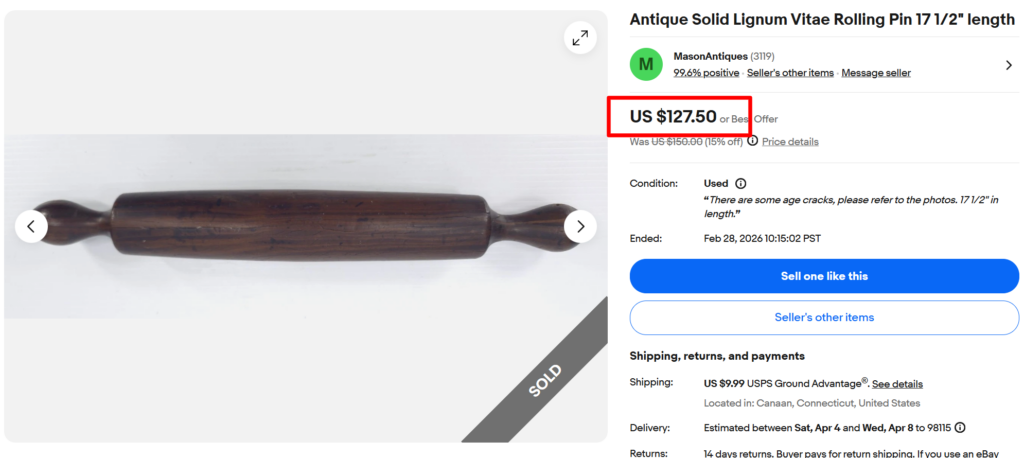
| Average Value | $80 – $175 |
| Production Period | 1800s – early 1900s |
| Key Features | Dense, dark brown-black wood; one-piece construction |
| Collectibility | Moderate to High |
| Collector Notes | Check the weight; originals will sink in water. |
This is an antique rolling pin made of Lignum vitae (Latin for “wood of life”). It is one of the densest traded woods in the world with natural oils that make it self-lubricating and moisture-resistant. That’s why it was widely used for ship bearings and heavy tool-making through the 1800s.
Lignum vitae is now listed under CITES as a potentially endangered species, adding to the rarity and collectibility of genuine antique rolling pins.
10. Bristol Blue Thos. Webb & Sons Glass Rolling Pin
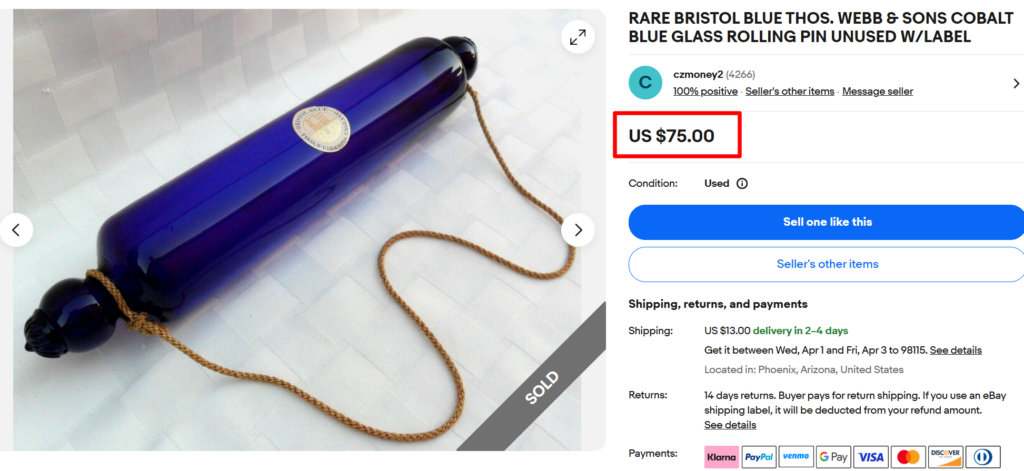
| Average Value | $50 – $150 (plain) |
| Production Period | 19th century – early 20th century |
| Key Features | Cobalt blue glass; hollow barrel; round knob ends |
| Collectibility | High |
| Collector Notes | Original “Bristol Blue” paper label adds value. |
Bristol Blue glass, which is a deep cobalt flint glass, was produced by English glassworks from the 18th century onward. Thomas Webb & Sons made rolling pins in this glass.
These pins come with a hollow barrel to fill with cold water for pastry work or hang as wall decoration. The hanging cord was standard, as many were displayed rather than used. Intact original cords and the original brand label are now rare and add value.
Note: This article is intended for informational, educational, and entertainment purposes only. Some images are illustrative and may not represent actual brands, products, or related entities. All trademarks, product names, brand logos, packaging, and other intellectual property referenced remain the exclusive property of their respective owners. Any brand mentions or references are provided solely for descriptive and educational context and do not imply any formal or commercial association.