Antiques Know How Research
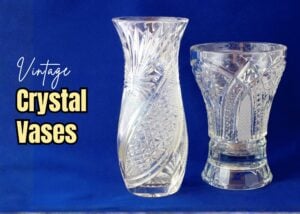
Vintage Crystal Vases
An in-depth research of several eBay sales by our Antiques Know How team shows that most vintage crystal vases sell for under $50, while marked antique hand-cut pieces from top makers can fetch up to $5,000 or more. The value depends on maker signature, hand-cut quality, shape and form, and foot and rim condition. Most valuable crystal vases come from brands like Baccarat, Lalique, Waterford, Moser, Steuben, and Bohemian workshops.
Antiques Know How
A vintage crystal vase from a thrift store can be worth $15 and never sell. The same general shape from a different maker can bring $2,000 at auction. And from across a room, the two crystal vases may look almost identical, but they’re certainly not.
This guide helps you spot genuinely valuable antique crystal vases and shows you which pieces and styles by the top makers are selling for right now.
Is The Vase Actually Crystal? 3 Easy Tests
Most collectors don’t really know if they’re holding authentic crystal or just plain glass. This filter has to come first because vintage glass vases rarely sell for premiums at auction, no matter how fancy they look.
You can check for three simple things that will tell whether your vintage vase is crystal or not.
- The first one is weight, as crystal is significantly heavier than glass of the same volume due to the lead content in it. Crystal glasses before 1990 usually contained at least 24% lead oxide, making them dense.
- The second thing to check for is the sound produced by striking the rim. Crystal gives off musical ring sounds, whereas glass produces a duller sound.
- Finally, the light test. If you shine light through the vase, the crystal refracts it into rainbow flashes. Plain glass would not do so.
However, remember that the ring test alone isn’t conclusive, since some lead-free modern crystal also rings. So, it’s best to do all three checks for a confident answer.
The 4 Things That Decide a Vintage Crystal Vase’s Value
Once you’ve confirmed your old vase is actually crystal, assess the following four factors to determine where your vase sits on the price spectrum.
The Form and Size
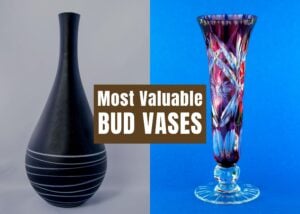
The larger and more complicated the form, the more valuable the vase would be. That being said, trumpet vases and bud vases flood estate sales, and usually sell for a few bucks unless they’re from a notable maker.
Tall vases over 10 inches, urns with lids, and uncommon forms like flip vases, epergnes, or covered jars are scarcer and bring more money.
The Maker’s Mark on the Base
This is the single biggest value lever. A vase that is acid-etched with a Baccarat, Lalique, or Waterford signature can be worth up to 10 times as much as an unsigned vase of the same quality.
But many antique crystal glassware items did not bear any specific marking. In that case, you may have to identify the piece by the pattern and shape from the brand’s official catalogs or reference guides.
The Cut Pattern and Quality
Genuine antique hand-cut crystal shows tiny irregularities and feels sharp on the fingertips. Machine-pressed pieces have rounded edges and perfectly uniform patterns. Hand-cut wins on value every time.
The Condition of the Foot and Rim
The better the condition, the higher the value goes. While overall damage matters, chips on the foot or rim are the real value killer; even minor chips and cracks can reduce value by between 50 and 80 percent.
Originality also plays a vital role. A vase that has the original pontil ground out of the bottom of it will fetch a higher price.
Valuable Vintage Crystal Vase Makers and How to Identify Them
The maker’s name is where most of the value lies. The seven brands listed below make up nearly all the valuable antique crystal vases that exist on the market.
They have their own distinct styles and marks that appear on the bottom that help in identification.
1
Baccarat Harcourt Vase (France)
Typically sells for $400 to $1,500+
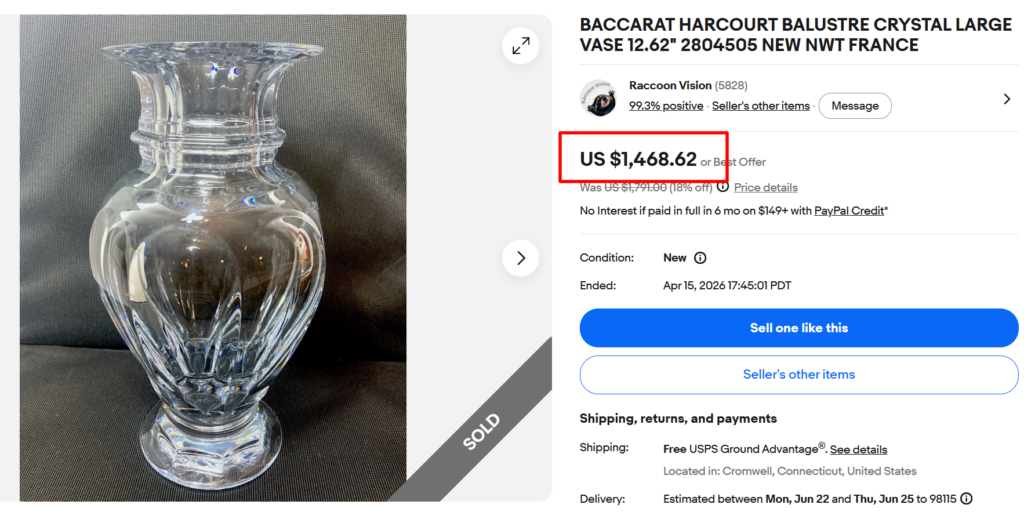
- Made: Harcourt line introduced in 1841, acid-etched mark from 1936 onward
- Identifying Mark: Acid-etched circular stamp reading “Baccarat France” on the base, sometimes with a decanter, glass, and tumbler symbol in the center
- Collectibility: Very high, especially for signed examples
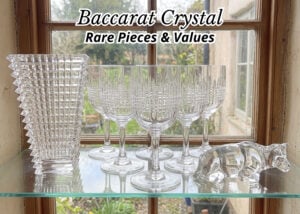
Baccarat is among the most reliably valued producers of crystal in the world, and the Harcourt pattern is their signature style. You can identify it by the square panels and the hexagon-shaped foot.
The acid-etched marking places this piece at 1936 or later. Older pieces from Baccarat may be unmarked and simply identifiable through the quality of the cut work.
2
Lalique Bacchantes Vase
Typically sells for $1,600 to $3,000 for post-1945 pieces
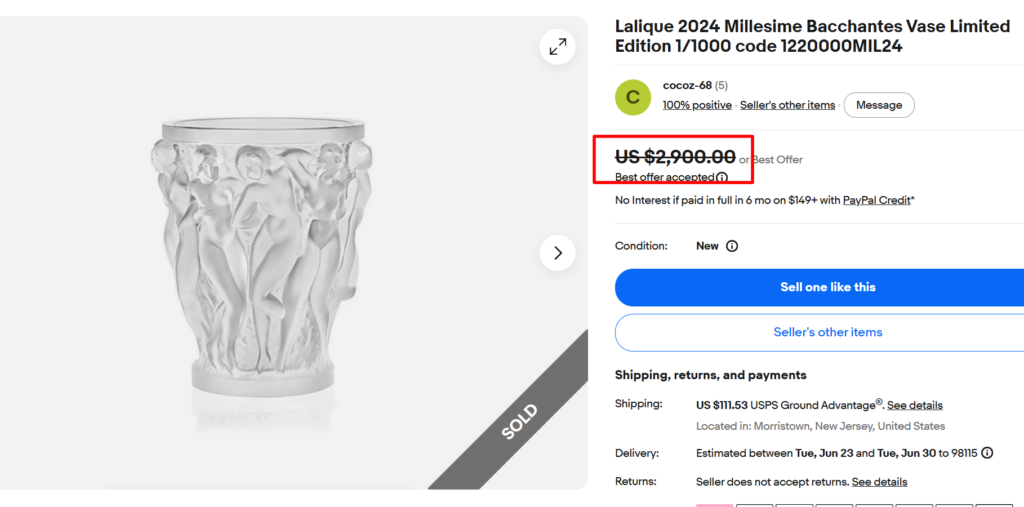
- Average Value: $15,000 to $30,000+ for pre-1945 R. Lalique signed examples
- Made: Designed in 1927, still in production
- Identifying Mark: Pre-1945 pieces signed “R. Lalique France”; post-1945 pieces signed “Lalique France”
- Collectibility: Top-tier (reproductions exist)
This vase is one of Lalique’s most valuable pieces. The Bacchantes vase shows a continuous frieze of dancing female figures in relief around the body.
The original 1927 design by René Lalique is also one of the most counterfeited crystal vases on the market. So, the signature is a crucial factor, not just for value but for authentication, too.
“R. Lalique” marking means it’s a pre-1945 piece, which pushes the value into the thousands. “Lalique France” alone means post-war production, and it brings around $1,600 to $3,000.
3
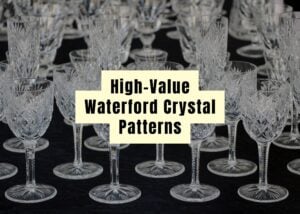
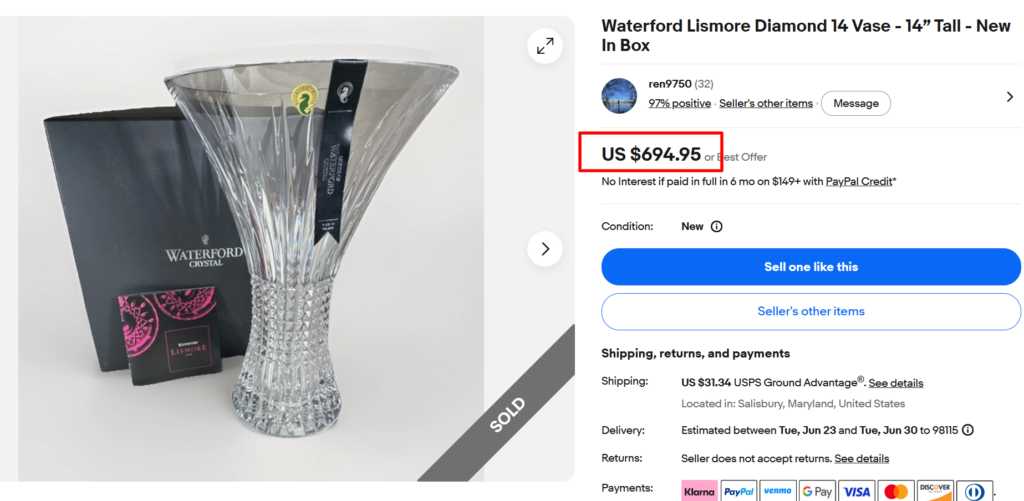
Waterford Crystal Lismore Vase
Typically sells for $80 to $700
- Made: Lismore pattern introduced in 1952
- Identifying Mark: Acid-etched “Waterford” script on the base, sometimes with a seahorse logo on a sticker
- Collectibility: Strong, especially for taller versions and discontinued variations
Lismore is Waterford’s most recognized pattern, named after Lismore Castle in Ireland. The pattern uses deep diamond and wedge cuts that catch light from every angle.
Most standard Waterford Lismore vases bring $80 to $300. The Lismore Castle vase (11 inches tall) and the 60th Anniversary edition fetch premiums because of their rarity. An original box and tag can further add 20 to 30 percent to the value.
4
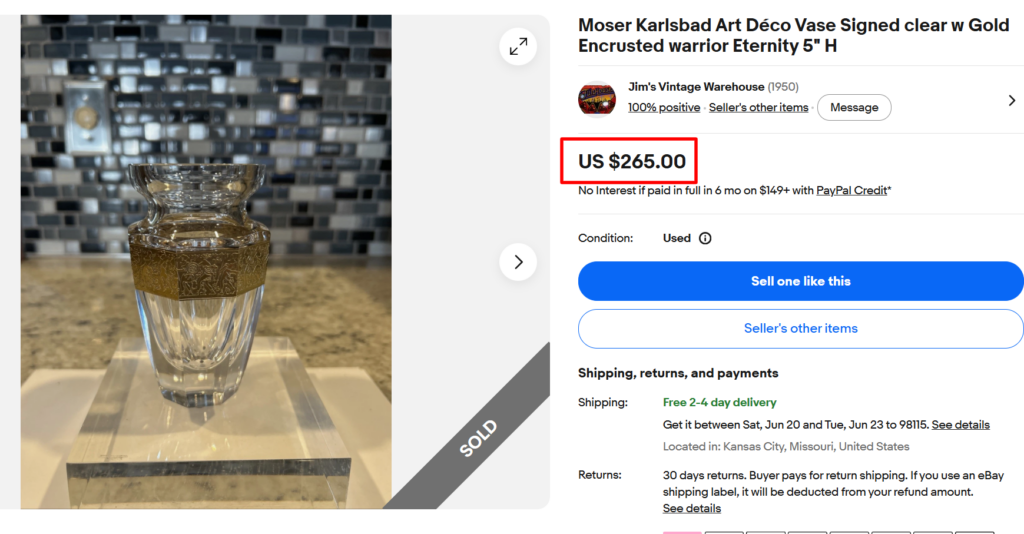
Moser Karlsbad Crystal Vase
Typically sells for $200 to $800 (clear); $1,000 to $10,000 (rare)
- Made: Founded 1857; Karlsbad mark in use since the late 1800s
- Identifying Mark: Acid-etched “Moser Karlsbad” or “Moser” in script on the base
- Collectibility: Very high for colored 19th-century pieces
Moser is the most important manufacturer of Czech crystal. A rich colored Moser glass in shades like green, cobalt, ruby, cranberry, or amethyst with painted gold decoration make the most collectible Moser crystal vases.
Most of the 19th-century originals do not have any marks, but you can recognize them from the depth of color, application of gold in decoration, and cuts made on them.
5
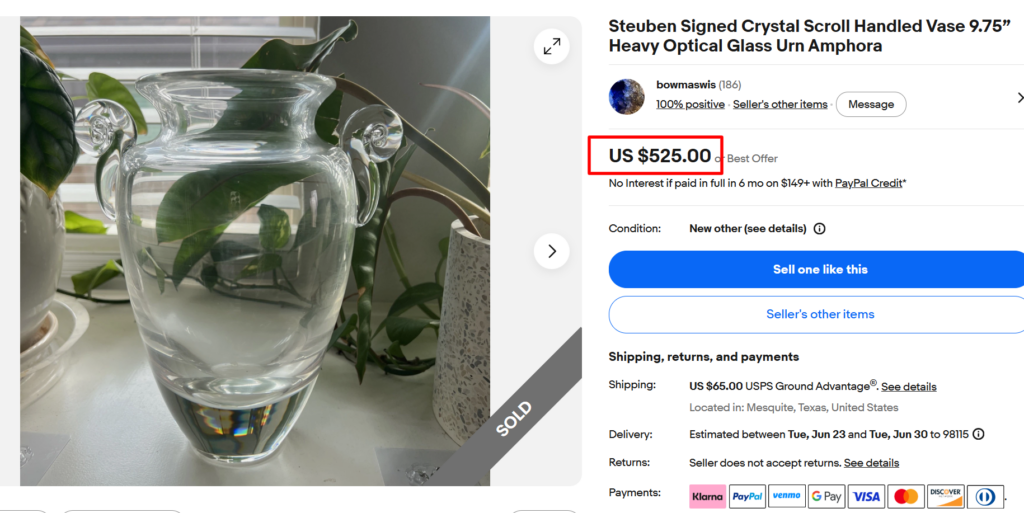
Steuben Crystal Vase
Typically sells for $300 to $1,500 (clear); $1,500 to $5,000+ (aurene)
- Made: Founded 1903; clear crystal era starts 1933
- Identifying Mark: Acid-etched fleur-de-lis with a ribbon banner containing “STEUBEN” in the center
- Collectibility: Strong regional collector base, especially Northeast US
Steuben crystal glass is divided into two collector periods. The Carder era (1903 to 1933) produced a lot of colored art glass, including Gold Aurene and Blue Aurene. These rare colored pieces command the highest prices today.
Then there is the clear crystal era (1933 to 2011), which is what most people know Steuben for. Clear Steuben crystal vases can also be worth a premium, depending on pattern and form. Pieces by named designers (George Thompson, Sidney Waugh) also bring premiums of 30 to 50 percent.
The fleur-de-lis mark with the Steuben banner is the easiest identifier.
6
Bohemian Cut-to-Clear Crystal Vase (Czech Republic)
Typically sells for $100 to $600
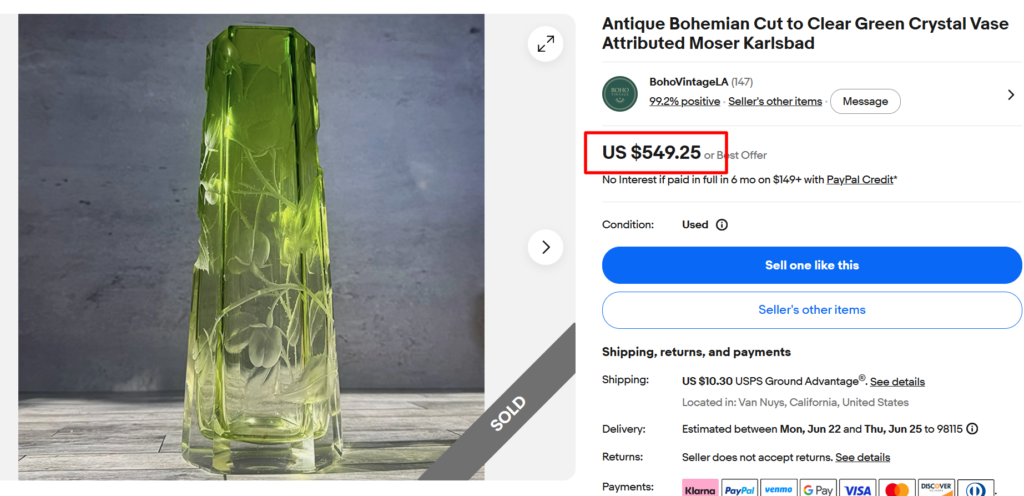
- Made: 1860s to present, peak collector value from 1880 to 1930
- Identifying Mark: Often unmarked; some pieces stamped “Bohemia” or “Czechoslovakia”
- Collectibility: Strong, especially for ruby, green & cobalt cut-to-clear examples
Bohemian cut-to-clear crystal uses a colored outer layer cut through to reveal clear crystal underneath. The technique creates dramatic two-tone patterns of vines, animals, or hunting scenes.
Most Bohemian vases are unmarked, which makes the cut quality the only reliable value cue. Look for sharp, deep cuts with crisp, clean edges. Modern reproductions from the same region tend to have shallower, softer cuts.
Note: This article is intended for informational, educational, and entertainment purposes only. Some images are illustrative and may not represent actual brands, products, or related entities. All trademarks, product names, brand logos, packaging, and other intellectual property referenced remain the exclusive property of their respective owners. Any brand mentions or references are provided solely for descriptive and educational context and do not imply any formal or commercial association.