You spot a heavy stoneware plate at an estate sale. Blue floral border, cream body, and a small castle mark on the base. That’s almost certainly vintage Pfaltzgraff, and depending on the pattern, it could be worth $2 or $200.
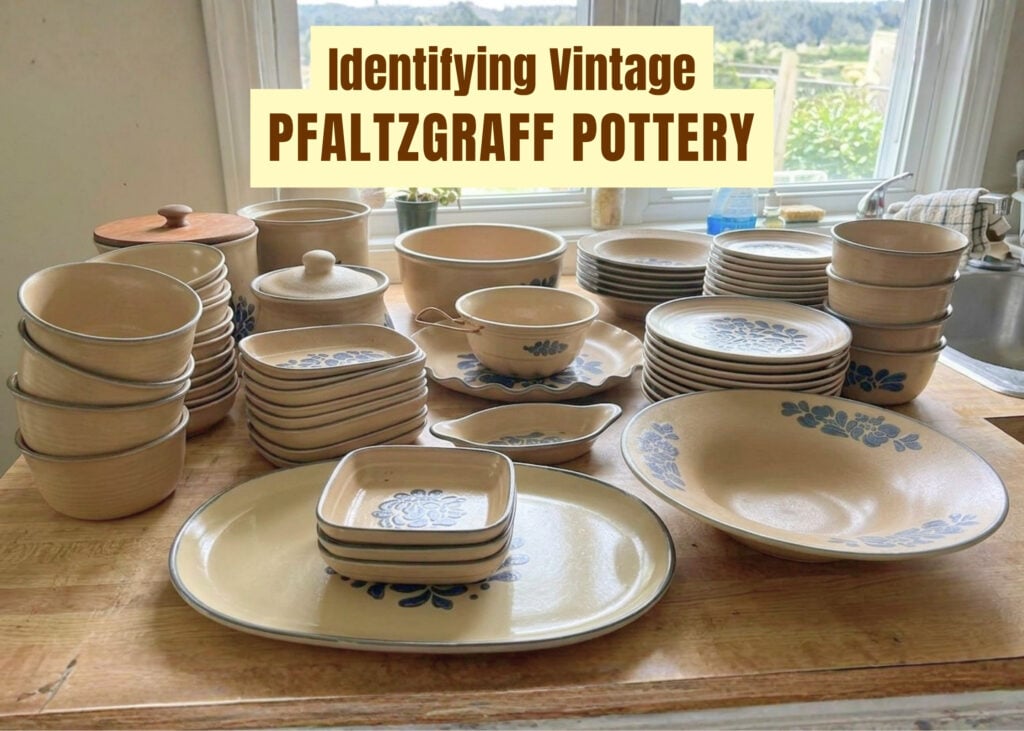
Most Pfaltzgraff you’ll find in the garage or estate sales is common. But some retired patterns, unusual serving pieces, and early backstamps sit in a different tier. Find out how to read Pfaltzgraff marks, what it’s worth, and which patterns and pieces are worth collecting in this guide.
A Quick History of Pfaltzgraff
Pfaltzgraff started in 1811 in York County, Pennsylvania, as a small kiln on a 21-acre homestead. The company grew through five generations of the founding family and is often called the oldest continuously operating pottery in the United States.
For roughly a century, the shop made utilitarian goods. Salt-glazed crocks, jugs, animal feeders, and flowerpots kept the business alive. The switch to household dinnerware came in the 1930s and 40s with early lines like Gourmet Oven Ware.
The years that matter most to collectors are the 1960s through the late 1990s, when lines like Heritage, Yorktowne, and Folk Art came out. By the 2000s, production had largely moved overseas, and in 2005, Lifetime Brands finally took over Pfaltzgraff.
How to Identify Vintage Pfaltzgraff: Marks and Backstamps
The base of the piece tells you almost everything. Pfaltzgraff marks changed several times, and each one narrows the era.
Early Impressed Marks (Pre-1930s)
The oldest pieces you’re likely to encounter carry text like “Pfaltzgraff Stoneware Co. LTD, York Penna.” These are often pressed into the clay rather than printed, so the letters feel slightly recessed under your thumb.
Anything with this style of mark points to early crock or stoneware production, well before the dinnerware era.
The “P” and “YORK” Mark (1930s)
In the 1930s, the company simplified things. A large stylized “P” paired with the word “YORK” appeared on the base. This is a transition-era mark, showing up on early art wares like vases and planters made during the Depression.
The Keystone and Castle Marks (1960s onward)
The mark most people find is the Pfaltzgraff castle. It shows the outline of the family’s namesake castle from the Pfalz region of Germany, with a large “P” running down through the word “PFALTZGRAFF.”
Handy tip: If you see a clean castle mark with “USA” underneath, the piece was made in Pennsylvania and predates the offshore shift. That single detail matters more for value than most people realize.
A related keystone shape appears on some pieces, referencing Pennsylvania’s nickname as the Keystone State. Both marks stayed in rotation from the 1960s through the late 1990s.
Country-of-origin Marks (2000s onward)
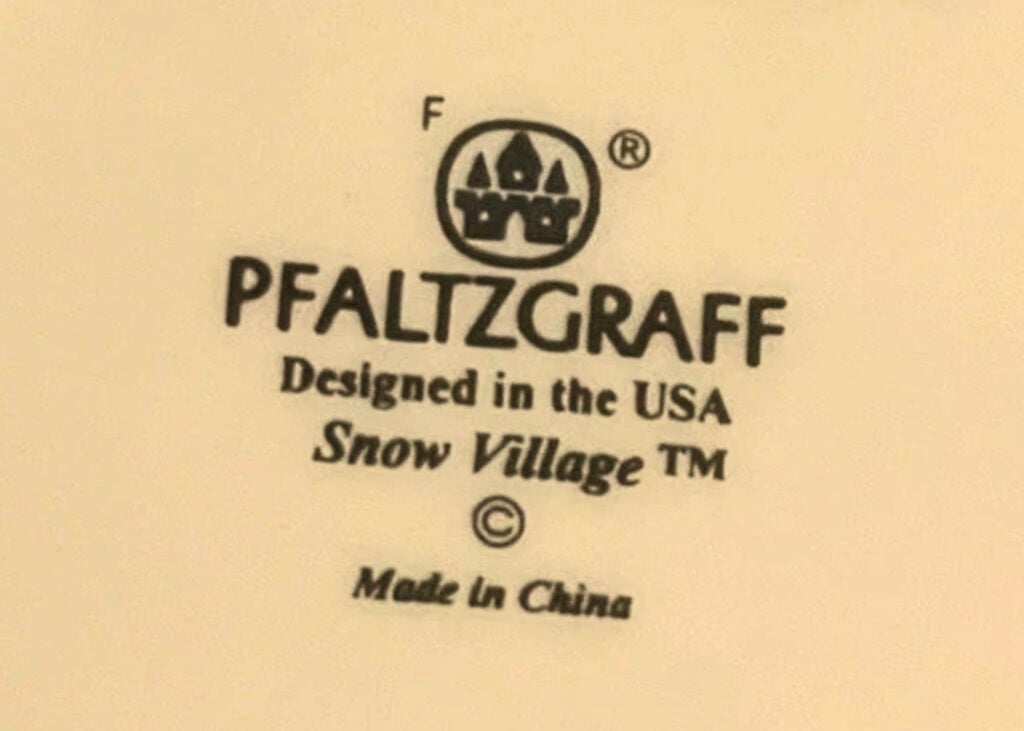
Once production moved overseas, marks began listing “China,” “Mexico,” or “Indonesia” alongside the Pfaltzgraff name. These are printed rather than impressed. If you see one of these, the piece is modern and holds little collector value regardless of pattern.
A Note on Pattern-specific Stamps
Many patterns had their own dedicated backstamp variations. Yorktowne pieces from the late 60s and 70s, for example, carry an embossed castle plus “USA,” while later Yorktowne runs have a printed version.
Comparing the mark’s sharpness and depth against a reference guide is one of the quickest ways to sort early from late production within the same pattern.
Most Collectible Pfaltzgraff Patterns & Lines
Not all vintage Pfaltzgraff holds the same demand and value in the collector market. Some patterns are so common they sell for a few dollars a plate. Others, especially short-run or holiday lines, command premium prices.
1. Yorktowne
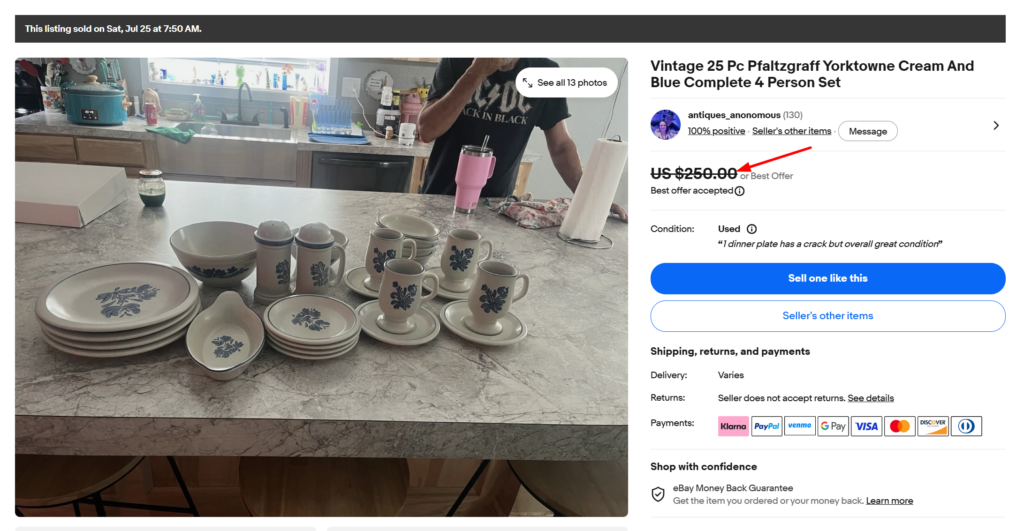
This is the classic blue-and-cream pattern. Yorktowne was introduced in 1967 and stayed in production until 2007, so dinner plates, cups, and cereal bowls are pretty common and mostly sell for $4 to $10 each.
Yorktowne becomes valuable on the accessory pieces. Soup tureens with the original ladle, batter bowls, coffee pots, and the harder-to-find serving items regularly sell in the $30 to $80 range.
Complete 60- to 80-piece vintage sets with the early castle mark can sell well for over $200 when the condition is clean.
2. Village
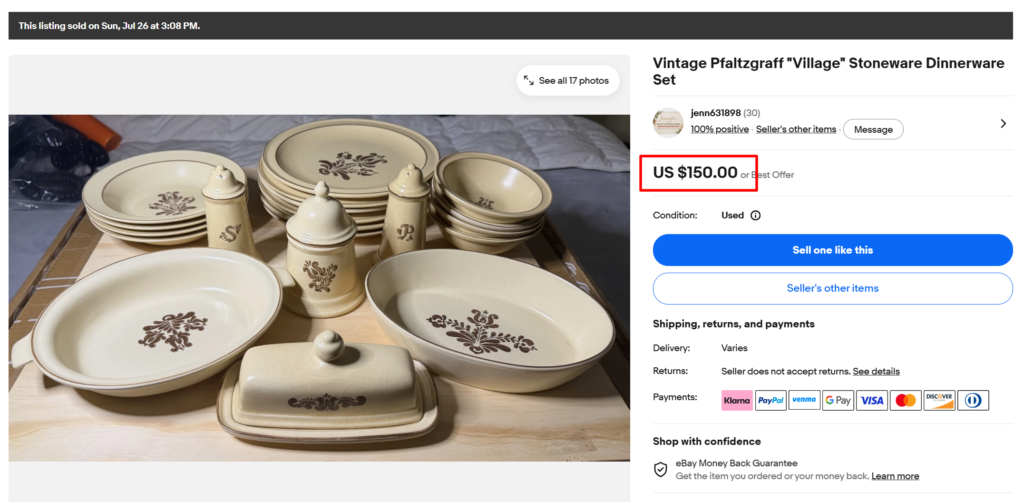
Village has that unmistakable brown-and-cream farmhouse look, with tiny country houses running around the rim.
Individual plates are common and inexpensive, but canister sets, coffee pots, and the harder-to-find serving pieces fetch more. Complete dinner sets in good shape usually sell for over $100.
3. Folk Art
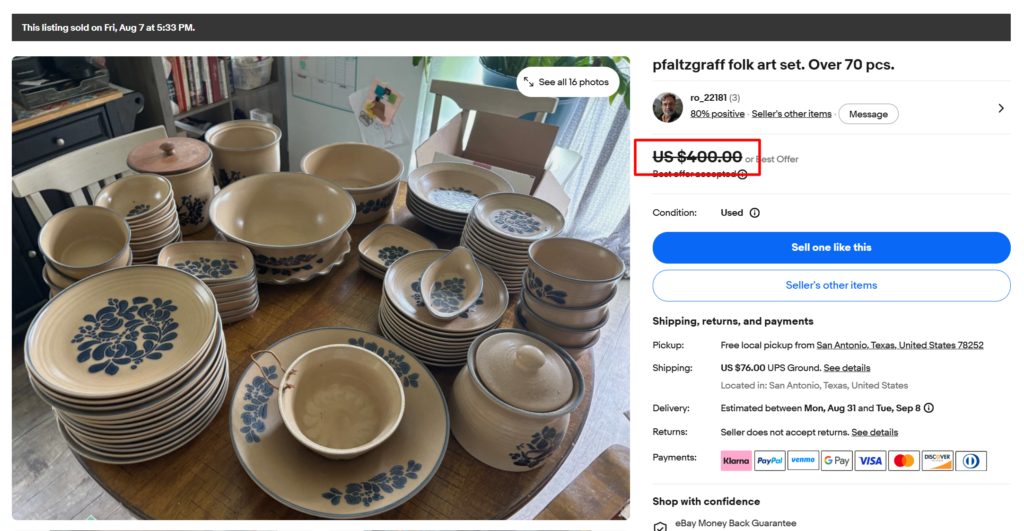
Folk Art ran from 1977 to 1983, which makes it one of the shorter production windows in the Pfaltzgraff catalog. It’s known for its bold Pennsylvania Dutch styling, hearts, birds, and stenciled motifs on a cream body.
Because the run was brief, complete sets are getting harder to source. Larger pieces like the loaf pan, oval baker, and platters bring the best prices, and lots of ten to twelve mixed pieces easily clear $100.
4. Tea Rose
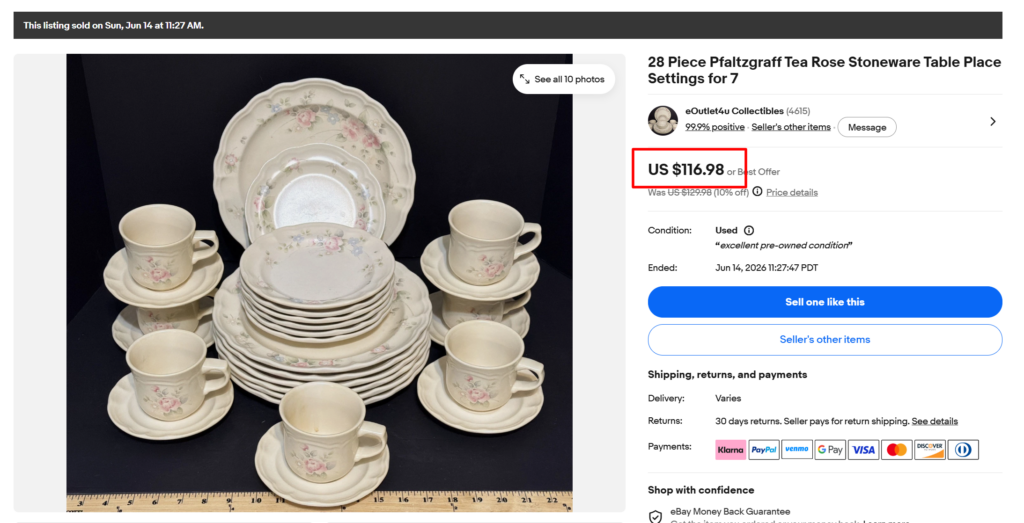
Retired in the early 2000s, Tea Rose has a devoted collector base built around its soft pink floral design. Punch bowl sets, canister lots, and full 48-piece sets from the 1980s show up regularly at auction and hold their value well.
5. Heritage
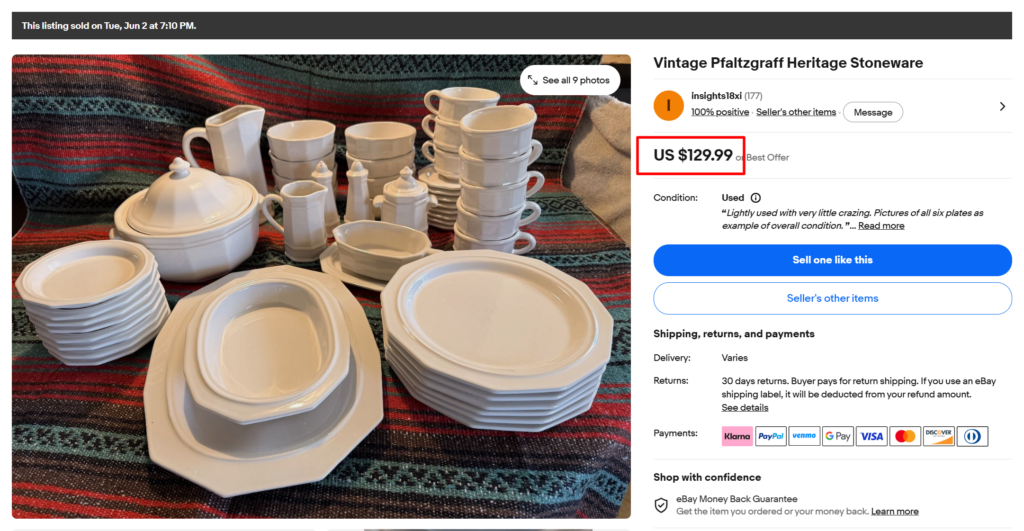
Understated, cream-colored dinnerware without the busy decoration of Yorktowne or Folk Art. These patterns won’t make anyone rich, but they draw steady interest from collectors filling out inherited sets.
Heritage in particular has been in continuous production since 1963, so mark identification is what separates the vintage pieces from the modern ones.
6. Winterberry, Christmas Heritage & Snow Village
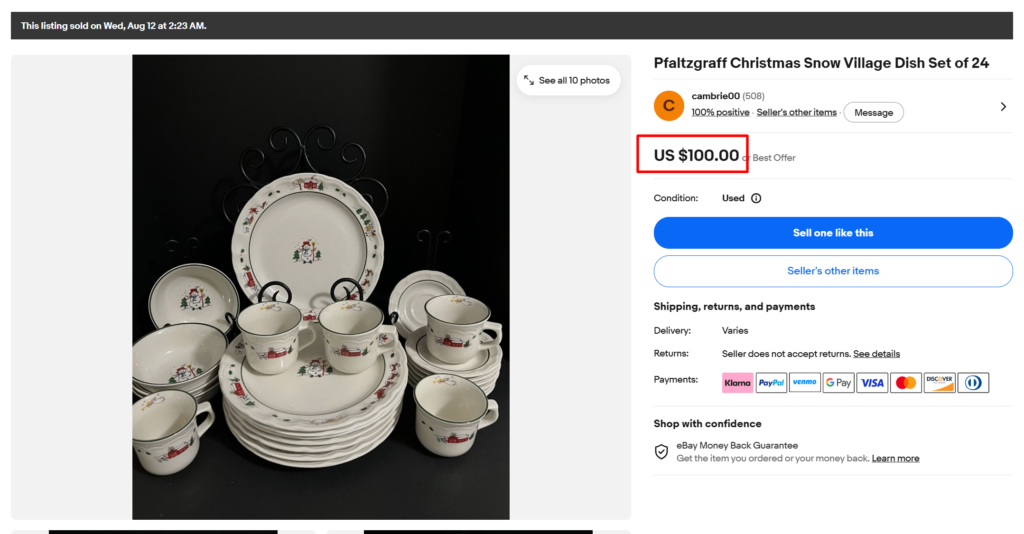
Holiday patterns follow a predictable rhythm. Prices climb every fall and hold through December. Winterberry has been officially discontinued, and its harder-to-find serving pieces, cake stands, and platters can sell for two or three times their common-piece value during peak season.
7. Pistoulet
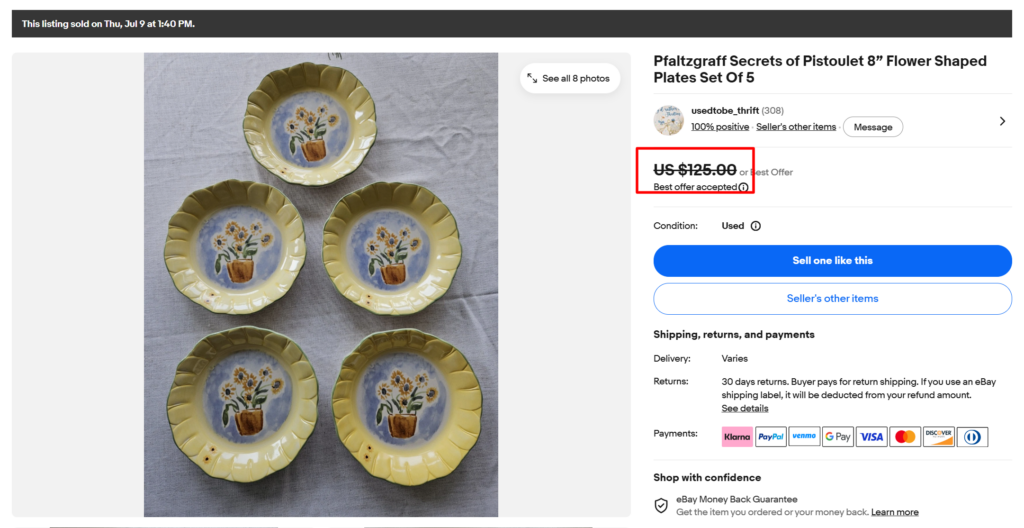
This is a short-lived French-country-inspired pattern based on Jana Kolpen’s illustrated book The Secrets of Pistoulet. It features warm Provençal colors, hearts, sunflowers, and hand-drawn motifs.
Its storybook connection built a devoted following, and collectors still search for the harder-to-find serving pieces years after retirement.
8. Villa della Luna
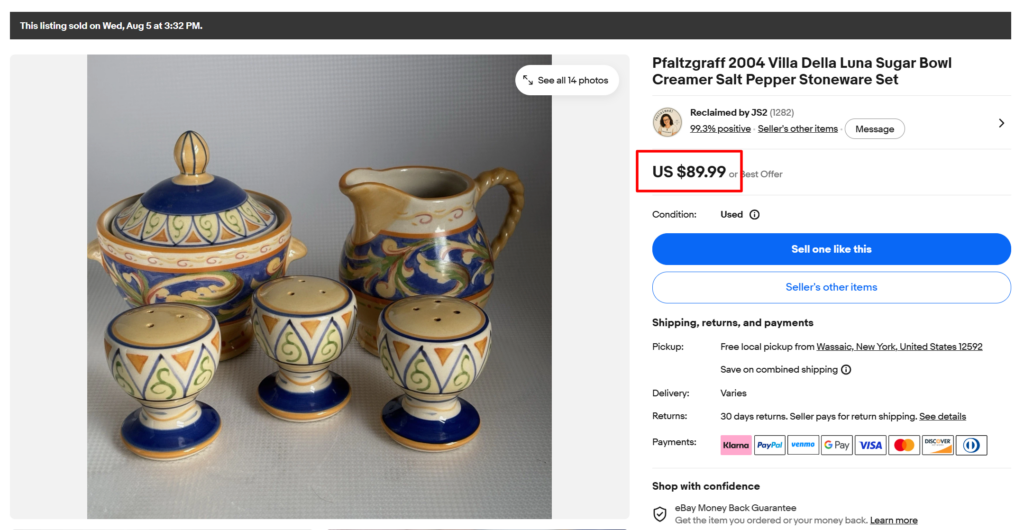
Introduced in 2004 as the Italian follow-up to Pistoulet, based on the sequel book Dancing with the Moon. Vivid Mediterranean colors, scalloped edges, and a distinctive fleur motif set it apart from anything else in the Pfaltzgraff catalog.
The 10th-anniversary pieces from 2014 carry a special backstamp and are worth watching for.
9. Napoli
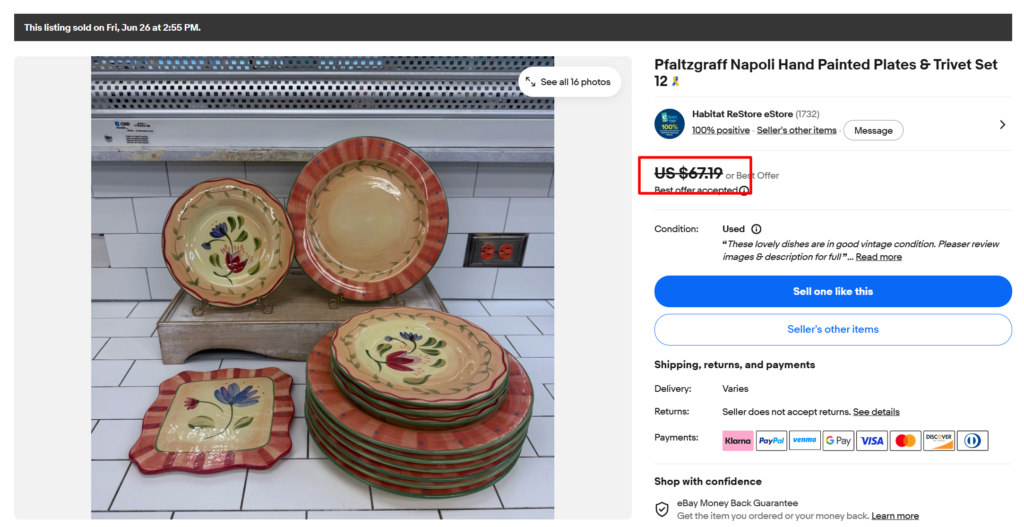
Napoli is a Tuscan-styled pattern featuring warm terracotta tones, olive branches, and Old World Italian design cues. It ran for a relatively short window and turns up mostly in complete sets or accessory pieces like pitchers and iced beverage glasses.
10. Summer Breeze
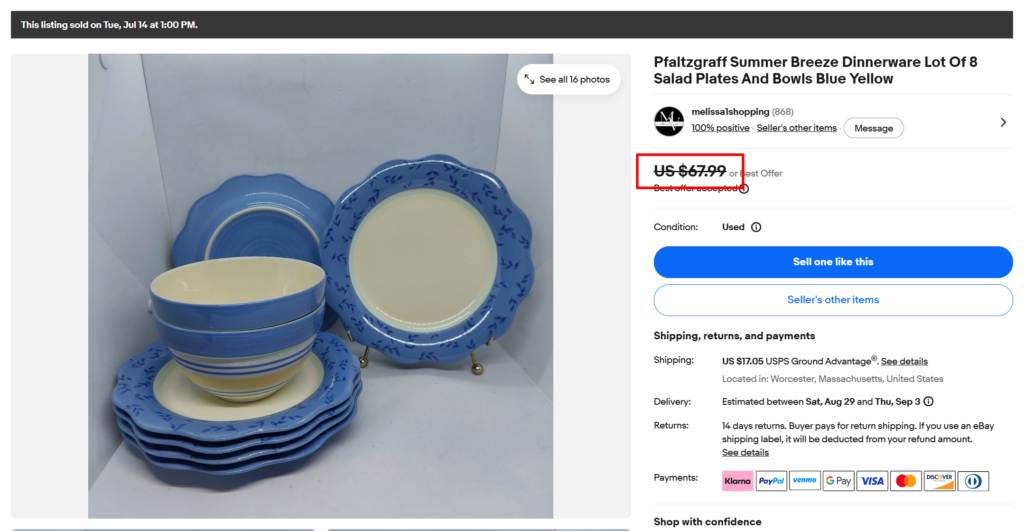
This is one of the more delicate Pfaltzgraff designs, and its lighter color palette has a narrower but steady collector base. You can identify it by its soft yellow ground with forget-me-nots and leaves on a garden-trellis motif. Partial sets are actively collectible.
What Is Your Vintage Pfaltzgraff Actually Worth?
The value of vintage Pfaltzgraff stoneware comes down to four things: the pattern, the piece type, the mark era, and the condition. The most valuable pieces come with a rare pattern, in a unique form, and in excellent condition.
In general, common Pfaltzgraff dinner plates, cups, and saucers in common patterns rarely clear $10. Serving pieces are where value jumps. Tureens, batter bowls, canister sets, coffee pots, punch bowls, and large platters routinely sell for four to ten times the price of a single dinner plate in the same pattern.
Full sets outperform piece-by-piece pricing when they’re complete and undamaged. A 60- to 80-piece Yorktowne set with matching accessories and the early USA castle mark can settle in the $200 to $400 range, depending on how much serveware comes with it.
Value Note: Before you list anything or accept an offer, do a live comparable check on eBay. Filter to Sold Listings and search your specific pattern and piece type to see what collectors pay for it at that time.
Vintage Pfaltzgraff turns up almost everywhere. Estate sales are the best hunting ground, followed by Facebook Marketplace, church rummage sales, and thrift stores.
Does Vintage Pfaltzgraff Contain Lead?
Some pieces definitely do. Independent testing has confirmed lead in the glaze of several vintage Pfaltzgraff patterns, including Tea Rose and Heritage White from the mid-1980s. Avoid using pieces with crazing for acidic food, and test with a home kit if you plan to use them daily.
That doesn’t make every vintage Pfaltzgraff piece dangerous. But it does mean two things: pieces with visible crazing, the fine cracks in the glaze surface, should not be used for acidic foods like tomato sauce, citrus, or vinegar-based dressings.
And if you plan to use vintage pieces daily, a home lead test kit costs under $15 and gives you a definitive answer for your specific dishes.
Vintage Pfaltzgraff requires you to check everything carefully. The mark on the base tells you the era, the pattern tells you the market, and the form type tells you the style. Get those things right before you buy or sell anything.
Note: This article is intended for informational, educational, and entertainment purposes only. Some images are illustrative and may not represent actual brands, products, or related entities. All trademarks, product names, brand logos, packaging, and other intellectual property referenced remain the exclusive property of their respective owners. Any brand mentions or references are provided solely for descriptive and educational context and do not imply any formal or commercial association.