Most trinket dishes are displayed at an estate sale or thrift store alongside full china dinner sets and, hence, get overlooked due to their tiny size. But actually, these are quite little collectibles that can be worth almost as much as the jewelry they once held.
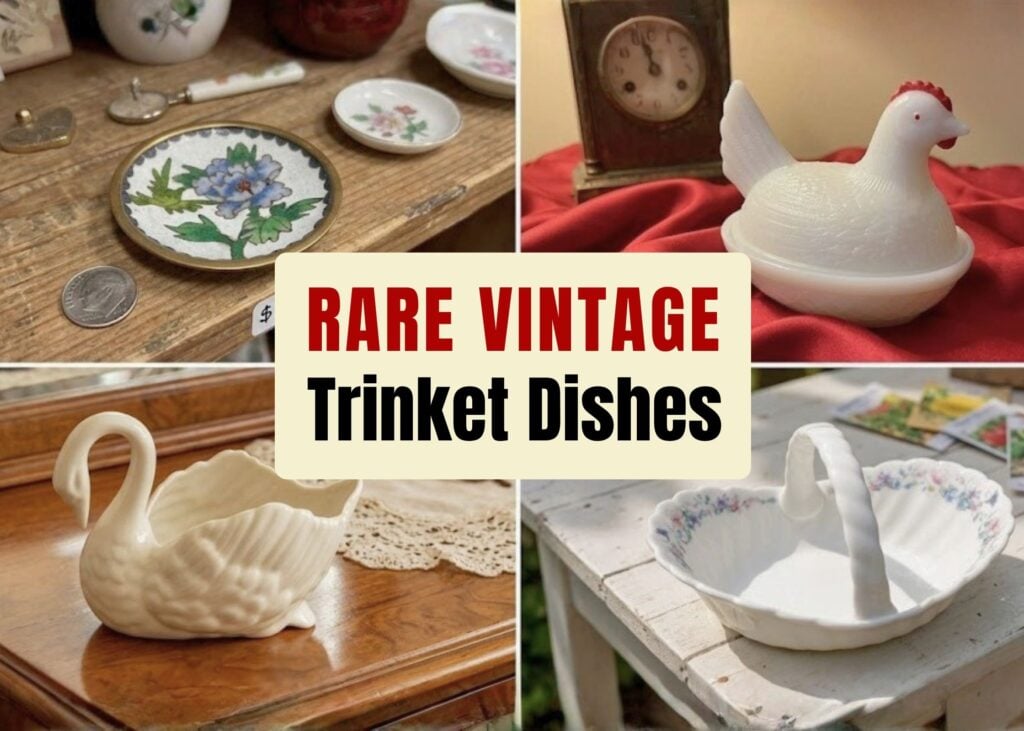
If you have inherited a little covered dish, pin tray, or ring dish and are unsure if it is worth anything at all, then look no further than this guide. Learn about the most popular designs and how valuable they really are today.
What is a Trinket Dish?
Also called a pin tray, ring dish, vanity dish, or vintage jewelry dish, it is any small, shallow bowl meant for rings, earrings, hairpins, and small keepsakes. Most vintage examples date from the 1890s to the 1980s. Some dishes come with lids, like boxes.
Most Valuable Trinket Dishes Worth Collecting Today
1
Sterling Silver & Silverplate Ring Dishes
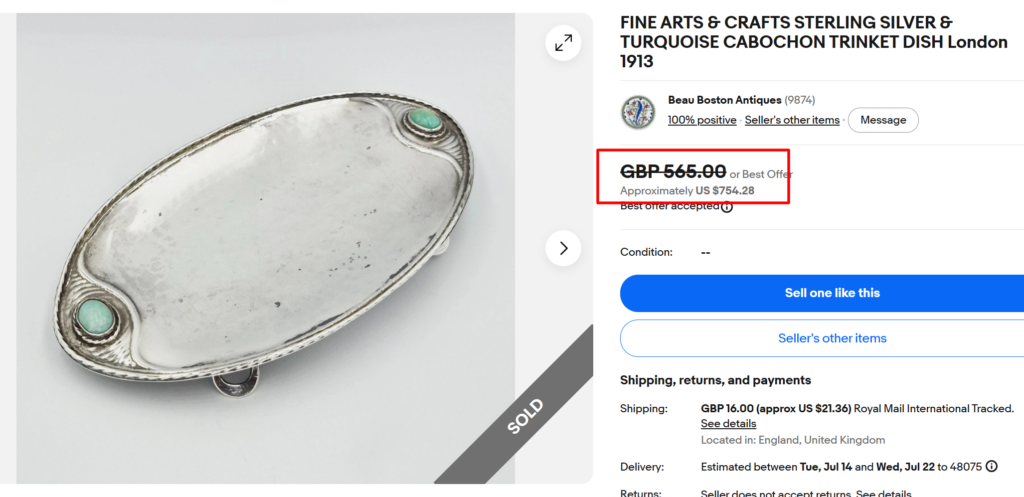
Typically sells for $40 to $800 – marked sterling, $15 to $40 – silverplate
| Production period | Early 1900s to 1960s |
| Key features | Hallmarks, repoussé rims, weight |
| Collector notes | Tiffany or Gorham marks add value |
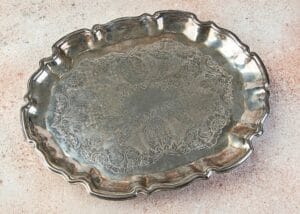
Sterling silver dishes dating from the early 1900s are among the most costly items of this type. Pieces that carry a hallmark from Birmingham, Sheffield, Tiffany, or Gorham are particularly desirable.
The hallmarks themselves give it away – lion passant signifies sterling, a date letter for the year, and a maker’s mark. Weight also drives value, since these are scrap-worth at minimum, plus the collector premium on top.
Silverplate pieces are common, too, but they are worth far less, in the $20 to $40 range.
2
Royal Worcester Trinket Dishes
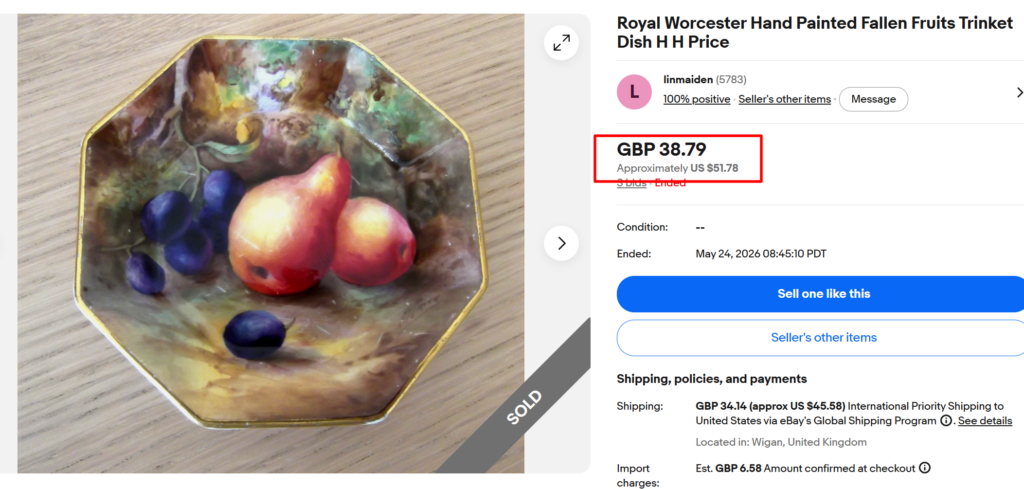
Typically sells for $15 to $120 (signed examples: $150 to $500+)
| Production period | Late 1800s through 1980s |
| Key features | Hand-painted fruit, artist signed |
| Collector notes | Puce mark = pre-1955, higher value |
Royal Worcester’s hand-painted fruit dishes top the list of collectible English porcelain. You can identify them by realistic still paintings of apples, pears, grapes, and blackberries on ivory-ground porcelain.
What collectors pay for is the artist’s signature on the front, usually in the lower right of the fruit panel, especially names like Horace Price, Harry Ayrton, Richard Sebright, and E. Townsend.
ID Note: Look for the puce (purple) factory mark on the base, which indicates pre-1955 production and is worth more.
3
Coalport Jeweled Trinket Dishes
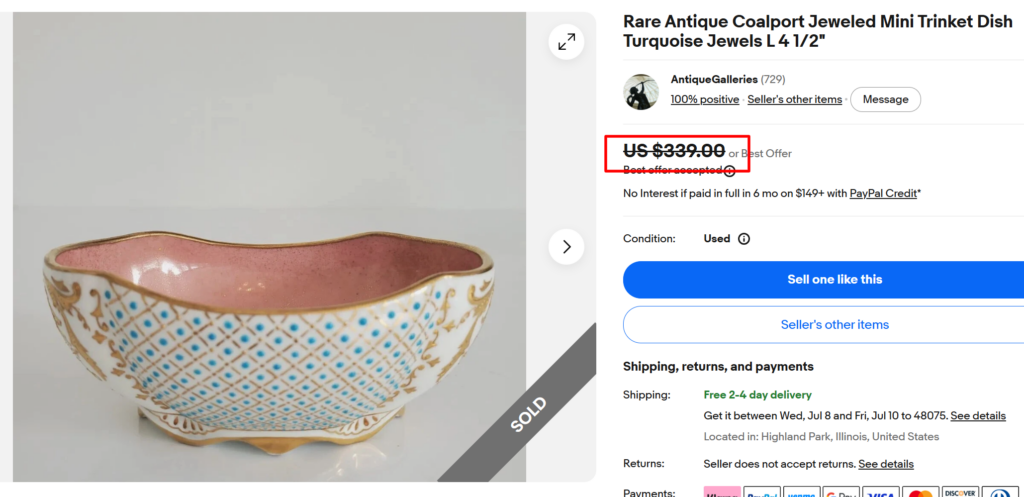
Typically sells for $150 to $400 (standard patterns: $50 to $120)
| Production period | 1890s to 1920s (peak) |
| Material | Bone china, enamel jewels, gilt |
| Key features | Raised enamel dots, gold lattice |
| Collector notes | Intact jewels are critical to value |
The Coalport jeweled porcelain plates are some of the undervalued items in the English china category. The plates have small turquoise and coral enamel spots that have been placed on the gold lattice and then fired to appear as if they were jewels.
Rare antique Coalport jeweled mini trinket dishes can fetch up to $400, depending on condition, while standard non-jeweled pieces sell for less.
4
Vintage Milk Glass & Depression Glass Trinket Dishes
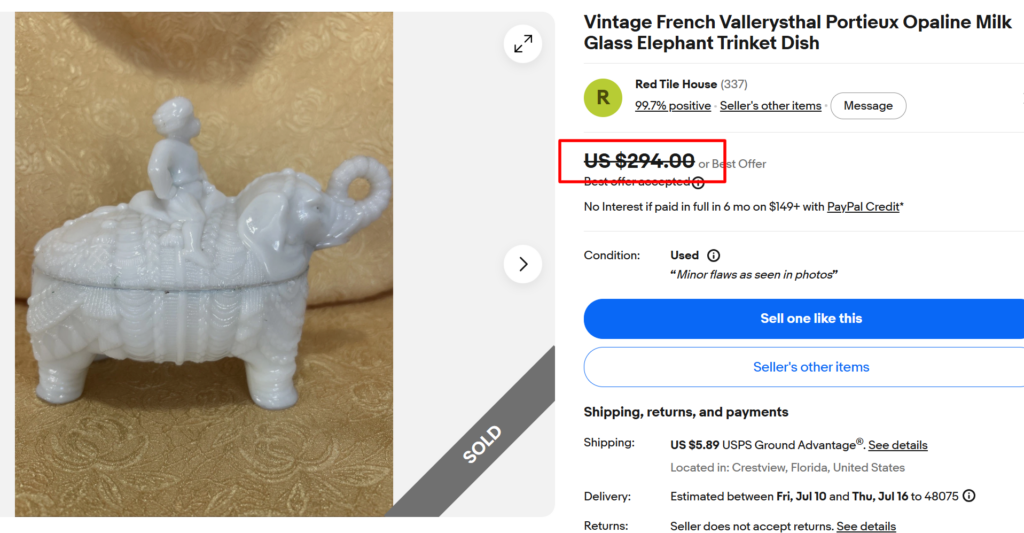
Typically sells for $10 to $35 common (rare figurals: $150 to $300+)
| Production period | 1880s to 1980s |
| Material | Pressed, opaline, or hobnail glass |
| Key features | Figural forms, opalescent colors |
| Collector notes | French Vallerysthal outperforms US pieces |
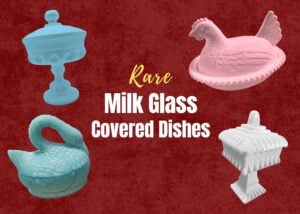
Glass trinket dishes are usually worth less than porcelain pieces. But rare antique figural-covered milk glass dishes are exceptions. This example is a vintage French Vallerysthal Portieux opaline elephant trinket sold at an exceptional price.
Fenton hobnail examples in white stay cheap, but colored Fenton (blue opalescent, cranberry, plum) and older Westmoreland or Anchor Hocking figural pieces can also fetch $75 to $200.
5
Lenox Trinket Dishes
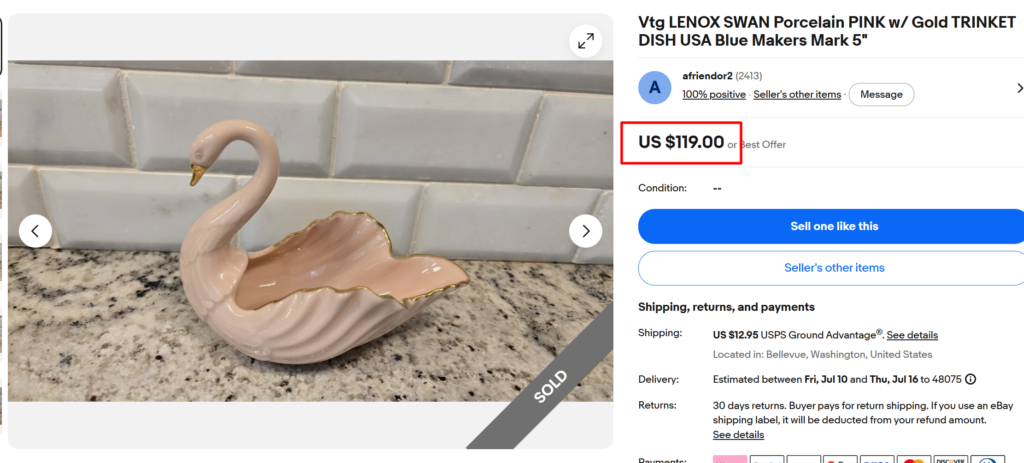
Typically sells for $10 to $50 (early Belleek-era: $75 to $250)
| Production period | Early 1900s to present |
| Key features | Swan shapes, Rose Manor, gold rims |
| Collector notes | Green wreath mark = pre-1953 |
Lenox trinket dishes are highly collectible American pieces. Modern gold-wreath pieces are affordable and common. But the early green-mark Belleek-style dishes, especially the swan shape and Rose Manor heart, can easily fetch a few hundred dollars.
Collector tip: A palm-frond stamp under the wreath signals the earliest Lenox era (1906 to 1930). These pieces, especially in rare shapes, can be worth a lot.
6
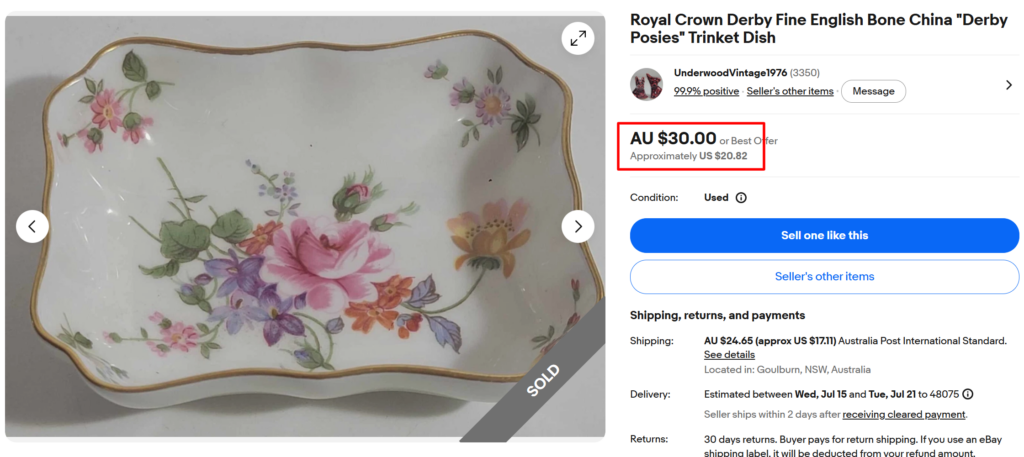
Royal Crown Derby Posies
Typically sells for $10 to $30 (Imari-palette pieces: $50 to $150)
| Production period | 1940s to present |
| Key features | Hand-painted floral posies |
| Collector notes | Year cipher on base dates the piece |
The pattern by Royal Crown Derby called Posies appears frequently on eBay, and it is one of the most sought-after trinket dish patterns. This pattern includes hand-painted flowers of England on white bone china with a gold trim.
Common shapes, like heart, fan, oval, and square, are usually worth a few bucks, but rare shapes can fetch more. Older Imari-palette pieces in cobalt, red, and gold are usually more valuable.
7
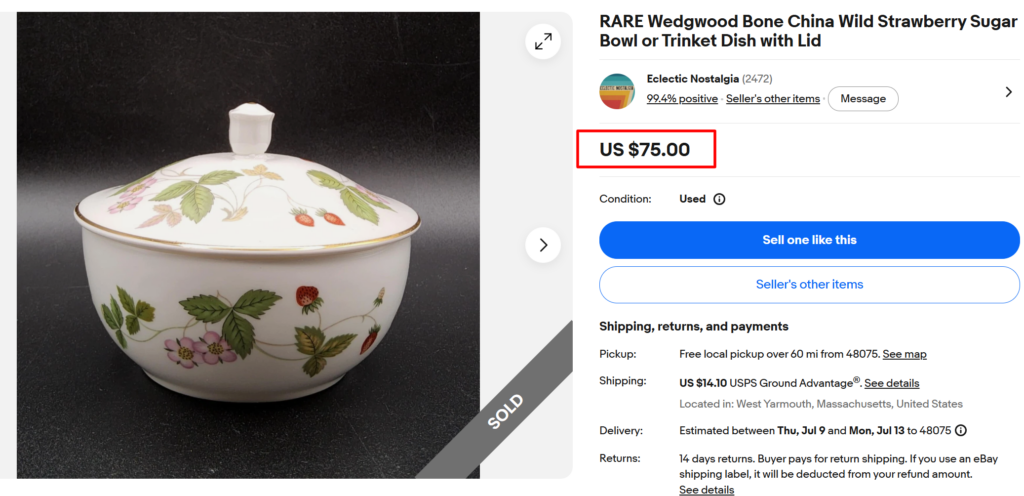
Wedgwood Wild Strawberry
Typically sells for $20 to $50 (boxed sets: $60 to $120)
| Production period | 1964 to present |
| Key features | Strawberry vines, green border |
| Collector notes | Boxed pieces bring 30-40% more |
Wedgwood launched Wild Strawberry in 1964, and it has stayed one of the company’s best sellers ever since. The trinket dish version isn’t rare, but holds steady value.
Wedgwood also makes trinket dishes in Jasperware, the matte blue-and-white classical style. Those also range from $25 to $75, depending on shape and lid.
8
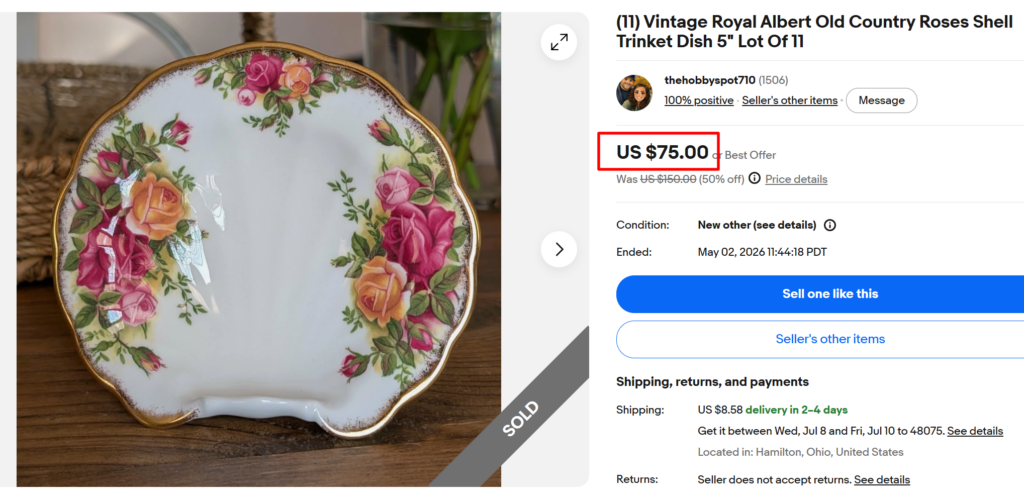
Royal Albert Trinket Dishes
Typically sells for $15 to $60 for common shapes
| Production period | 1962 to present |
| Key features | Rose bouquets, scalloped edges |
| Collector notes | Discontinued patterns outperform |
Royal Albert’s Old Country Roses has been produced since 1962. So, the small trinket dishes are very common and undervalued, yet collectible for their name.
Discontinued patterns like Lavender Rose, Moss Rose, and Montrose are also equally desirable. Look for the small, round, covered trinket boxes and the heart-shaped pin dishes and boxed pieces in the original packaging.
9
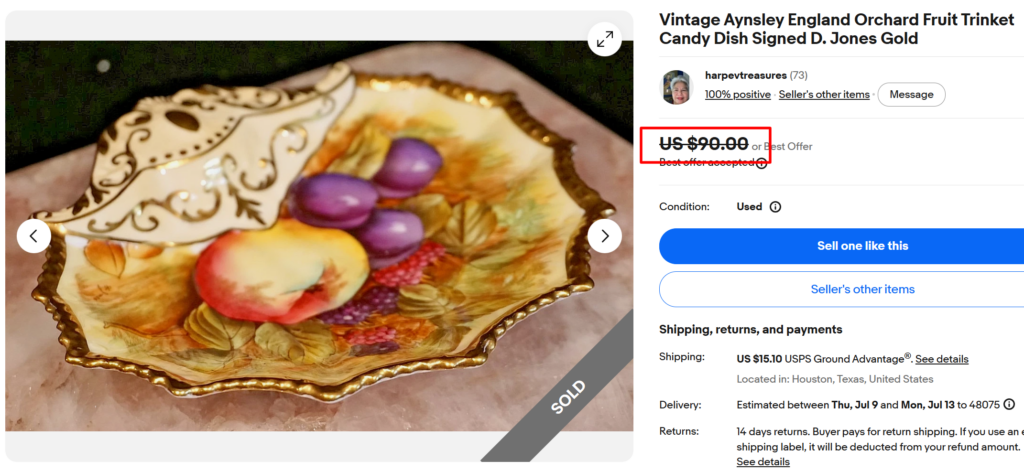
Aynsley Orchard Fruit Signed Dishes
Typically sells for $15 to $40 (lidded pieces: $30 to $75)
| Production period | Mid-1900s to present |
| Key features | Hand-painted fruit, floral, bird motifs |
| Collector notes | Artist-signed pieces have highest value. |
One of the rarest items is Aynsley’s Orchard Fruit trinket dishes, which feature hand-painted apples, grapes, and berries on scalloped bone china with a gold border.
Original signed pieces by artists like D. Jones can be especially valuable. Cottage Garden (flower/butterfly motif) and Pembroke (birds) series fetch less but still maintain their collector interest.
10
Limoges Hand-Painted French Trinket Dishes
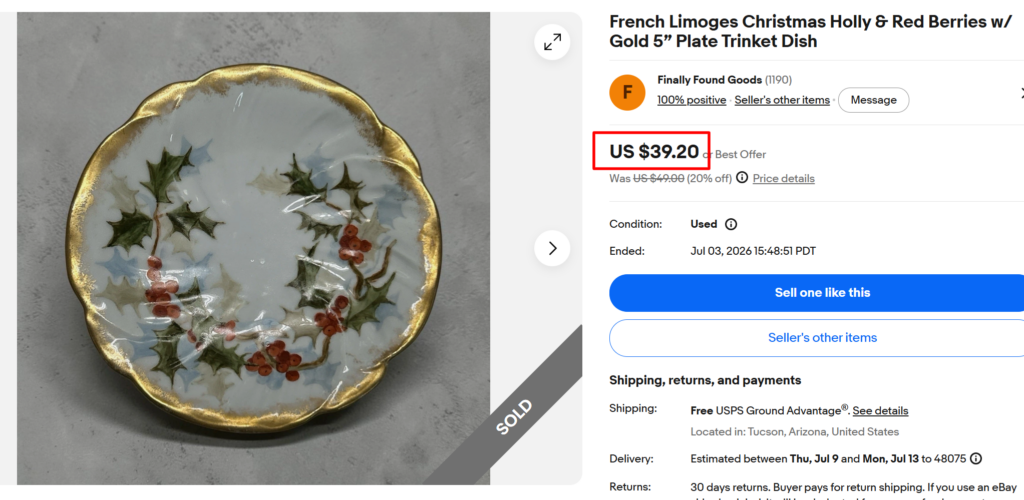
Typically sells for $30 to $150 (signed antiques: $200 to $600+)
| Production period | 1890 to 1930 (peak era) |
| Key features | Roses, violets, oyster shell shapes |
| Collector notes | Artist signature raises the value sharply |
Limoges trinket dishes include all sorts of makers, ranging from Haviland to T&V, to a myriad of smaller firms from Limoges, France.
The most desirable Limoges trinket dishes include hand painted, signed pieces dating from about 1890 to 1930, typically adorned with roses, violets, or courtship scenes, and rimmed in heavy gold.
Look for an artist’s signature on the painted surface and a green “Limoges France” or “Haviland Limoges” mark on the base. Oyster and shell-shaped Limoges dishes are especially collectible today.
What Drives the Value of Antique Trinket Dishes?
Like any other vintage china, three things matter the most for trinket dishes when it comes to value.
The first is the backstamp of the maker. A known name, such as Royal Worcester or Wedgwood, will have more value than an unmarked piece of the same standard, while old marks will also have value over the newer marks.
The second is pattern and rarity. Discontinued patterns and short-run designs sell for multiples of what current-production dishes bring.
The third is the condition and packaging. Intact gilding, no chips on the rim, and a crisp painted decoration matter more than most people realize. Plus, a single dish or set in its original box holds even higher value.
Note: This article is intended for informational, educational, and entertainment purposes only. Some images are illustrative and may not represent actual brands, products, or related entities. All trademarks, product names, brand logos, packaging, and other intellectual property referenced remain the exclusive property of their respective owners. Any brand mentions or references are provided solely for descriptive and educational context and do not imply any formal or commercial association.