Antiques Know How Research
Miriam Haskell Jewelry Value
A closer look at several eBay sales by the Antiques Know How team shows that many vintage Miriam Haskell pieces sell for under $200, while signed 1940s–1960s pieces and sets can fetch $400–$3,500+. The most valuable styles are baroque‑pearl necklaces, Gripoix‑glass brooches, “Queen Blue” sets, chalcedony‑style glass bead necklaces, crinkle‑coil designs, and complete parures. The identification relies on markings and tags, construction, materials, and aging signs, while the value is driven by the production era (especially pre‑1950 Frank Hess work), condition, completeness, and design complexity.
Antiques Know How
About Miriam Haskell Company
In 1926, Miriam Haskell founded her first boutique in New York City. Although she was the visionary, a lot of the brand’s most recognizable works were created by its chief designer at the time, Frank Hess.
During the difficult era of the Great Depression and World War II, the business did quite well because it offered women luxury amid tough times. Haskell used alternative materials like wood, shells, and plastics in lieu of expensive materials to create stylish but affordable jewelry.
In the 1950s, the business became known worldwide. Celebrities adorned themselves with their complex floral and botanical pieces. Currently, the brand is a top-tier name among vintage costume jewelry collectors around the world.
How to Identify Original Miriam Haskell Jewelry
Because Haskell jewelry used common materials, fakes and misattributed pieces are common, especially online. But genuine Haskell pieces have several telltale construction details that are hard to fake well.
Markings
Markings are the best way to identify post-1940s Miriam Haskell jewelry because Haskell didn’t permanently sign her jewelry until the late 1940s. Before that, pieces only had paper hang tags (black and gold), which are rarely found intact today.
The following is a quick breakdown of the company’s markings throughout the years:
- Before 1947: Unsigned. Only paper tags. These are the hardest to authenticate and usually need expert-level knowledge of Haskell construction and materials.
- 1947–1950: The “horseshoe” mark, a small semicircular plaque stamped “MIRIAM HASKELL” in capital letters. These are uncommon because the horseshoe wasn’t used on all pieces.
- Early 1950s–late 1970s: The classic oval plaque with “MIRIAM HASKELL” stamped in capitals. The stamping shows through to the reverse side as an indented, reversed impression. This is the most recognizable Haskell mark.
- Late 1970s–present: Similar oval plaque, but with a “flat back.” The stamping no longer comes through to the reverse. If you have a flat-back oval tag, your piece dates from around 1980 or later.
Necklace hooks and clasps can also carry the “MIRIAM HASKELL” stamp in small print. Earring backs sometimes show just “HASKELL.”
As for unsigned pieces, you can check for other features like construction, design, and materials to identify original pieces.
Construction
This is what really separates genuine Haskell from fakes. Every element on an authentic piece (pearls, beads, crystals, leaves) is individually wired by hand to a metal base, never glued. If you see glue on a piece marked Haskell, it’s not genuine.
Always check and feel the back. On authentic Haskell jewelry from the signed period, you’ll feel the texture of wrapped wires and metal filigree work.
The back should feel substantial and well-finished, not thin or flimsy. Fakes tend to have lighter, less detailed filigree backings.
Materials (Accents & Base)
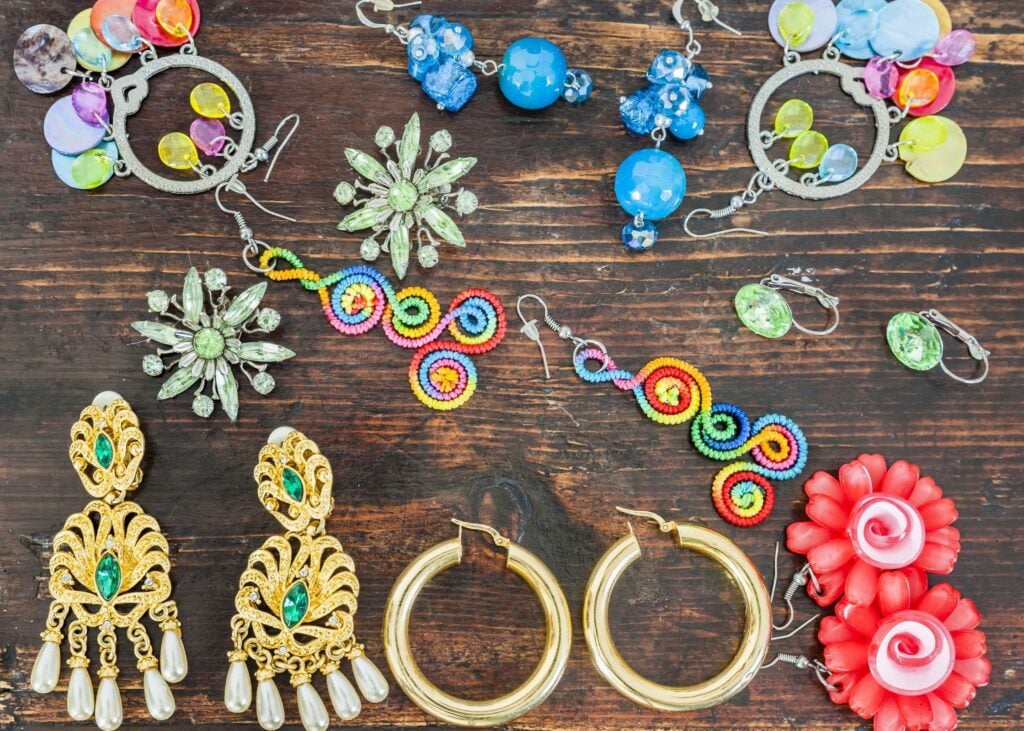
Apart from affordable materials, Haskell used high-quality components sourced from across Europe and Japan.
The most common materials you’ll see are faux baroque pearls (imported from Japan), Bohemian glass beads from Gablonz, Swarovski crystals, and rose montée rhinestones (with a special ring-shaped backing used for hand-sewing onto metal).
The setting is unique, too.
The company’s signature gold finish is called Russian Gold. It’s a proprietary plating formula that contains real 24-karat gold mixed with copper and other metals over brass or copper. It has a warm, slightly antique tone that’s different from standard gold plating.
Clasps and Findings
Clasps changed over the decades and are useful for dating pieces. Early unsigned necklaces typically have ornate box clasps decorated with pearls, beads, or rhinestones. The other common early clasp was a simple spring ring, but without the protruding thumb tab found on most spring rings.
After the signed period began, Haskell introduced a hook-and-tail closure system. In this, one end has a distinctive hook (often decorated with an eight-petal flower made of pearls or beads), and the other end has a chain of several pearls or beads that can be adjusted in length. These hooks are usually signed “MIRIAM HASKELL.”
If you find a claw clasp or toggle clasp on a piece marked Haskell, it’s likely a modern reproduction.
Signs of Authentic Aging
Genuine vintage Haskell pieces show specific types of wear. Verdigris is extremely common on Haskell jewelry, especially where brass wiring meets faux pearls. It’s a bright bluish-green encrustation that happens from atmospheric oxidation.
It’s not pretty, but it’s actually a sign of authentic age and real brass construction.
The Russian Gold finish will develop a warm patina over time, but shouldn’t be completely worn away on a well-cared-for piece. Pearl coatings on older pieces may show some yellowing or uneven wear.
Slight unevenness in bead placement is normal on handmade pieces. Perfect uniformity is actually more suspicious than minor irregularities.
Most Valuable Miriam Haskell Jewelry Styles & Pieces
Haskell produced a wide range of designs over many decades, but certain styles stand out for their craftsmanship, collectibility, and value. Below are some of the most notable ones that collectors actively seek out.
1
Baroque Pearl Cluster Necklace Set
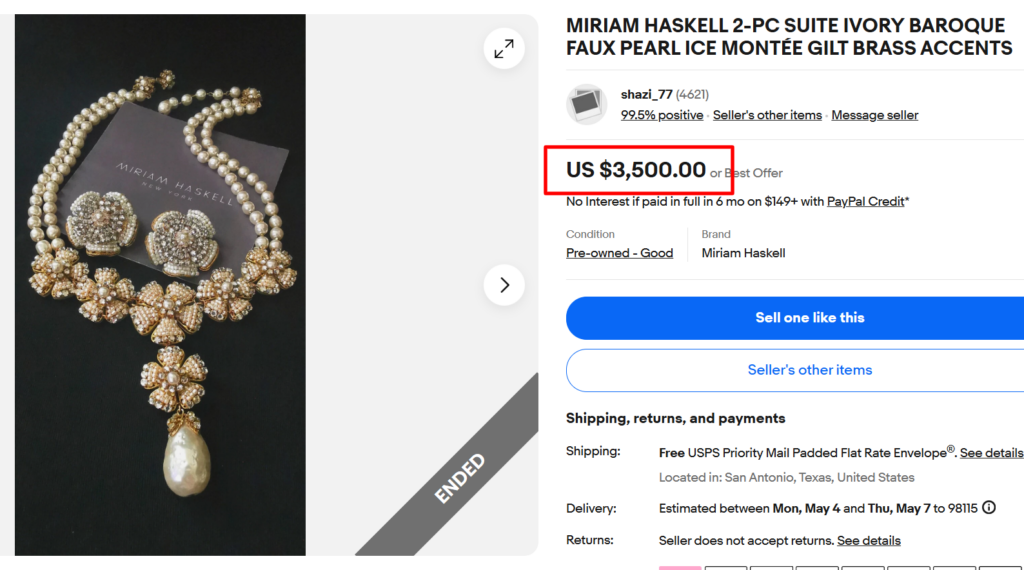
Typically sells for $800 – $3,500+
| Average Value | $800 – $3,500+ |
| Production Period | 1940s – 1960s |
| Key Features | Multi-strand pearls, floral cluster medallion |
| Collector Notes | Complete parures are more valuable. |
The baroque pearl cluster necklace is probably the most iconic Miriam Haskell design to look for.
These usually feature multiple strands of hand-wired faux baroque pearls with a central floral-cluster medallion of faux pearls, rhinestone montées, and gold-tone filigree flowers, often with a large teardrop pearl pendant hanging below.
Matching earring and brooch sets in this style are especially collectible. The quality of the pearl coating matters a lot. Pieces with intact, lustrous pearls in their original warm ivory tone are worth far more than those with worn or yellowed coatings.
2
“Queen Blue” Bracelet & Earrings Set
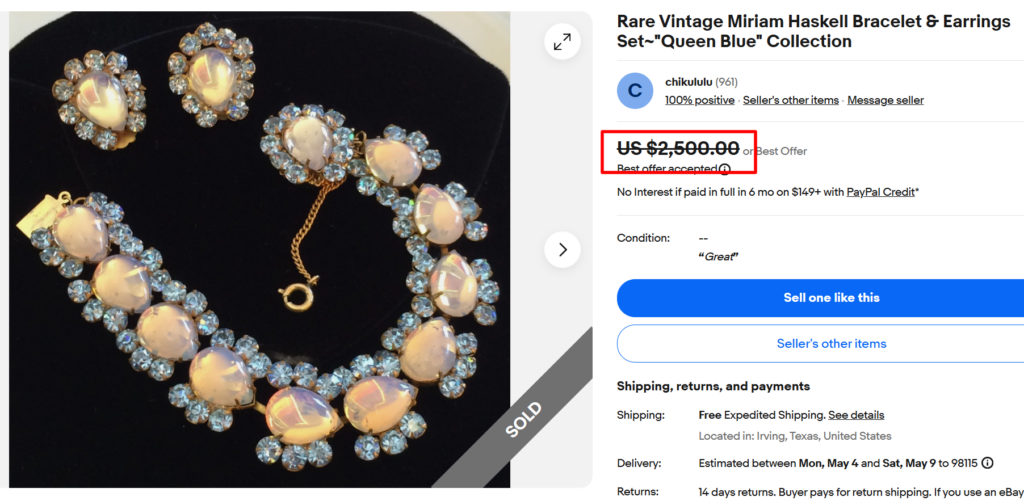
Typically sells for $800 – $2,500
| Average Value | $800 – $2,500 |
| Production Period | 1950s – 1960s |
| Key Features | Opalescent cabochons, blue rhinestones |
| Collector Notes | Verify all stones are original and intact |
This Miriam Haskell set features large opalescent glass cabochons surrounded by rings of blue rhinestones in a gold-tone setting. The bracelet has linked stations of these clusters, connected by a chain and a spring-ring clasp.
The matching clip-on earrings follow the same design with a single cluster each.
The “Queen Blue” rhinestones are a specific shade that collectors recognize. Besides, original opalescent cabochons will have a milky, slightly iridescent quality with pink and blue undertones.
The quality of the rhinestone prong settings and whether all stones are present and original are key value factors.
3
Gripoix Glass Brooch
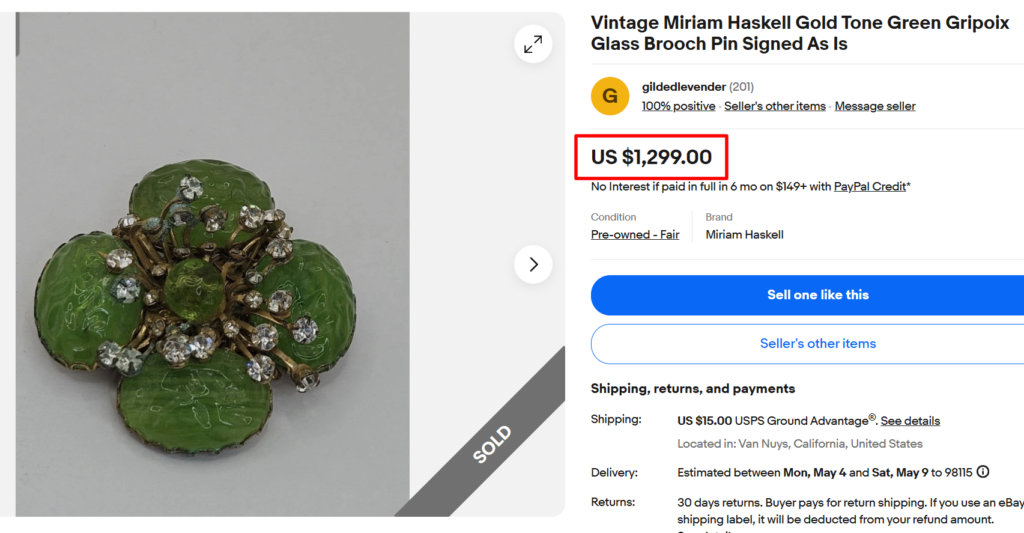
Typically sells for $600 – $1,500
| Average Value | $600 – $1,500 |
| Production Period | 1940s – 1960s |
| Key Features | Large green Gripoix glass petals, rhinestones |
| Collector Notes | Glass condition is crucial to value. |
Green Gripoix glass pieces are among the more valuable Haskell brooches because the poured glass technique is labor-intensive. This brooch uses large, poured Gripoix glass in a deep green color, shaped into petal or leaf forms.
The glass elements are set against a gold-tone filigree backing with clear rhinestone accents between the petals. The overall design is typically floral, with four or five glass petals forming a single large flower.
The Gropoix glass condition is everything for value; even minor chips or cracks reduce value noticeably. Pieces with condition issues (listed as “sold as is”) fetch several hundred dollars, while intact examples can sell above a thousand.
4
Chalcedony Baroque Beads Necklace
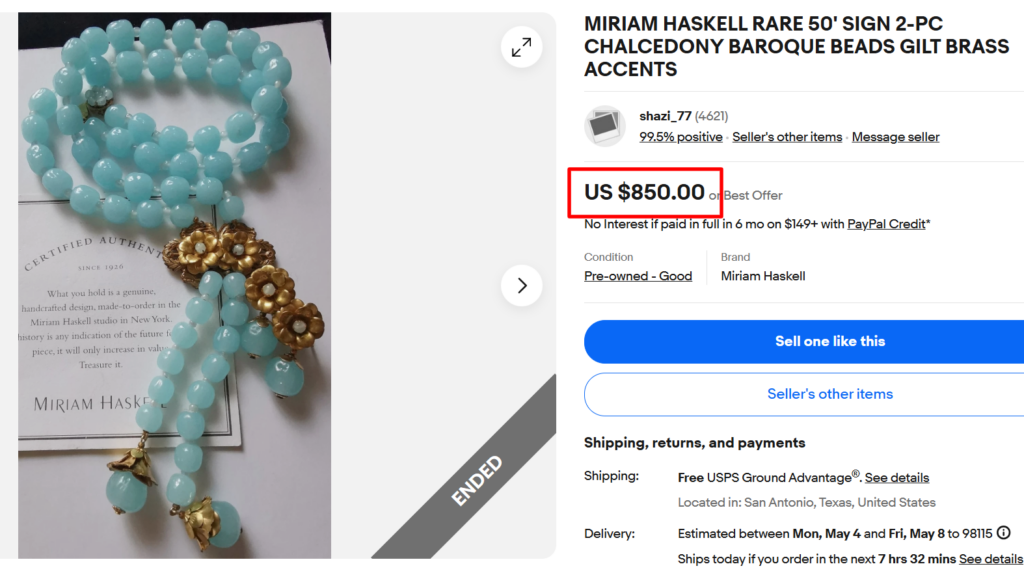
Typically sells for $500 – $900
| Average Value | $500 – $900 |
| Production Period | 1950s |
| Key Features | Blue-green glass beads, gilt floral caps |
| Collector Notes | Authenticity cards add value |
These necklaces use large, opaque beads in soft blue-green tones meant to imitate chalcedony stone. The beads are hand-strung and usually accented with gilt-brass floral caps and small rhinestone-set spacers.
Some versions also include a decorative floral clasp with layered metal petals and small bead accents.
While the beads are made of high-quality glass, not actual chalcedony, they still have a weight and smoothness that cheaper imitations don’t. Signed examples from the 1950s with the original Haskell authenticity card are particularly desirable.
5
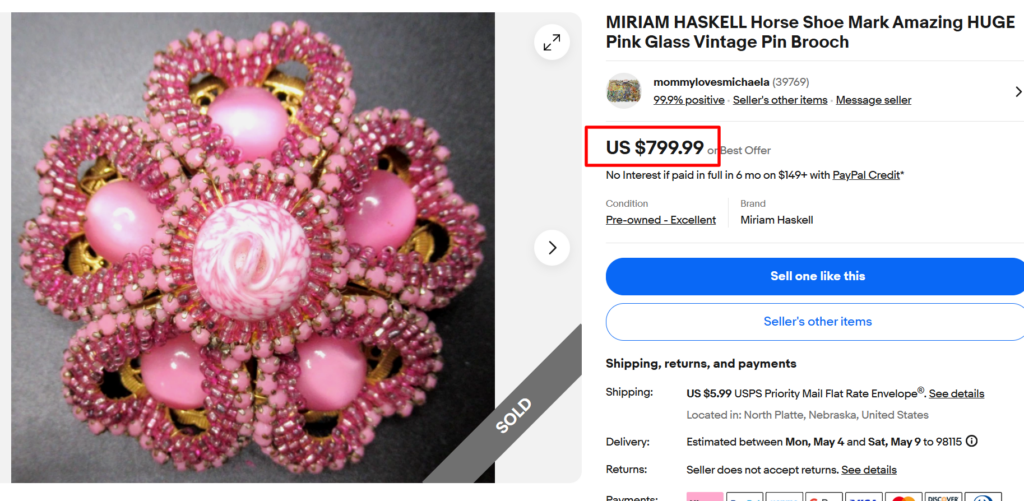
Pink Glass Brooch
Typically sells for $400 – $850
| Average Value | $400 – $850 |
| Production Period | Late 1940s – 1960s |
| Key Features | Pink pâte de verre glass, seed bead loops |
| Collector Notes | Chipped poured glass elements reduce value. |
Haskell’s pink glass brooches are mostly associated with the “horseshoe mark” period of the late 1940s to early 1950s. Although similar designs continued into later decades, as well.
This brooch features pink poured glass cabochons and seed beads arranged in a floral pattern over a gold-tone filigree base. The pink glass elements range from pale rose to deeper fuchsia tones, and the smaller seed beads are often strung in loops around the larger cabochons.
The poured glass elements, known as pâte de verre (a French glass-working technique), are fragile and prone to chipping. Pieces with all original, undamaged glass cabochons are worth significantly more than repaired examples.
6
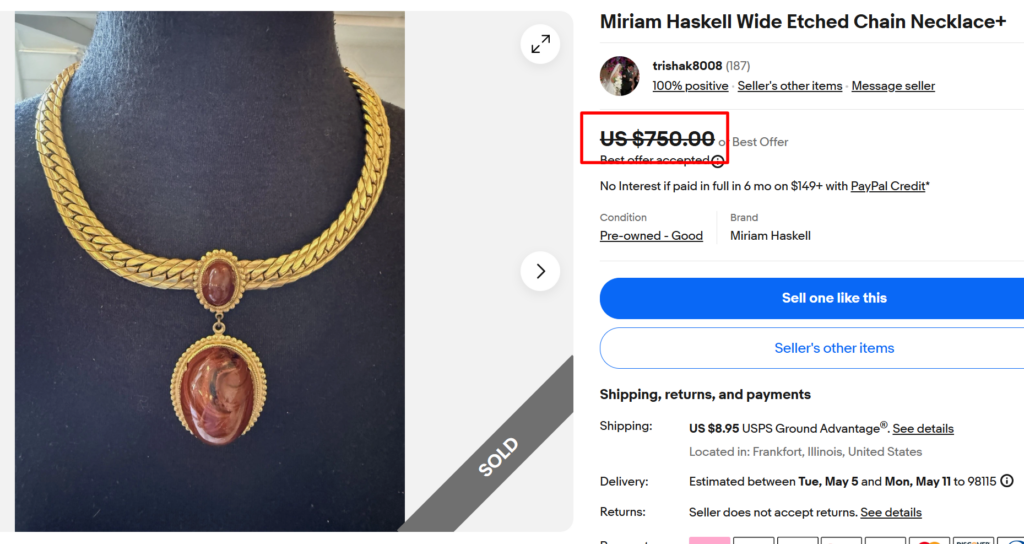
Wide Etched Chain Necklace
Typically sells for $400 – $800
| Average Value | $400 – $800 |
| Production Period | 1960s – 1970s |
| Key Features | Wide etched chain, large cabochon pendant |
| Collector Notes | Check plating wear on the chain. |
This necklace style features a wide, etched gold-tone chain collar with a large glass cabochon pendant drop in a rope-textured bezel. The chain itself has a braided or herringbone pattern with detailed etching work.
The etched metalwork and heavy chain construction are distinctive and harder to replicate than beaded styles. Intact gold plating and original and undamaged pendant stone are the two most crucial value factors for this piece.
7
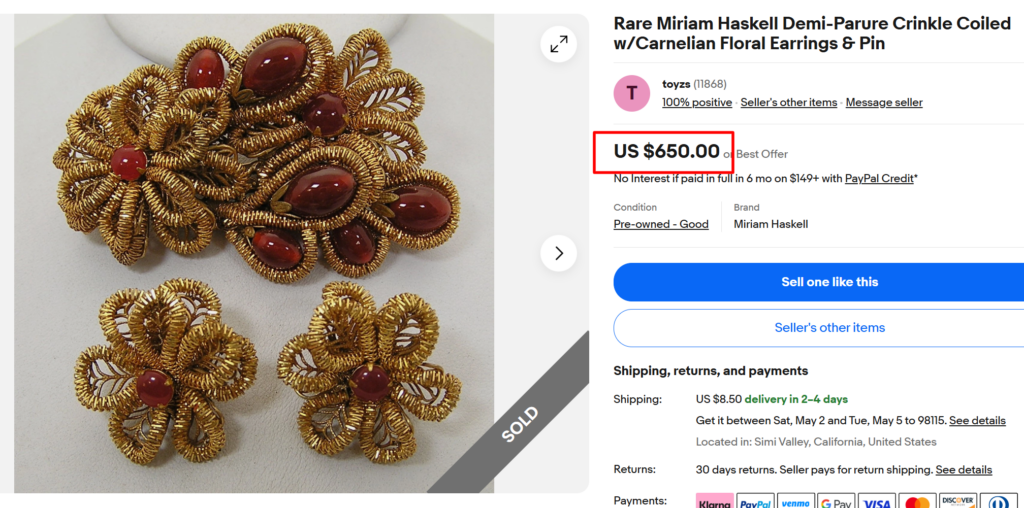
Crinkle Coiled with Carnelian Demi-Parure
Typically sells for $400 – $750
| Average Value | $400 – $750 |
| Production Period | 1950s – 1960s |
| Key Features | Crinkle wire flowers, carnelian cabochons |
| Collector Notes | Check that all cabochons are original. |
This style features coiled, crinkle-textured gold-tone wire formed into floral shapes. Each flower has a carnelian-colored glass cabochon in the middle. They are a special kind of translucent glass that is poured by hand.
The wire coils are individually shaped and assembled by hand, giving each piece a layered, organic look.
The price of these pieces is very dependent on whether all the glass pieces are intact and original, since replacements in the exact color and shape are difficult to source. Demi-parure sets with both earrings and a pin sell for hundreds.
8
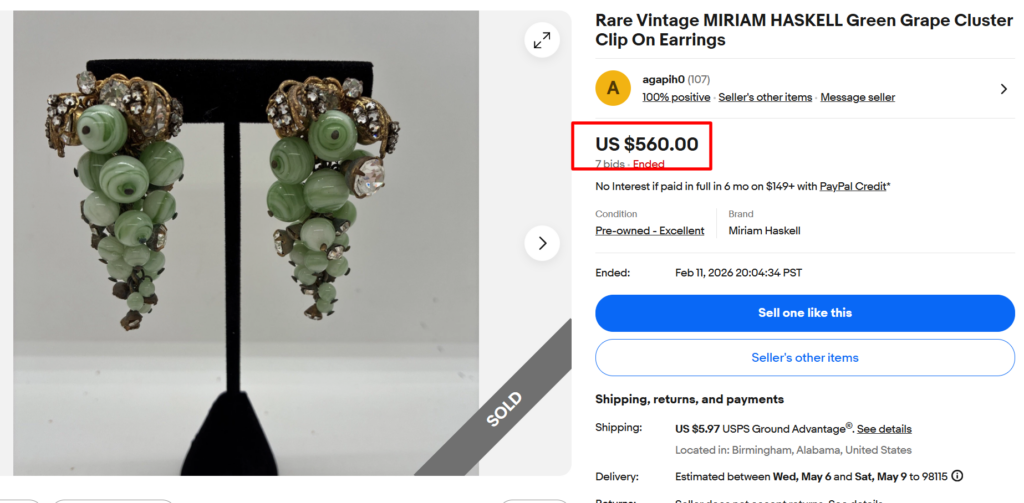
Grape Cluster Earrings
Typically sells for $350 – $600
| Average Value | $350 – $600 |
| Production Period | 1950s – 1960s |
| Key Features | Marbled green beads, grape cluster form |
| Collector Notes | All dangles must be present for value |
The grape and fruit cluster designs are commonly seen in Haskell’s jewelry line. They come in colors and types of beads.
These clip-on earrings have clusters of green glass beads that look like bunches of grapes. They are accented with rhinestones and leaves made of gold-tone filigree.
The beads have a swirled or marbled green pattern rather than a solid color, giving each bead a slightly different appearance. This version is one of the more desirable colorways for fruit cluster pieces.
9
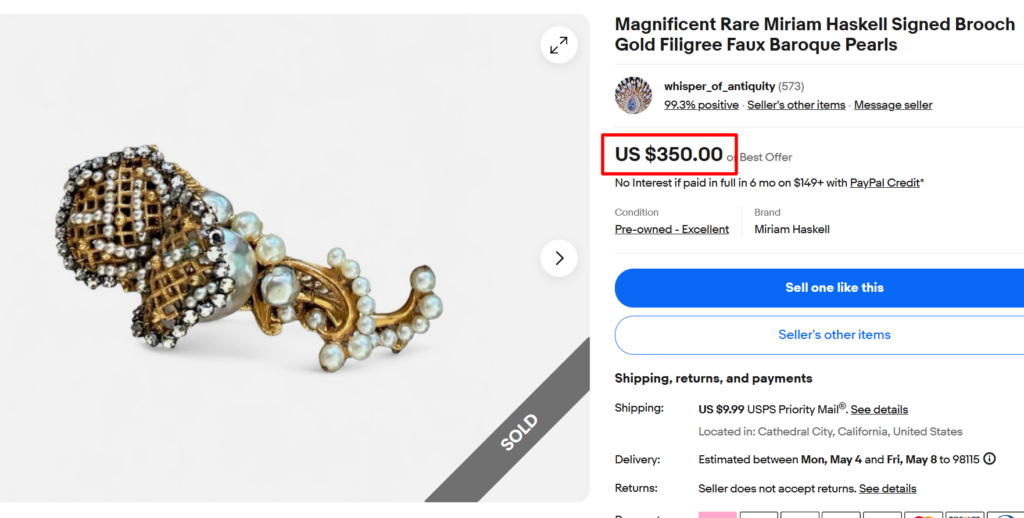
Gold Filigree Faux Pearl Brooch
Typically sells for $200 – $450
| Average Value | $200 – $450 |
| Production Period | 1940s – 1960s |
| Key Features | Filigree dome, hand-wired baroque pearls |
| Collector Notes | Larger pieces with no missing pearls are key |
This brooch features a domed filigree base covered in hand-wired faux baroque pearls and small rhinestones. The filigree work is visible around the edges and forms a lacy framework underneath the pearl clusters.
Some brooches like this one may also have smaller baroque pearls between the bigger pearls.
Haskell’s pearl brooches, like this one, are very common. So the price depends on how big it is, how complicated it is, and what condition it is in. Small and simple versions are common, while larger, more elaborate pieces with intact pearls and full rhinestone detailing can reach the mid-hundreds.
10
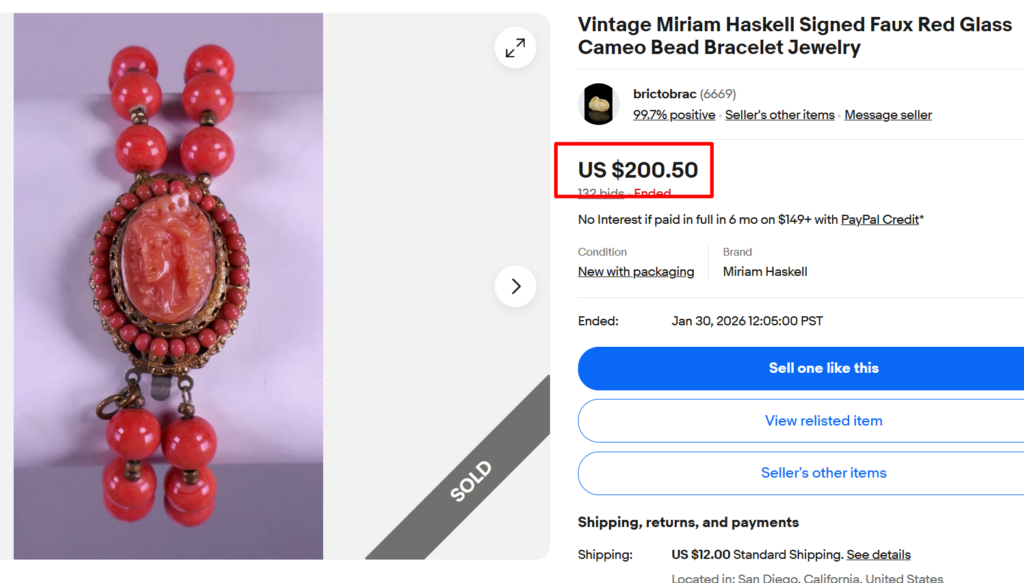
Faux Red Glass Cameo Bead Bracelet
Typically sells for $150 – $300
| Average Value | $150 – $300 |
| Production Period | 1950s – 1960s |
| Key Features | Glass cameo center, red bead clusters |
| Collector Notes | Check cameo for chips or cracks in the glass |
This bracelet combines a carved faux glass cameo centerpiece with clusters of round red glass beads in varying sizes. The cameo is usually set in an ornate gilt bezel, and the surrounding beads are wired onto a filigree backing.
The cameo element is molded glass rather than carved shell, but the detail is fine enough to show a classical profile. There are various colors available for these bracelets, but the red glass version is more desirable and easily identifiable.
How to Tell If Miriam Haskell Jewelry is Valuable?
You saw above that several factors can affect how much a Miriam Haskell jewelry piece is worth. Here are the main things to consider:
- Era of production: Pre-1950 pieces (the Frank Hess era) are the most sought after. Earlier generally means more valuable, with 1930s and 1940s pieces at the top.
- Condition (Pearls & Beads): Missing, chipped, or heavily discolored pearls drop the value significantly. Inconsistent replacement pearls will do the same, since exact matches to the decades-old Japanese glass pearls are nearly impossible to find.
- Design Complexity: Multi-layered pieces, those with complex beadwork, and designs that go beyond two dimensions are valued more than simpler, single-strand designs. Elaborate brooches and parures are especially valuable.
- Signed vs. Unsigned: Signed pieces are easier to sell and generally bring higher prices. But authenticated, unsigned pre-1950 pieces can be extremely valuable due to their age and rarity. They need more expertise to confirm.
- Completeness: A full parure (matching necklace, bracelet, earrings, and brooch) is worth significantly more than the sum of its parts. Even a demi-parure (two or three matching pieces) carries a premium over single items.
Note: This article is intended for informational, educational, and entertainment purposes only. Some images are illustrative and may not represent actual brands, products, or related entities. All trademarks, product names, brand logos, packaging, and other intellectual property referenced remain the exclusive property of their respective owners. Any brand mentions or references are provided solely for descriptive and educational context and do not imply any formal or commercial association.