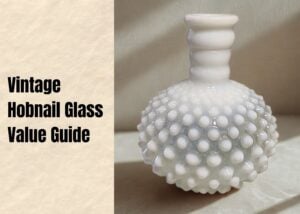
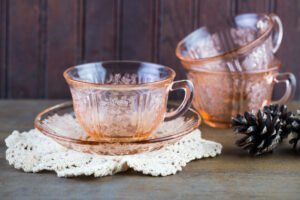
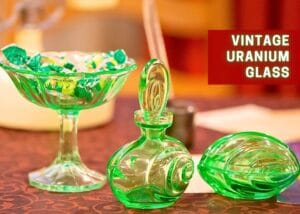
Just grab any old glass bowl featuring a white-colored edge fading into a blue or cranberry body, and chances are you’ve got yourself opalescent glass.
Generally, these pieces sell at affordable prices. But a combination of the right manufacturer, color, and design might boost their value to several hundred dollars, or even thousands. But it all starts with knowing what you have.
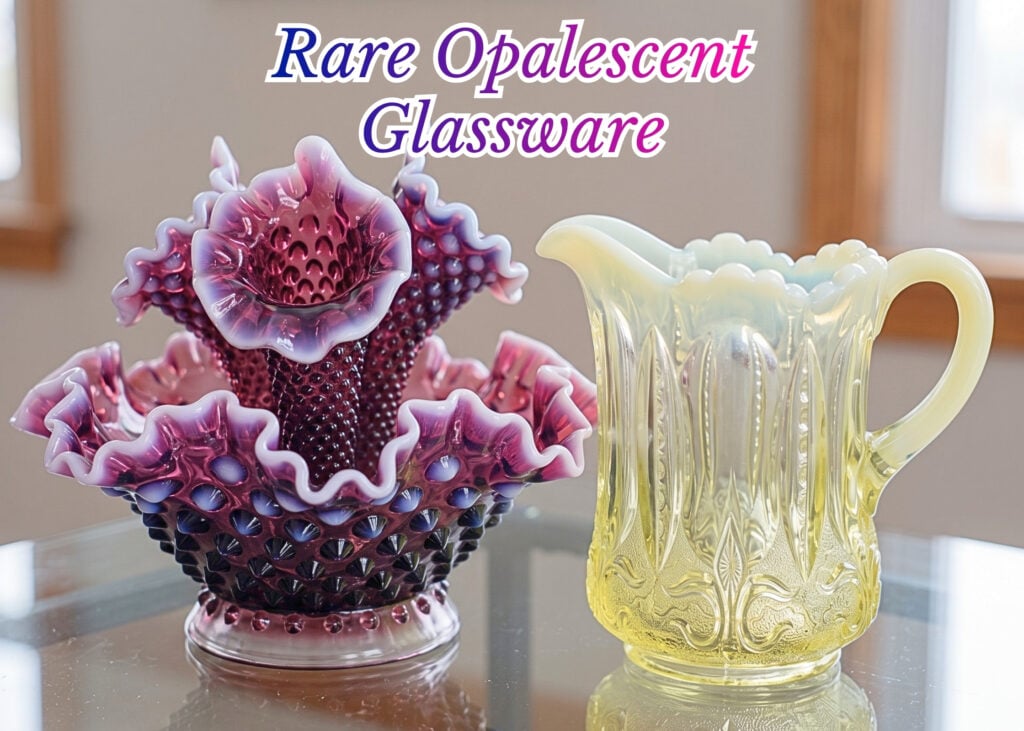
In this guide, you’ll learn to identify genuine old opalescent glass, discover antiques that are worth money today, and learn what decides their value.
What Is Opalescent Glass?
Opalescent glass refers to transparent glass with some whitish areas around the edges, rims, and raised areas. The makers of opalescent glass used heat-sensitive materials in their batches, which, when subjected to heat, resulted in a white color in selected areas while the rest remained transparent or colored.
The British glassworks made opalescence fashionable in the late 1870s and 1880s. Most American Victorian opalescent glass was produced by Hobbs Brockunier, Northwood, and Jefferson between 1880 and 1915.
René Lalique and other French designers took the opalescent glass trend into the Art Deco period. Fenton and Fostoria revived it later for the mid-century market.
Opalescent vs. Milk Glass, Opaline, and Carnival Glass
These four types of glass are frequently mixed up, so here is how you can distinguish them from each other:
- Opalescent glass: Transparent glass having white color only on the edges or in raised designs.
- Milk glass: Fully opaque and completely white throughout.
- Opaline: Uniformly translucent glass that is always French-made and doesn’t have a white border.
- Carnival glass: Iridescent pressed glass. Carnival glass made of opalescent glass is much more expensive.
How to Spot Antique or Vintage Opalescent Glass
Identifying genuine old opalescent glass doesn’t really need a lot of instruments or time. All you need is a window, an inexpensive UV light, and a close examination of the bottom.
Know the Glass Type
There were two types of opalescent glass, and each one has its own markers:
- Pressed opalescent: The white color/pattern is found on the surface, on rims, hobnails, and raised patterns. Northwood, Jefferson, and Dugan produced their patterns using the pressed process.
- Blown (optic) opalescent: The white color is found inside the glass. Coin Spot, Swirl, Seaweed, and Daisy and Fern are smooth to the touch despite the raised pattern.
You can judge the type by touching the pattern. If it’s smooth, it’s probably a blown opalescent.
Quick Fact: Most of the blown cranberry opalescent is either Victorian or Fenton.
Check Where the White Sits
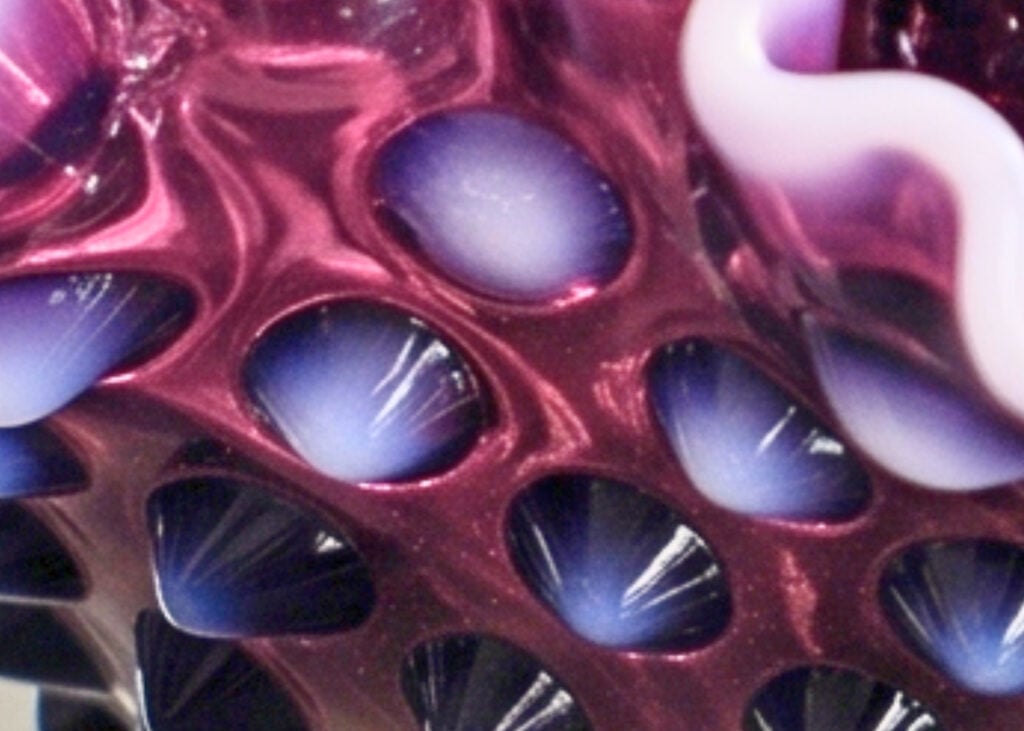
In genuine opalescent glass, the presence of white is limited only to edges, hobnails, ribs, and decorative designs. And the transition from the white area to the colored glass occurs gradually rather than abruptly.
Another common feature is that when put against a window or bright light, the white parts tend to become slightly amber in color.
Also, on older opalescent pieces, the white fades gradually into the color and also changes depending on which side it is. The newer pieces done in factories tend to have solid, white edges that seem almost painted.
Learn the Colors
Opalescent glass wasn’t made in all the colors. White and blue are the most typical ones. Green, canary yellow, and pink are the midrange options, while cranberry, amethyst, and aqua are rare and expensive.
Use a Blacklight (But Mindfully)
Canary opalescent glass, often called vaseline opalescent glass, contains uranium. It glows bright green under UV light, unlike plain yellow glass.
But the glow mostly proves uranium content, not the glass’s age. Fenton, Fostoria, and modern overseas makers all used uranium, so treat it as one clue among several.
Spot the Makers, Patterns and Aging Signs
Early opalescent glass is rarely marked, and so it is best identified through its patterns, like Hobnail, Coin Dot, Swirl, or Daisy & Fern, among others.
Some makers marked their pieces during certain periods, and it usually gives an estimated manufacturing date.
- Northwood: An N within a circle, often underlined. The opalescent patterns of Northwood produced in the 1890s (Alaska and Klondyke) were not marked. Most fake marks will lack the circle and/or the underline on the N.
- Fenton: There is no logo until 1970. Then one should see an oval script logo, with 8 added in the 1980s and 9 in the 1990s.
- Davidson: A British registration mark gives the date of design, but not manufacture.
Evidence of aging is found in the form of very fine scratching at the bottom of the glassware caused by decades of handling. Blown glass has a pontil mark, which is evidence that the glassblower’s blowpipe was removed by polishing.
What Makes Opalescent Glass Valuable?
Old opalescent glass generally resells for $20 to $100. Most common pieces include Fenton hobnail bowls and typical Northwood blue glassware. What distinguishes the more expensive pieces is:
Base Color (Depends on Glass Type)
While color is important, its hierarchy changes based on the glass type:
- Blown Victorian glass: Cranberry ranks first, followed by blue, while white ranks last.
- Pressed glass designs: Canary and green glass are more valuable than blue and white glassware.
- Carnival glass: Aquamarine opalescent and ice blue opalescent fetch the highest premiums. Marigold is the most common of all.
Opalescent edge/pattern build matters, too. A heavy, well-defined opalescent edge brings more than a faint one on the same pattern.
Form and Completeness
Certain shapes are generally worth more than others, especially in full sets. Pitchers along with six matching tumblers in total sell much better than individual tumblers, which are cheap.
Butter dishes covered along with sugar bowls become worthless if they are not accompanied by their original lids. Likewise, cruets need their stoppers and epergnes need all of their horns to be worth premiums.
Condition, Glass-Style
An opalescent glass piece in pristine, undamaged condition will always be worth more than worn ones. Tiny rim nicks, known as flea bites, slightly reduce the value, but chips and cracks reduce it severely.
Also, make sure there aren’t any unseen repairs since dealers will often grind down any damage to the rim or hobnail ends. A smooth rim or hobnail tip usually means grinding.
Most Valuable Opalescent Glass Pieces & Patterns from Top Makers
1
René Lalique Opalescent Vases
Typically sells for $800 to $30,000+
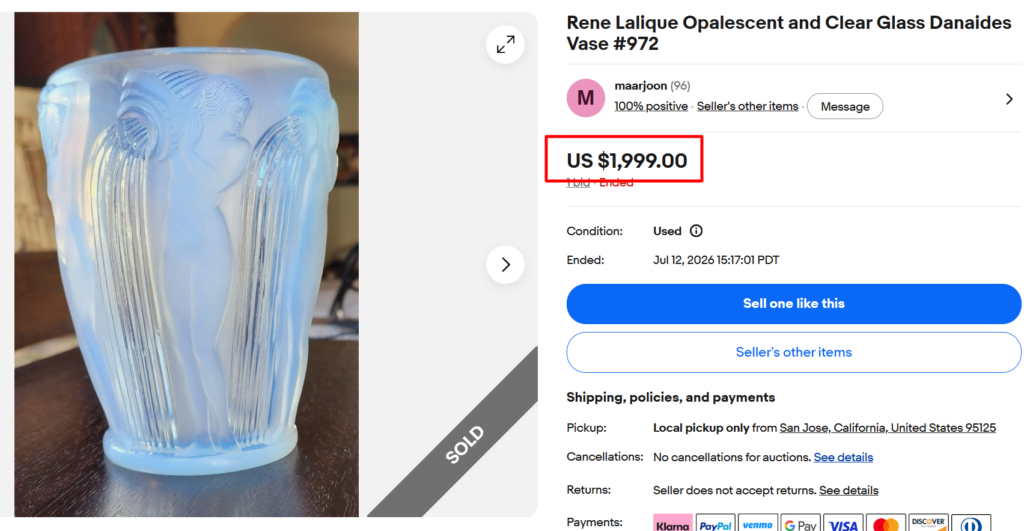
| Manufacturing Years | 1920s to 1945 |
| Key Features | Molded relief, “R. Lalique” signature |
| Collectors’ Notes | Post-1945 pieces sell for less |
A René Lalique opalescent vase can be worth more than an entire display of Victorian glass. Lalique designed the pieces in a way that the white would appear in the heavy relief sections of fishes, birds, and nude forms.
Nude figure opalescent vases are the most collectible pieces today, selling for a few thousand dollars.
Note: Always look for the base signature first. Anything that has “R. Lalique” is from before 1945, and the “R.” is highly valuable.
2
Fenton Cranberry and Blue Opalescent Hobnail
Typically sells for $30 to $400 ($500 to $2,000 for GWTW lamps)
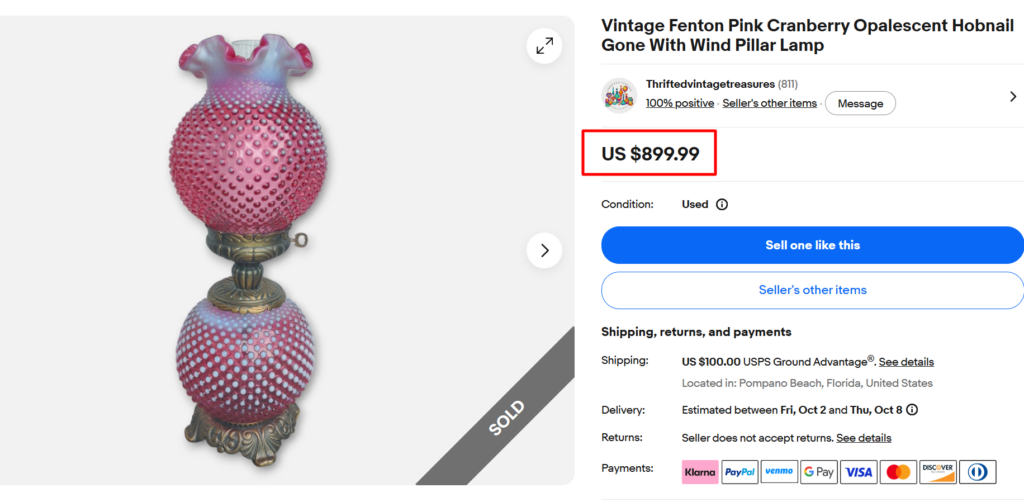
| Manufacturing Years | 1939 through the 1960s |
| Key Features | Molded hobnails, crimped rims |
| Collectors’ Notes | Unmarked pieces usually pre-1970 |
Fenton started to produce hobnail ware around 1939, and it was an immediate hit. That is why ordinary bowls and vases can be found anywhere at low prices.
The most valuable pieces are cranberry and blue opalescent wares of the 1940s and 1950s, like epergnes, fairy lamps, and Gone With the Wind oil lamps with crimped rims.
3
Fenton Topaz and Plum Opalescent
Typically sells for $40 to $1,000
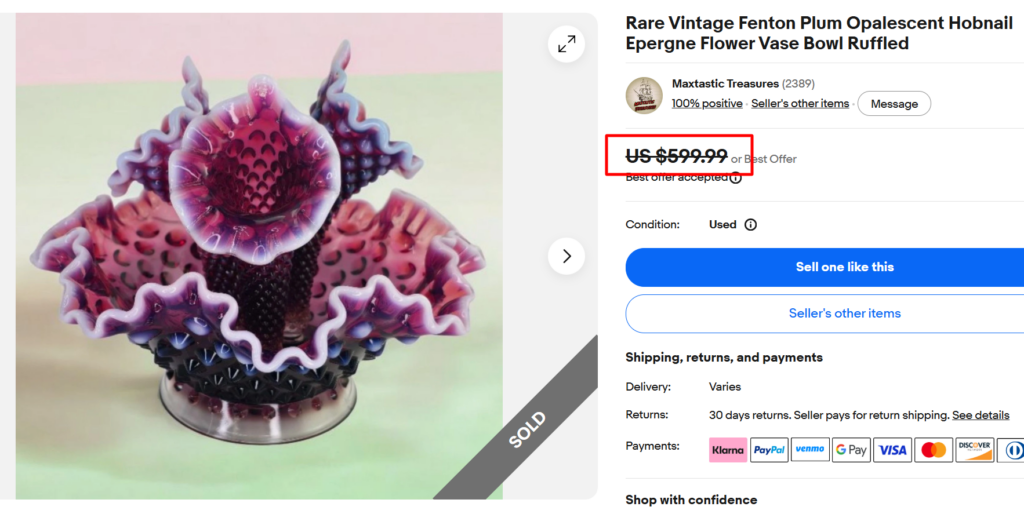
| Manufacturing Years | 1940s to 1990s |
| Key Features | Rare colors, white edges |
| Collectors’ Notes | Topaz glows under UV |
Topaz Opalescent is Fenton’s term for Vaseline opalescent, which means that when exposed to black light, it produces a glow in green color, while Plum Opalescent is the purple-colored opalescent with the white edges.
These two types of glass were manufactured in limited batches and then re-manufactured later on. So, early topaz and plum hobnails without the company logo attract most buyers.
4
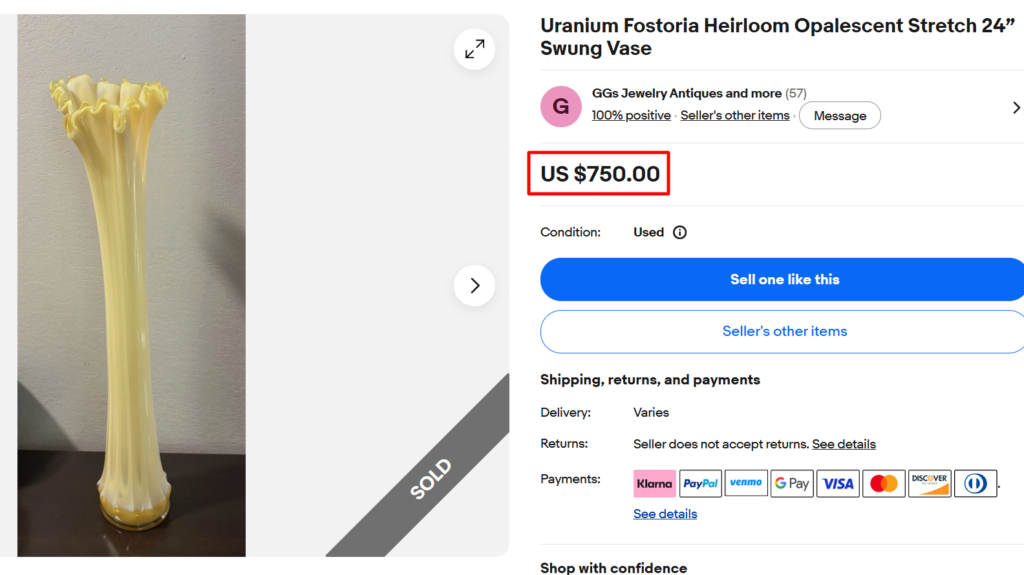
Fostoria Heirloom Opalescent
Typically sells for $20 to $900+ (large, rare pieces)
| Estimated Value | |
| Manufacturing Years | 1959 to 1970 |
| Key Features | Hand-pulled free-form shapes |
| Collectors’ Notes | Yellow pieces react to UV |
Fostoria marketed Heirloom as decorative giftware from 1959 to 1970. These glass pieces were hand-pulled by craftsmen to make the glass take free-form designs such as handkerchief bowls, epergnes, and leaf dishes.
The colors included white, green, pink, yellow, and persimmon orange.
Yellow uranium is the most popular color, and yellow Heirloom opalescent bowls and swung vases can fetch a few hundred dollars.
5
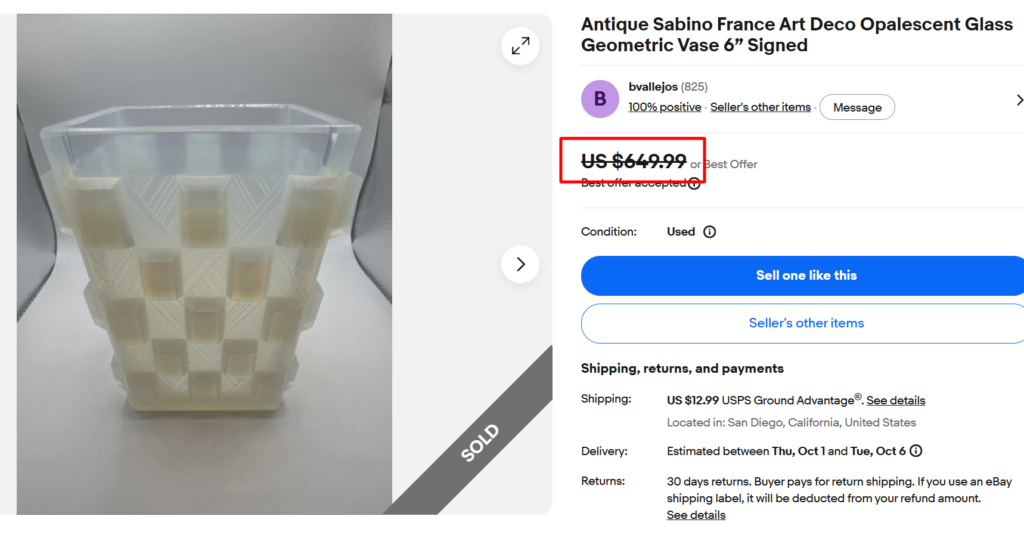
Sabino Opalescent Art Deco Vases
Typically sells for $150 to $4,000+
| Manufacturing Years | 1920s to 1970s |
| Key Features | Bluish opalescence, deep relief |
| Collectors’ Notes | Pre-war vases worth most |
A Paris-based glassmaker, Marius-Ernest Sabino, made opalescent glass in a bluish hue with relief designs of dancers, fish, birds, and blocks. Early Art Deco vases marked “Sabino Paris” fetch the highest price.
Since Sabino made many moldings again in the 1960s and 1970s, figurines can be easily found and are also quite affordable.
6
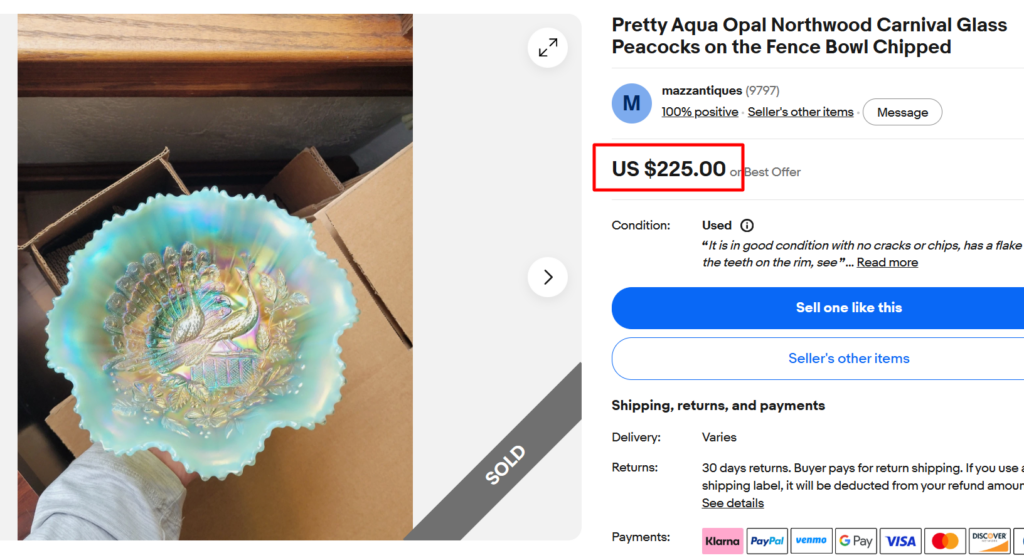
Northwood Peacocks on the Fence in Aqua Opalescent
Typically sells for $200 to $2,000+
| Manufacturing Years | Early 1910s |
| Key Features | Peacocks, iridescent opalescent edge |
| Collectors’ Notes | Plates rarer than bowls |
This is what carnival glass collectors always hope to find at an estate auction. Northwood made their Peacocks on a Fence design, featuring peacocks sitting on a fence rail, in bowls and plates in several colors.
The most notable pieces are the aqua opalescent Peacocks on a Fence, which combine a metallic sheen with a milk white rim. These have been known to fetch over $20,000 at auctions.
7
Davidson Pearline Glass Creamer
Typically sells for $40 to $300; $400-$600+ (sets)
| Manufacturing Years | 1889 to about 1914 |
| Key Features | Registration numbers, white edges |
| Collectors’ Notes | Primrose reacts to UV |
George Davidson and Company of Gateshead, England, introduced Pearline in 1889 in two colors, a lemon yellow called Primrose and a turquoise blue, both with white opalescent edges.
Most pieces carry a British registration number that dates the design. Primrose also contains uranium, which helps separate it from later yellow imitations under UV light.
8
Northwood Alaska and Klondyke Table Pieces
Typically sells for $50 to $500
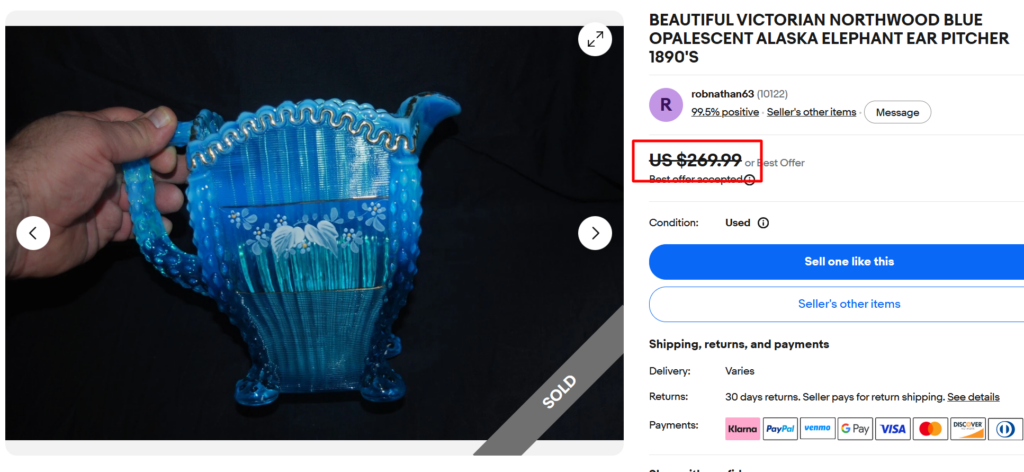
| Manufacturing Years | 1897 to about 1900 |
| Key Features | Pressed, footed, scroll ribs |
| Collectors’ Notes | Complete table sets are scarce |
Harry Northwood released Alaska and Klondyke around 1897 and 1898, just before he began marking his glass. Alaska has squared bodies on small glass feet, while Klondyke, also called Fluted Scrolls, uses curving scroll ribs.
Blue is the most common color in both, so canary, green, and complete table sets bring noticeably more.
9
Poinsettia Blue Opalescent Water Pitcher
Typically sells for $100 to $600
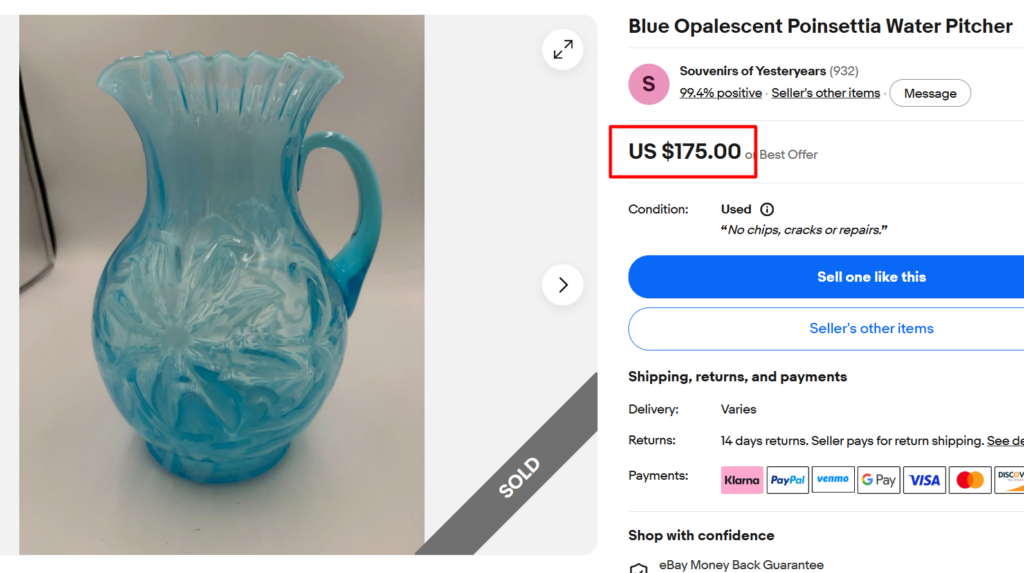
| Manufacturing Years | 1890s to early 1900s |
| Key Features | Blown floral optic pattern |
| Collectors’ Notes | Cranberry is worth more than blue. |
Collectors still debate who made one Poinsettia set, a vaseline opalescent pitcher with an applied reeded handle. The pattern shows large white blossoms against colored glass, and Hobbs made it first before Northwood took it into larger production.
Cranberry water pitchers bring the most today, with blue following close behind.
10
Dugan Peach Opalescent Carnival Glass
Typically sells for $50 to $800
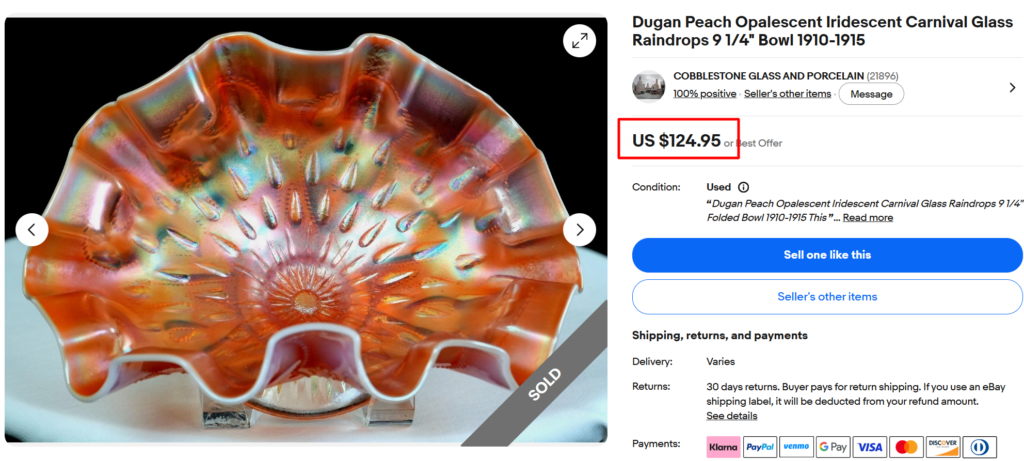
| Manufacturing Years | 1904 to about 1931 |
| Key Features | Marigold over opalescent edge |
| Collectors’ Notes | Plates outsell small bowls |
Most peach opalescent carnival glass you’ll find was made by Dugan Glass of Indiana, Pennsylvania. It combines a marigold iridescent glaze with a white opalescent rim.
Persian Garden, Fanciful, and Wishbone and Spades are among the most loved designs. Form is also an important value factor in this case, as big plates sell much higher prices than little bowls of the same design.
11
Jefferson Glass Opalescent Whimsies
Typically sells for $75 to $400
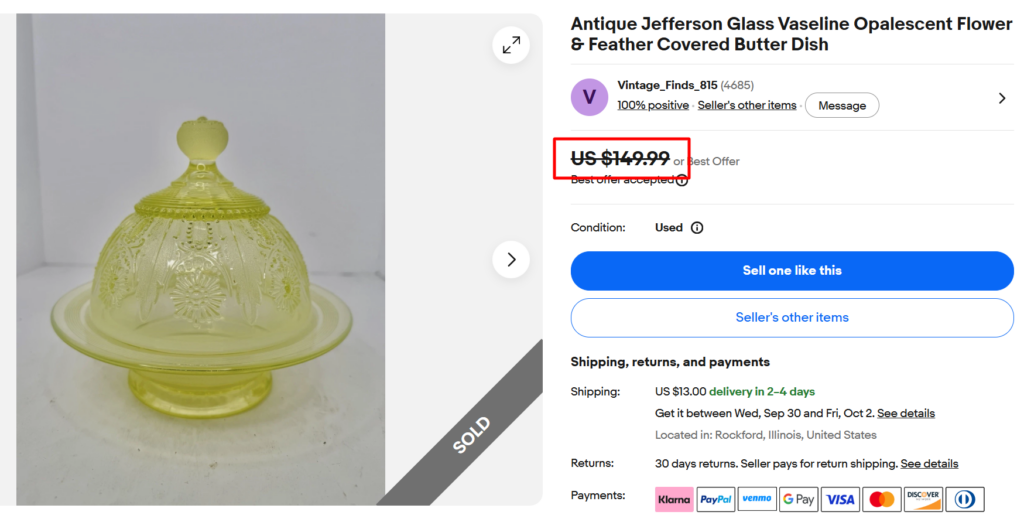
| Manufacturing Years | About 1900 to 1907 |
| Key Features | Hand-reshaped pressed forms |
| Collectors’ Notes | One-of-a-kind shapes win |
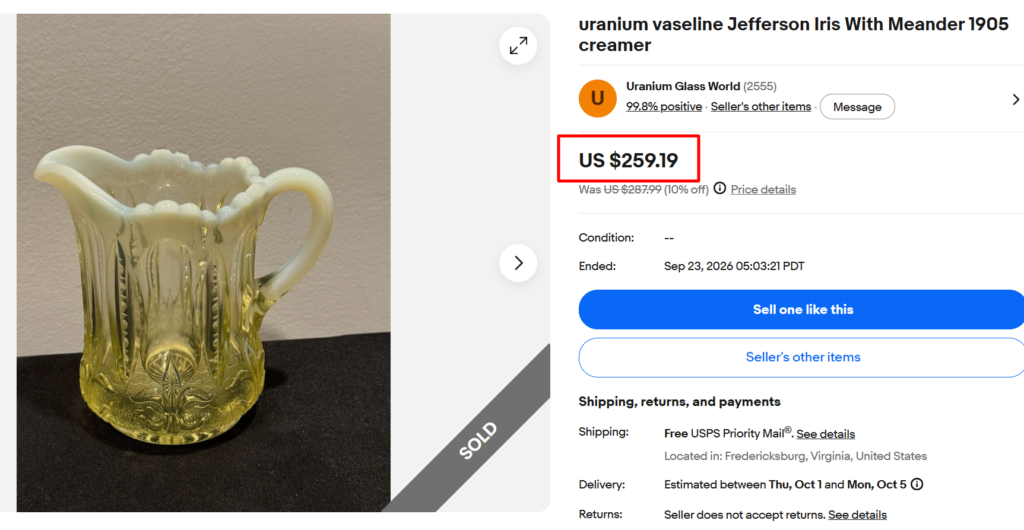
Some of the most valuable Jefferson pieces were never in the company catalog. Between about 1900 and 1907, Jefferson pressed patterns like Swag with Brackets and Iris with Meander in blue, green, canary, and white.
But workers also reshaped standard bowls and vases by hand into odd forms, and these whimsies are close to one-offs.
12
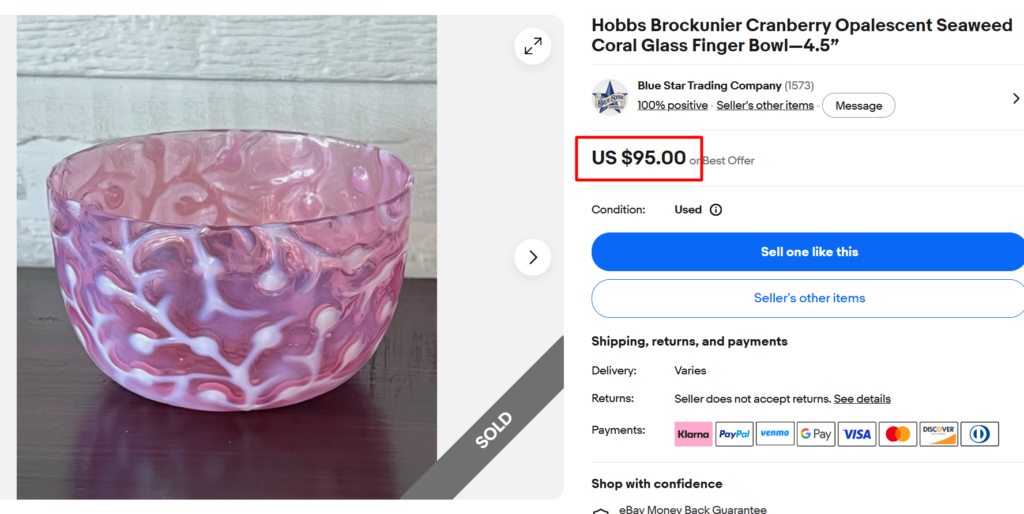
Hobbs Seaweed and Windows Swirl Pieces
Typically sells for $60 to $500
| Manufacturing Years | About 1889 to 1891 |
| Key Features | Optic-blown white patterns |
| Collectors’ Notes | Matching sets bring more |
Hobbs created Seaweed and Windows Swirl using optic glass, in which the white design is embedded within the glass itself. Seaweed features branching coral-like designs, while Windows Swirl incorporates swirling white panels.
The color most collectors want is cranberry, with barber bottles, syrup bottles, and water sets including matching tumblers being the most sought-after.
Note: This article is intended for informational, educational, and entertainment purposes only. Some images are illustrative and may not represent actual brands, products, or related entities. All trademarks, product names, brand logos, packaging, and other intellectual property referenced remain the exclusive property of their respective owners. Any brand mentions or references are provided solely for descriptive and educational context and do not imply any formal or commercial association.