Have you ever spotted a shimmering, fractured-looking pitcher at an estate sale? The cracks run all through the glass, but the surface is smooth, and the tag says five dollars.
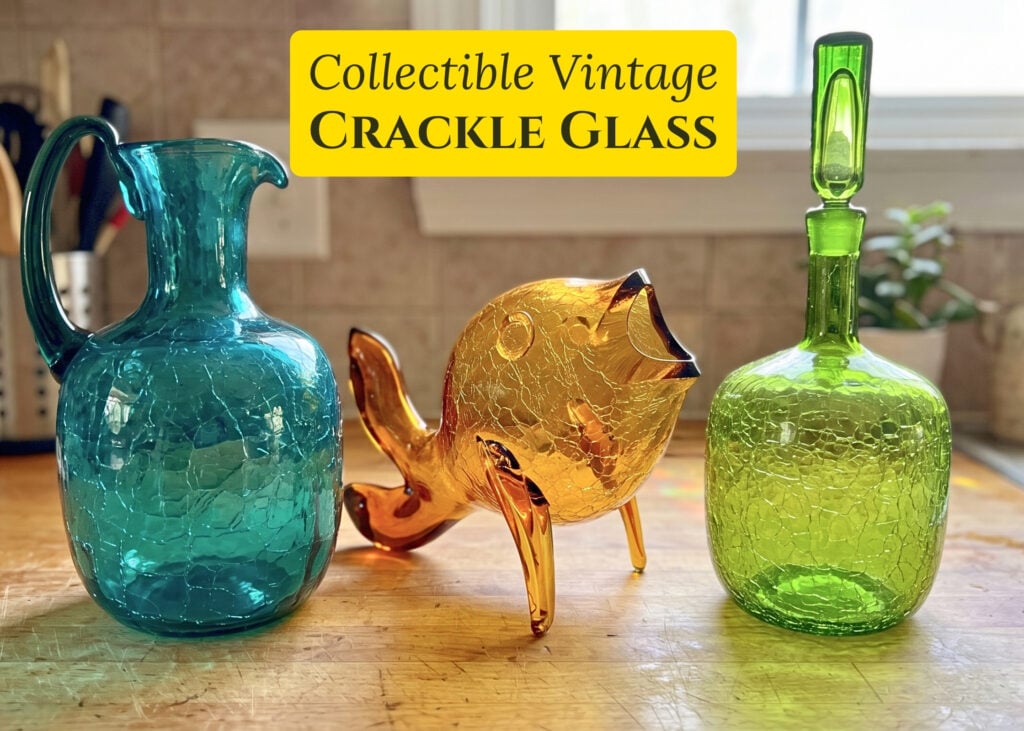
Many people overlook these pieces, thinking they’re broken vintage glassware. That’s why it’s important to know whether the crackle glass is genuine and worth any money. This guide walks you through what crackle glass actually is, how to tell real vintage pieces, and what your piece is really worth.
What Is Crackle Glass?
What is crackle glass? Crackle glass is a type of blown glass that is dipped in cold water when the glass is still hot, then immediately heated up and formed again.
Heating up the glass seals the surface to make it feel smooth, although it looks like it’s cracked. The process was invented in the 16th century in Venice. The Murano glassmakers there referred to it as vetro a ghiaccio or “ice glass.”
It faded, then had a big American revival from the late 1930s through the early 1970s. Five West Virginia companies produced most of the crackle glass you’ll actually run across today: Blenko, Pilgrim, Kanawha, Rainbow, and Bischoff.
That mid-century American run is what most collectors mean by “vintage crackle glass.” It’s also where the real value lives.
How to Identify Authentic Vintage Crackle Glass?
Most crackle glass was never marked. That’s why it’s hard to tell the genuine pieces. Only about one in ten pieces still carries its original foil label, so you have to rely on the piece itself to tell whether it’s real or not.
The Feel Test
Run your fingers along the outside of the piece. Genuine vintage crackle glass feels completely smooth, even though the fractures look like they should catch your nail.
This is because the cracks appear to be under the glass surface. The cheap reproduction in modern days appears to be gritty, etched, or rough, as the effect of crackle is done by surface treatment or acid etch.
The Pontil Mark
Flip the piece over and look at the base. You’re looking for a pontil mark, which is the rough or ground circular spot where the glass was broken off the blowpipe.
A visible pontil almost always means the piece was hand-blown. On newer reproductions from China and Taiwan, the base is usually machine-smooth with no pontil at all.
Applied Handles and Ruffled Rims
Look closely at any handle. On vintage pieces, the handle was added by hand after the body was formed, so you’ll see a slightly uneven join where it attaches to the body, and often a small curl or “tail” at the bottom. Modern factory handles look seamless and uniform.
Ruffled rims on real vintage pitchers are uneven because they were shaped by hand. Repro ruffles are identical all the way around.
Color and Weight
Vintage colors have depth that reproductions rarely match. Watch for these in particular:
- Amberina: a struck color that shifts from ruby red at the top to amber-yellow at the bottom. Fake amberina is usually painted or coated.
- Tangerine: a vivid red-orange most associated with Blenko in the 1950s and 60s.
- Cranberry: a true deep pink-red that Pilgrim became famous for in the late 1960s.
- True cobalt and ruby: deep, slightly uneven in tone, not the flat bright colors of modern glass.
Vintage crackle glass also feels heavier than you’d expect. A 10-inch pitcher has real weight to it, with a thicker base. Lightweight pieces that feel almost flimsy are a red flag.
Quick tip: Never soak an old piece with a paper or foil label. Water will dissolve the glue and take the label with it, along with a good chunk of the value.
The Makers That Matter Most
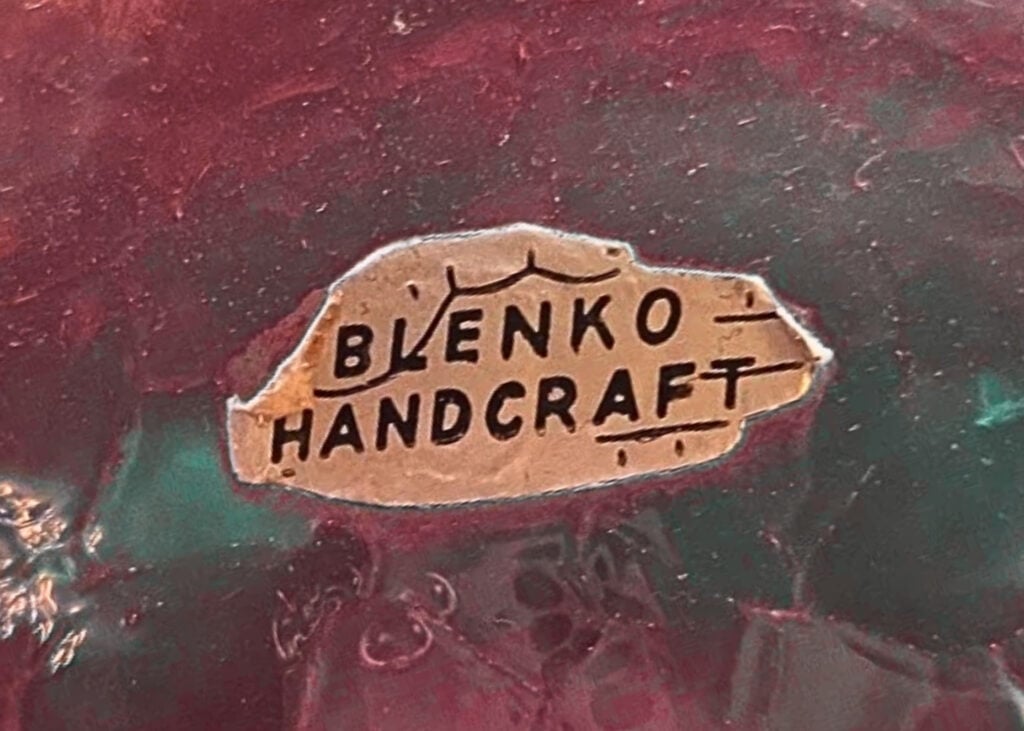
Once you know a piece is hand-blown, the next step is figuring out who made it. Attribution changes the value more than any other single factor. Here are the marks and physical tells to look for on the five main American makers.
- Blenko (Milton, WV): Gold-and-black foil label shaped like a small hand, reading “Blenko Handcraft.” Large scale, bold mid-century forms, and a rough pontil on the base. Signature colors include tangerine, amberina, sea green, cobalt, and Persian blue. Model numbers in old Blenko catalogs help confirm attribution when the label is gone.
- Pilgrim (Ceredo, WV): Small foil label in a shield or oval, sometimes with a “P” stamp on the base. Cleaner, more traditional shapes than Blenko, and generally smaller. Ruby, tangerine, amethyst, smoke, sapphire, amber, green, cranberry.
- Kanawha (Dunbar, WV): The easy one to spot. Kanawha pieces usually sit on a molded foot instead of a pontil, which is the fastest way to tell them from Blenko or Pilgrim. Also known for cased pieces with a white interior under a bright exterior.
- Rainbow Art Glass (Huntington, WV): Small rectangular foil labels. Specialized in miniatures and small ruffled-rim pitchers, especially in cranberry, ruby, and amberina. Often confused with Pilgrim.
- Bischoff (Culloden, WV): Rarely labeled. Bischoff copied a lot of Blenko forms with slight modifications, so many pieces get misattributed. Also produced some genuinely unusual shapes that don’t look like anything else out there.
Beyond the American makers, keep an eye out for early 1900s pieces from Kralik (Bohemia) and Loetz (Austria). Those are also highly collectible and rare.
Valuable Vintage Crackle Glassware Finds Worth Hunting For
These are the specific pieces worth grabbing on sight if the price is right. Prices reflect recent eBay sold listings and auction results, and always assume good condition unless noted.
1. Blenko Peacock Crackle Glass Pitcher
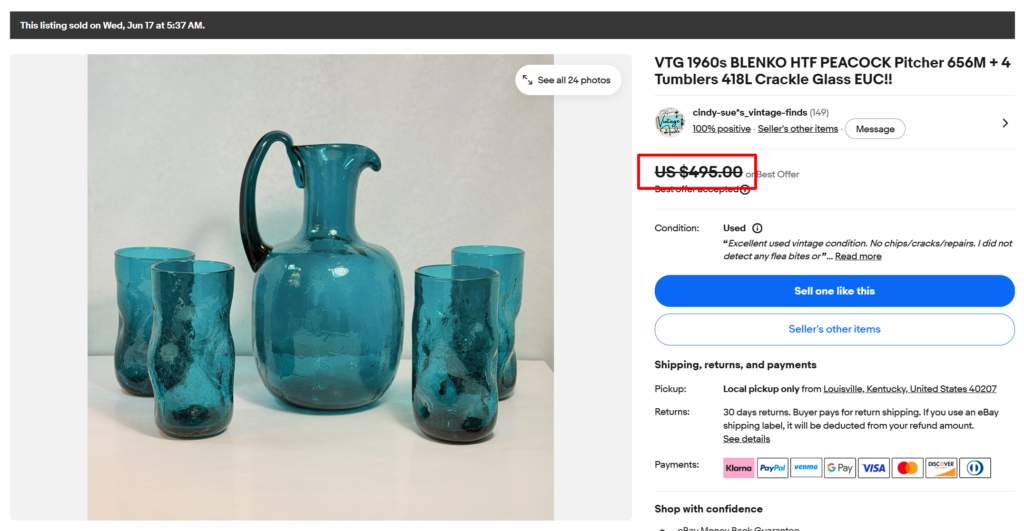
The Peacock color is a deep blue-green that Blenko used sparingly, which makes complete sets genuinely hard to find. The #418L dimpled tumbler was designed by Winslow Anderson and shown in the 1965 catalog.
A five-piece set (pitcher plus four tumblers) in excellent condition can sell for up to $500. Single tumblers in common colors run $15 to $25, but matched sets in Peacock or tangerine are top-tier Blenko.
2. Rainbow Crackle Art Glass Persimmon Fish Sculpture
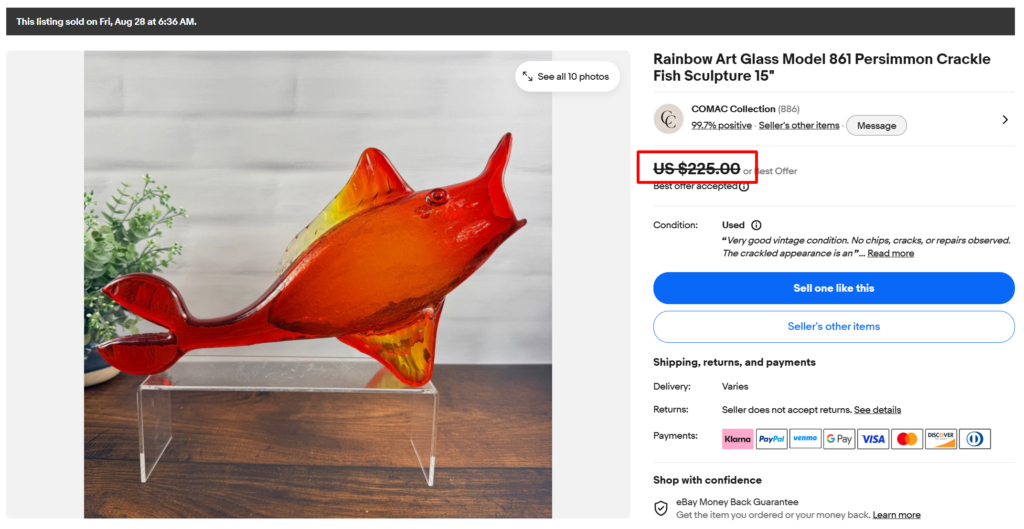
Rainbow’s figural animals in bold persimmon (a red-orange color) are far less common than their amberina pitchers. A 15-inch example in very good condition can easily fetch over $200. Any Rainbow figural in persimmon, tangerine, or ruby is worth grabbing.
3. Kralik Crackle Art Glass Blue Vein Vase
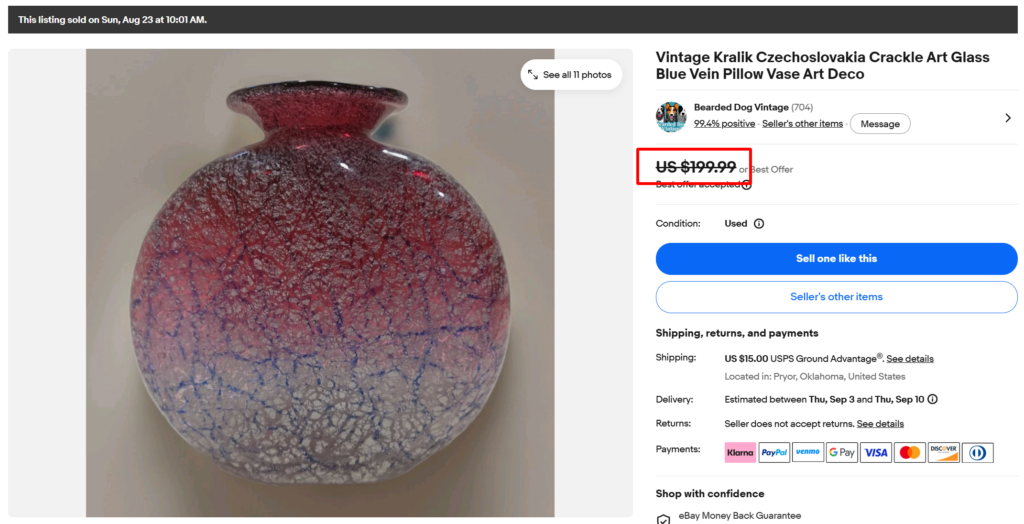
This is a grail find. Kralik pillow vases and pinched forms with red-and-white body work and cobalt blue veining running through the crackle are early 1900s Bohemian Art Deco pieces that rarely turn up at estate sales.
Top blue-vein pillow examples in clean condition clear $400 to $900 at auction today. Any European crackle piece with applied color threading or an iridescent surface is worth researching carefully before you sell.
4. Blenko #920 Crackle Decanter (Tangerine or Amberina)
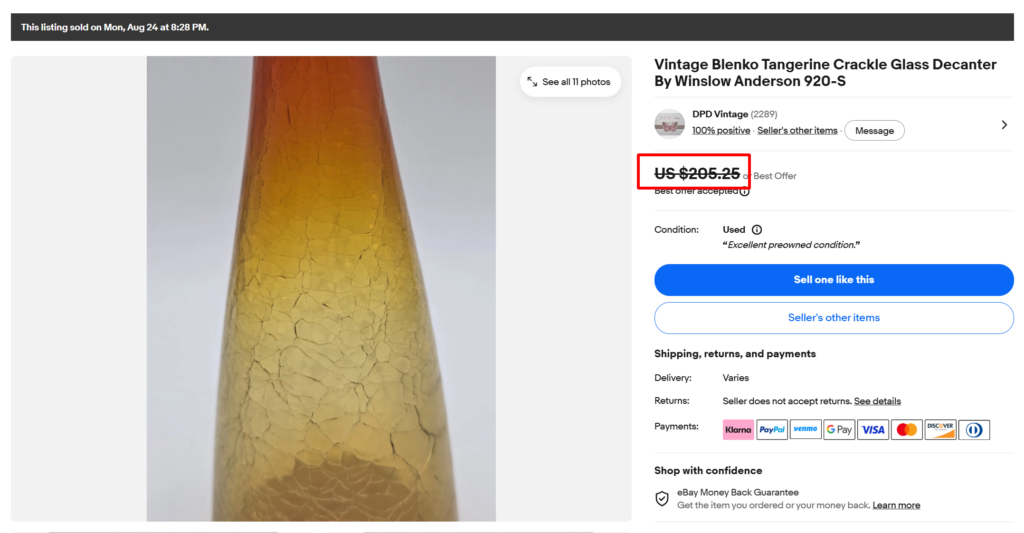
The classic Wayne Husted design from the late 1950s. Bold, tall (usually 15 to 17 inches), with a matching hand-blown stopper. Complete examples with the stopper sell in the $125 to $250 range. Missing stoppers cut the price roughly in half.
5. Pilgrim Emerald Crackle Flame Decanter
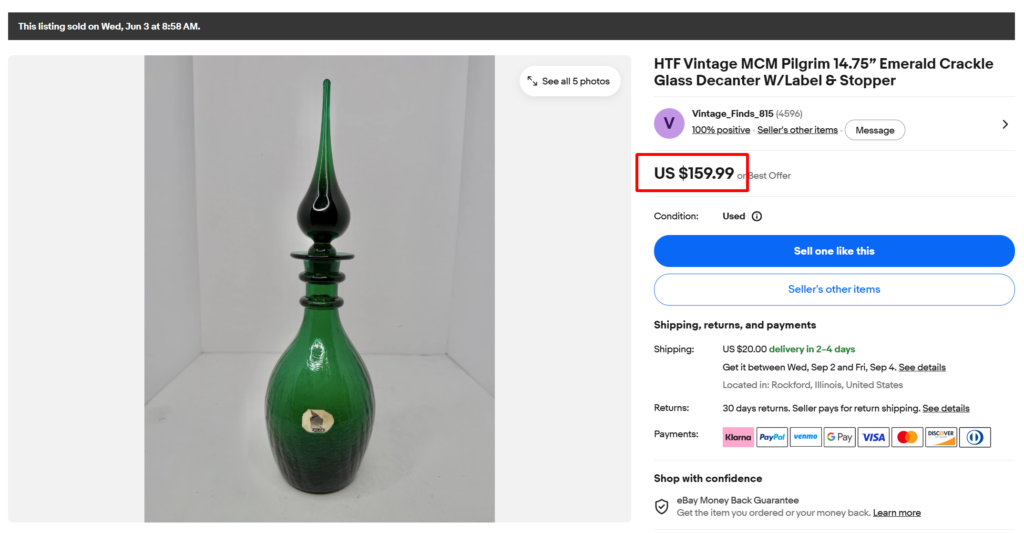
The tall pointed “flame” stopper is a Pilgrim signature and one of the harder Pilgrim forms to find complete. Missing stoppers drop the same decanter to $50 or less. Complete crackle decanter with its original foil label and stopper are worth collecting.
6. Bischoff Red Crackle Glass Vase
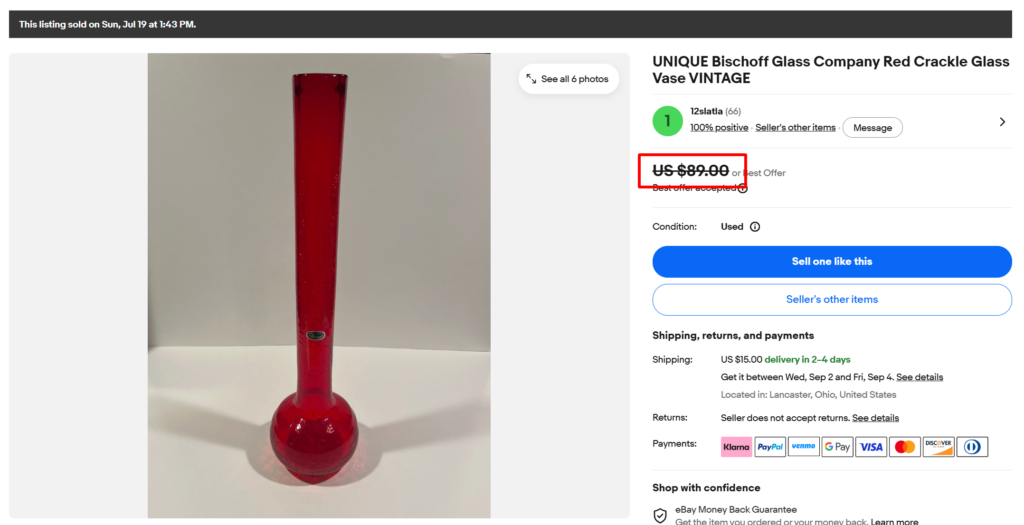
Bischoff’s weirder shapes, such as elongated necks, twisted bodies, and oversized stoppers, are the ones worth chasing. Attributed pieces with original labels in strong colors sell from $80 to $200, though confirming attribution is often the hard part.
7. Blenko #636 Crackle “Genie Bottle”
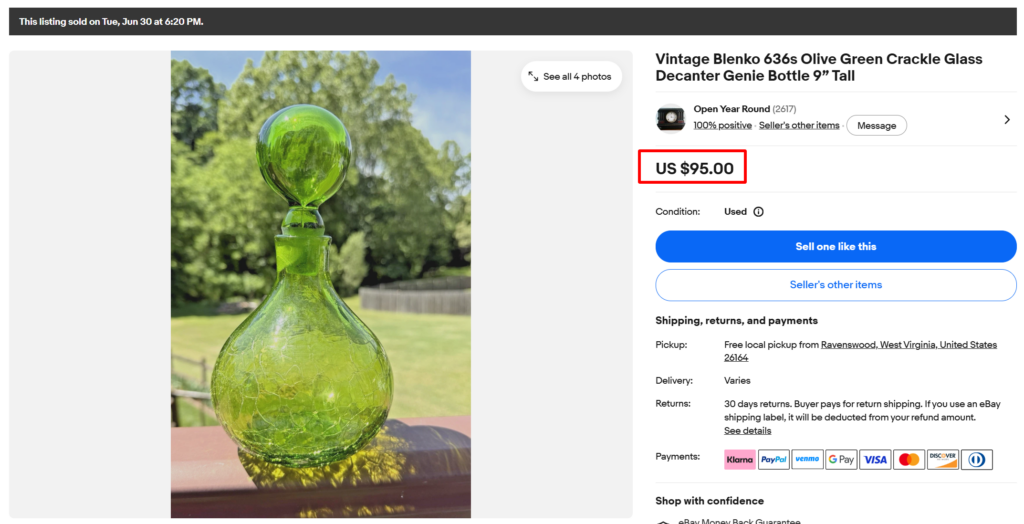
The Genie Bottles are smaller than the floor decanters, standing about 8 to 9 inches, with a round body and a stopper with a big, bulbous knob. The shape is among the most iconic of Blenko.
Complete crackle Genie bottles with original stoppers usually go for $80 to $140; an original foil label can further up the overall worth.
8. Kanawha Art Crackle Glass Vase
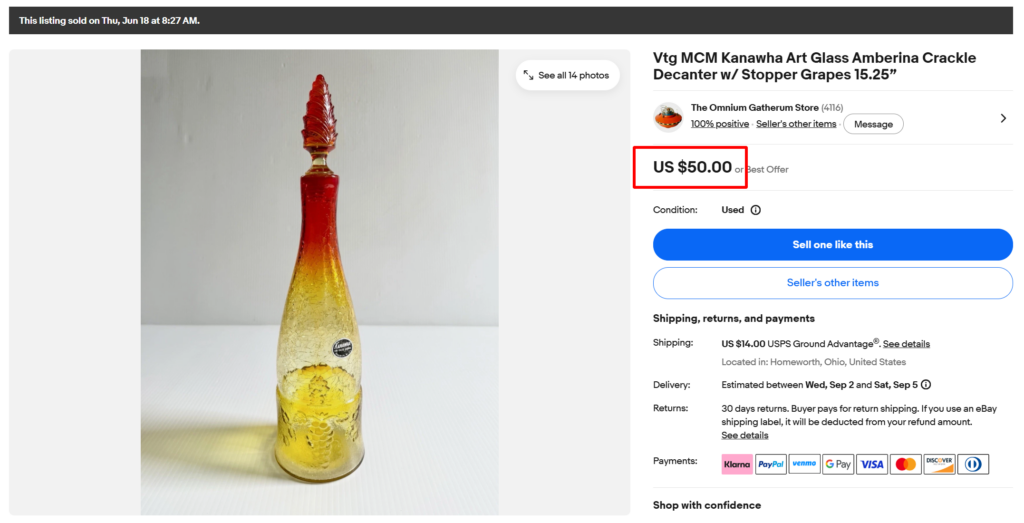
Tall, stretched, elegant, and unmistakably 1960s. The 15 to 20 inch vases and decanters in amberina or ruby are the ones to collect, typically selling in the $60 to $150 range. Rare colors, original labels, and decanter stoppers are crucial value factors here.
What Determines the Value of Old Crackle Glass?
Vintage crackle glassware is mostly cheaper than expected. An unlabeled green or amber Pilgrim vase sells for about $15-$35, while a Kanawha bowl sells for approximately $20-$40. Nonetheless, there are pieces that sell for up to $500, depending on certain factors:
- Attribution & Labels: A confirmed Blenko or Pilgrim piece with its original foil label sells for two to five times what the same piece brings unmarked.
- Color Rarity: Tangerine, amberina, cranberry, and ruby beat amber and green almost every time.
- Form & Completeness: Decanters with their original stoppers are worth two to three times the same decanter with the stopper missing. Pitchers with intact applied handles beat plain vases. Unusual forms like fish, apples, or Blenko’s genie bottles bring the strongest prices.
- Size: Blenko floor decanters over two feet tall regularly clear $300 to $500 and up.
- Condition: A single chip on the rim or a hairline crack near the handle drops value by 40 to 70 percent.
- Designer Attribution: For Blenko in particular, pieces designed by Wayne Husted, Winslow Anderson, or Joel Myers command a premium once documented in an old catalog.
Caring for Crackle Glass
The internal stress is higher in crackle glass due to the presence of internal cracks, so you must take care of that.
Wash by hand using lukewarm water and mild soap. Do not place any item in the dishwasher and never fill a cold item with hot liquids. The sudden temperature change can turn old surface fractures into fresh cracks.
Keep colored pieces out of direct sunlight too. Some vintage colors, especially amethyst and true cranberry, can shift or fade over years of UV exposure.
Note: This article is intended for informational, educational, and entertainment purposes only. Some images are illustrative and may not represent actual brands, products, or related entities. All trademarks, product names, brand logos, packaging, and other intellectual property referenced remain the exclusive property of their respective owners. Any brand mentions or references are provided solely for descriptive and educational context and do not imply any formal or commercial association.