Antiques Know How Research
Etched Glassware Value
Our detailed review of several eBay sales at Antiques Know How reveals that vintage etched glassware values from $5 for common stemware up to $850 for large sets or rare pieces. Some rare etched glass patterns include Fostoria June ($50–$200), Cambridge Rose Point ($100–$700), and Anchor Hocking’s Ballerina ($10-$200). You can spot genuine pieces by etching depth, maker’s marks, glass weight, and patterns.
Antiques Know How
Even a simple drink feels special when you pour it into old, beautiful, etched glassware. And when you’re not using them, they’re just as lovely on display.
But this is where it gets interesting: certain etched patterns from iconic glassmakers aren’t just decorative, they hold real collector value, and I’m talking hundreds of dollars!
So, let’s take a closer look at some valuable etched glassware pieces and learn how to tell which are authentic and collectible, and which are common!
What Is Etched Glass?
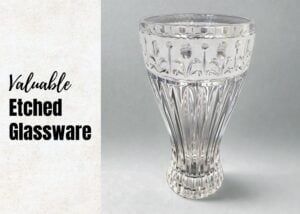
Etched glass refers to glass that’s been decorated by creating a design on its surface. This could be done in either of these two ways, or a combination of both:
- Acid Etching: a chemical process to frost or lightly “bite” the surface, producing soft, satin-like patterns.
- Wheel Etching: a small abrasive wheel that cuts the design directly into the glass, giving sharper, more detailed lines.
It’s different from cut glass, which has those deep, faceted, sparkling cuts; engraved glass, which is usually hand-carved with fine lines; and pressed glass, where the design is molded into the glass during the making rather than afterwards.
Etched glass was especially popular in the late 19th and early 20th centuries for its affordable elegance. Today, certain patterns from big makers are super collectible, valued for their art, condition, and timeless appeal.
Most Valuable Etched Glassware Patterns from Notable Makers!
Here’s a look at some of the most loved etched patterns out there:
1. Fostoria’s June Pattern
If you love classic American crystal, Fostoria’s “June” pattern is a gem. Those ribbon garlands with delicate floral sprays and flowing vines made it a favorite for bridal registries, wedding gifts, and anniversaries from the 1930s to the ’50s.
While goblets and small stemware are pretty common, pitchers, bowls, and full sets are collectors’ favorites. Likewise, rare colors like Azure, Dawn pink, and Topaz are more wanted than clear crystal pieces.
| Average Price | $10 to $200 |
| Manufacturing Period | 1928 to the 1950s |
| Status | Discontinued |
| Etching Style | Acid-etched |
| Design Motifs | Bouquet of flowers & vines tied with flowing ribbons |
| Notable Pieces | Candle holders, dishware, vases, etc. |
June Etch Fan Vase
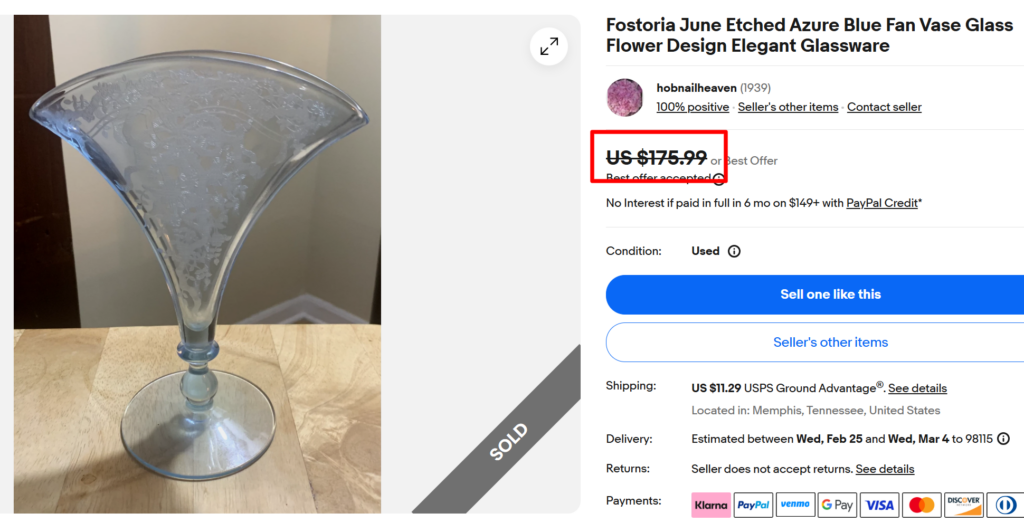
Made in America during the Depression, this rare fan-shaped vase from Fostoria shows off its meticulous artistry with its glossy finish. At 8 inches tall with a 6-inch opening, these pieces are perfect display collectibles in fine condition.
June Etch Glasses
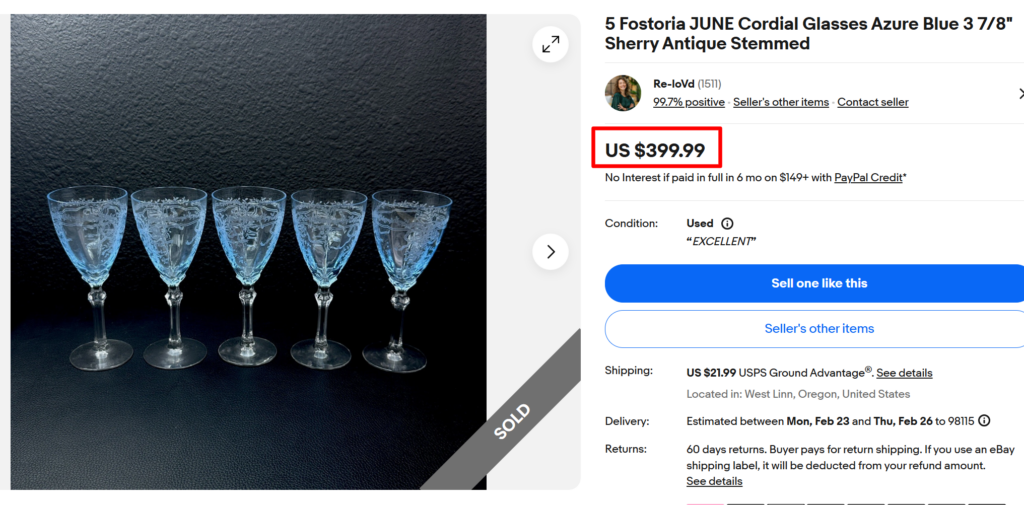
These five June sherry glasses stand 3⅞ inches tall and feature one of Fostoria’s rare colors, Azure Blue, making them super valuable! Even single glasses can fetch $50 to $100, as per condition!
2. Cambridge’s Rose Point Pattern
You can instantly spot “Rose Point” by its etched small roses and leaf sprays. The etch size scales with the piece, varying a bit at times. For instance, ashtrays have just a vine, but larger items have four or five medallions.
Colored blanks, like Amber, Carmen, Crown Tuscan, are rarer, and gold-encrusted pieces are quite sought-after, too.
| Average Price | $5 to $700 |
| Manufacturing Period | 1935 to 1959 |
| Status | Discontinued |
| Etching Style | Acid-etched |
| Design Motifs | Roses, leafy vines, and medallions |
| Notable Pieces | Stemware, dishware, candelabras, vases, etc. |
Rose Point Gold-Encrusted Glasses
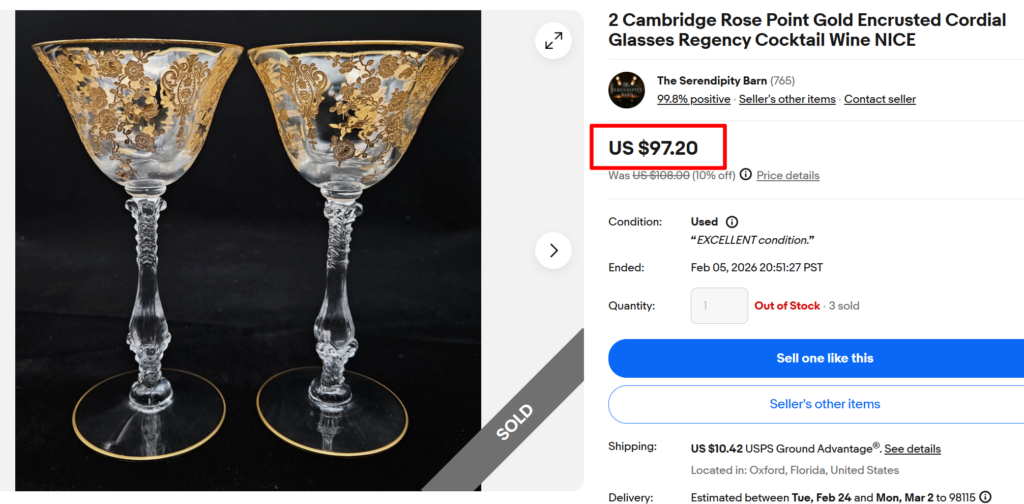
These glasses stand 5 inches tall and 3 inches wide, showing off Rose Point’s classic etched roses, vines, and medallions. The rare gold encrusting boosts the value. Such rare pieces in fine condition are highly desirable!
Rose Point Dinner Plates
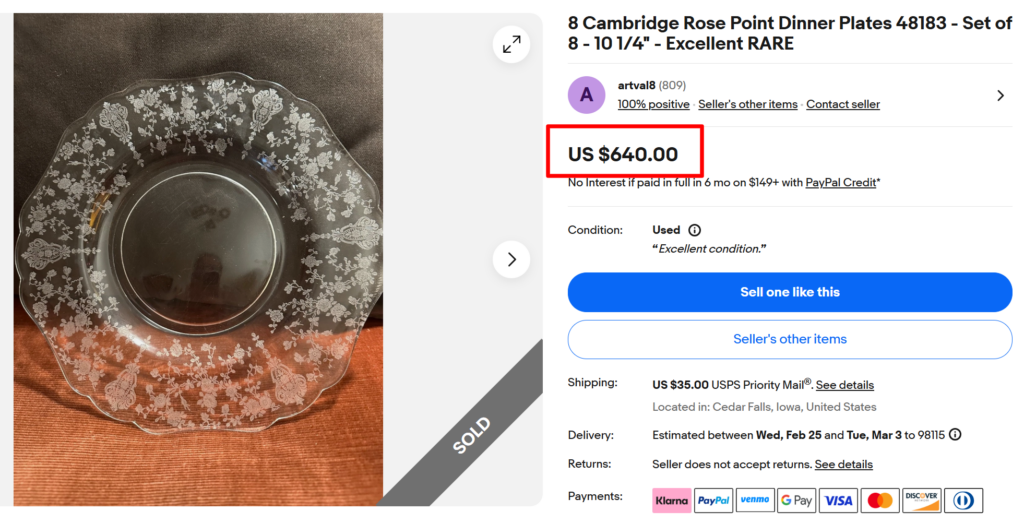
Finding a crack-free Rose Point dinner plate set is rare, which is why this one sold for over $600!
3. Morgantown’s Milan Pattern
Morgantown’s “Milan” etch shows off graceful flower urn sprays, slender leaves, and elegant chain swags in a sweeping, loopy design. Made for Depression-era department store exclusives and special orders, Milan glassware is quite rare.
You’ll spot it easily on stemware like goblets, but larger forms like pitchers, decanters, and full dinner sets hold higher value.
| Average Price | $60 to $150 |
| Manufacturing Period | 1940s to 1950s |
| Status | Discontinued |
| Etching Style | Acid-etched |
| Design Motifs | Flowing floral urns, dotted chain with slender leaves |
| Notable Pieces | Goblets |
Milan Etch Water Goblets
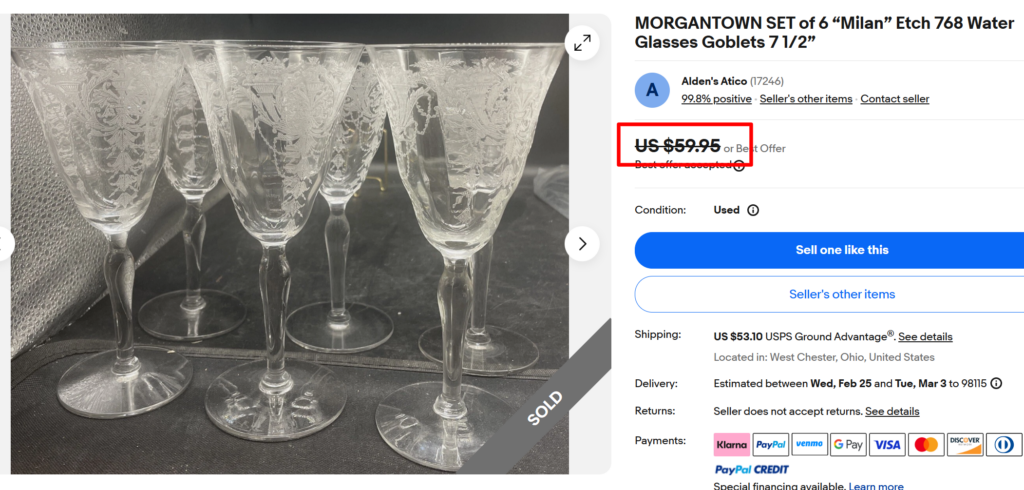
This set of six 8-oz goblets shows off the Milan etch’s signature lace-like florals and leaf sprays. The gently rounded bowl sits on a slender stem, standing about 2½ inches tall. Collectors shell out more for full sets like these in good condition!
4. Heisey Glass Company’s Orchid Pattern
True to its name, this pattern features slender orchid blooms with trailing stems. It’s acid-etched with an airy, floral layout that’s more refined and less crowded than your typical Depression-era etches.
That’s why it fits into both vintage and modern table settings, making it super collectible, especially pitchers, decanters, boxes, and large sets.
| Average Price | $5 to $80 (singles, small sets) $80 to $300 (rare shapes, large sets) |
| Manufacturing Period | 1940 to 1957 |
| Status | Discontinued |
| Etching Style | Acid-etched |
| Design Motifs | Orchid blooms with trailing stems |
| Notable Pieces | Goblets, decanters, candelabras, dishes, cruets, etc. |
Orchid Etch Candelabras
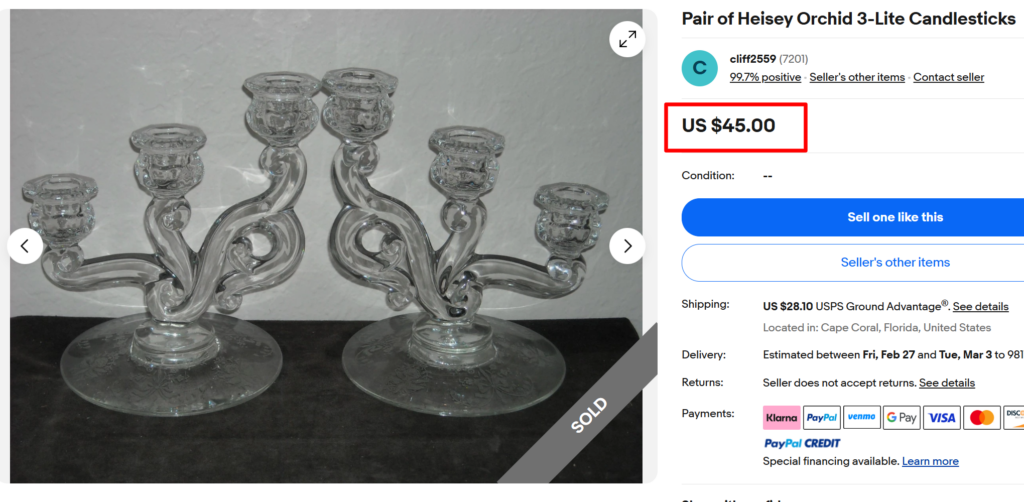
These Heisey Orchid candlesticks stand about 7⅜ inches tall on a 5½-inch base, giving them a graceful look. Collectors usually chase candlesticks more than everyday stemware because they are, well, decorative and overall rare!
Orchid Etch Ice Bucket
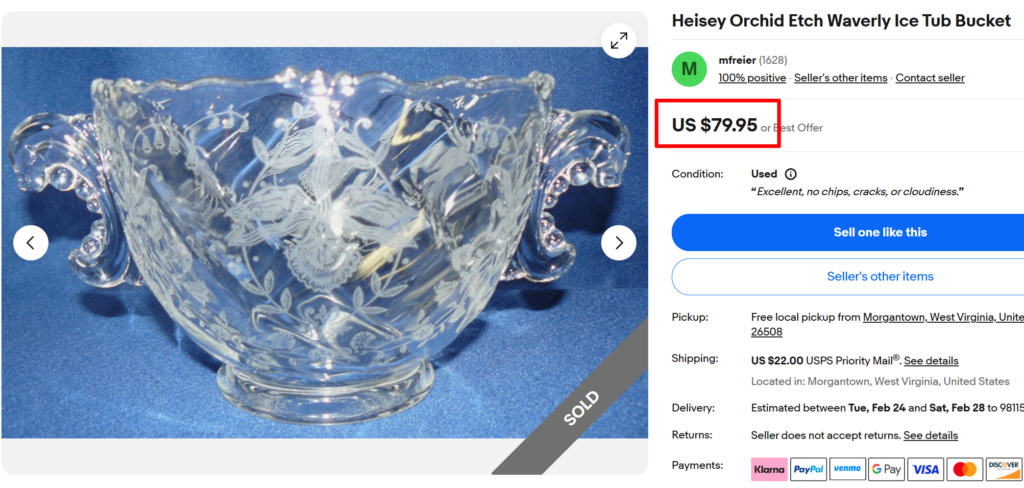
Combining Heisey’s signature Waverley blank with the Orchid etch, this ice bucket’s a true rare find. It’s 4½ inches tall with a broad, rounded body and stands out more than smaller pieces. Rarer than goblets or sherbets, ice tubs are usually valuable.
5. Murano’s Scavo Pattern
Scavo Murano has a unique weathered or frosted surface from acid-etching techniques that makes it look aged and ancient-Roman-like. Collectors love it for its combination of Murano artistry, rich coloration, and the one-of-a-kind texture.
While smaller vases and bowls are fairly common, larger sculptural pieces or signed examples from studios like Barovier, Seguso, or Barbibi are harder to find and carry the strongest collector value.
| Average Price | $5 to $200 (singles, common sets) $200 to $850 (Large sets) |
| Manufacturing Period | Early 1950s |
| Status | Discontinued |
| Etching Style | Acid-etched |
| Design Motifs | Ancient-Roman-inspired textured design |
| Notable Pieces | Ashtrays, vases, lamps, dishes, etc. |
Scavo Etch Vase
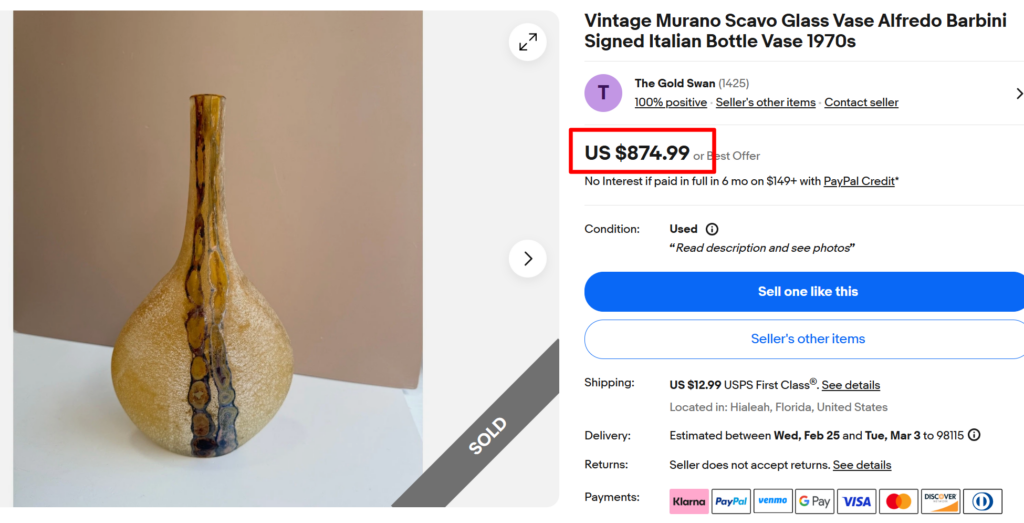
Along with its Scavo etch, the signature of Murano’s celebrated artist Alfredo Barbini is the reason for the impressive value of this 12-inch vase. The frosted, weathered finish beautifully mimics ancient excavated glass, glowing in a rich golden amber-brown. Larger pieces like this are much rarer and more valuable.
6. Hawkes’ Floral/Figural Patterns
Unlike mass-produced designs from other makers, Hawkes’ floral and figural designs are hand‑wheel‑etched, so each piece is unique. Collectors love these patterns for that labor-intensive hand-engraving, classic, Elegant Glass-era artistry, and Hawkes’ reputation!
| Average Price | $30 to $500 |
| Manufacturing Period | Early 1900s to 1930s |
| Status | Discontinued |
| Etching Style | Wheel-etched |
| Design Motifs | Florals, scrolls, & occasional figures |
| Notable Pieces | Vases, bowls, ice buckets, pitchers |
Floral Etch Cruet
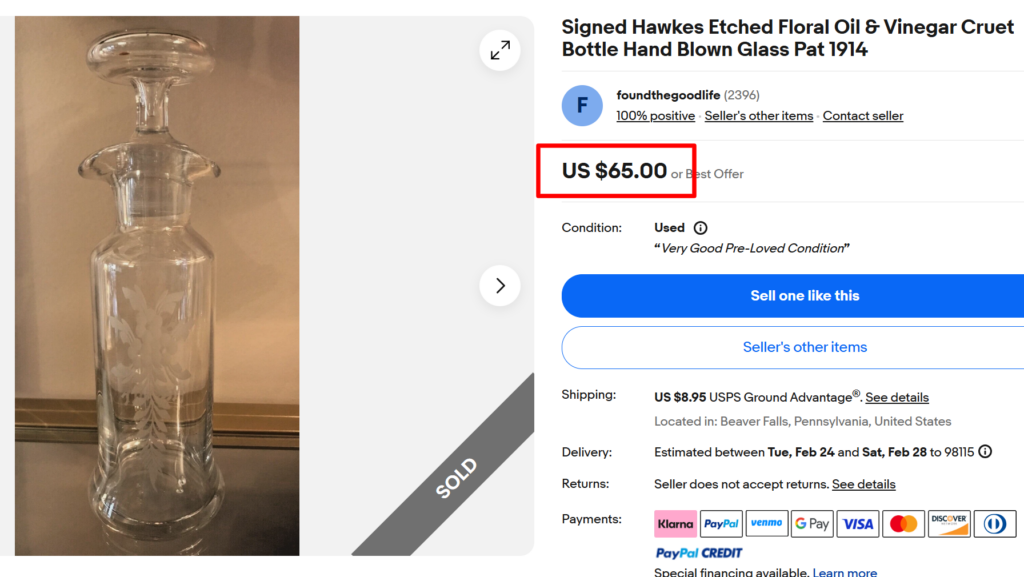
This Hawkes cruet bears etched “Oil” and “Vinegar” and features a delicate wheel‑etched floral design! You’ll also see the etched name and logo of Hawkes, and a date mark. A complete bottle with the original stopper is a great deal!
Fighting Cocks Etch Cocktail Shaker
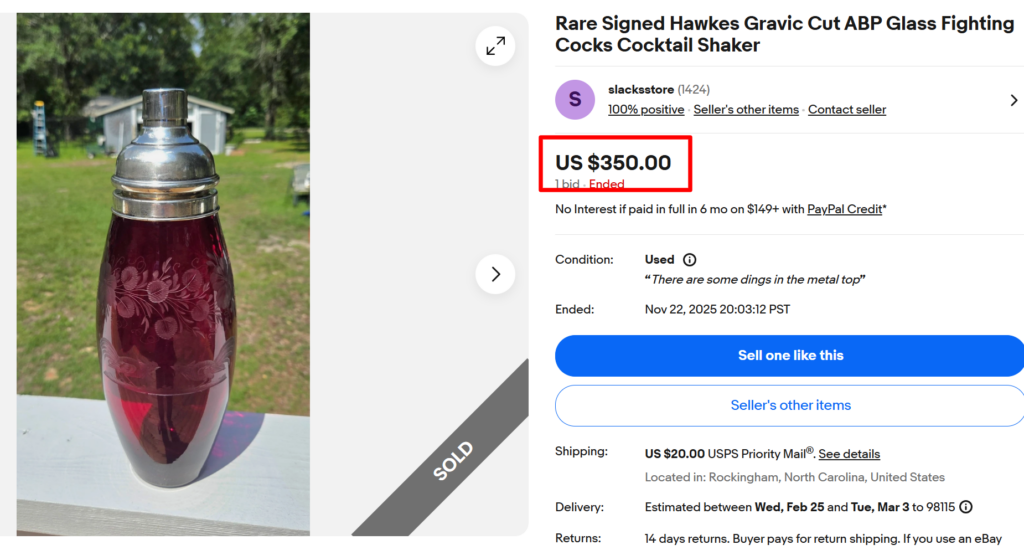
The rare combination of a Steuben blank, ruby-colored glass, and wheel-etched fighting cocks with floral Gravic cuts makes this cocktail shaker super valuable! It’s about 13 inches tall and has Hawkes’ signature on the metal and glass!
7. Anchor Hocking’s Ballerina Pattern
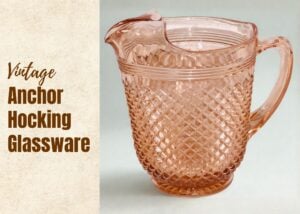
A pattern that’s both elegant and versatile; Anchor Hocking’s “Ballerina” features graceful acid-etched ballerinas in flowing poses, set against a cameo, with delicate floral or scroll motifs. It’s also popular as “Cameo Dancing Girl.”
| Average Price | $6 to $200 |
| Manufacturing Period | 1940s to 1960s |
| Status | Discontinued |
| Etching Style | Dancing ballerina with floral scroll |
| Design Motifs | Florals, scrolls, & occasional figures |
| Notable Pieces | Dishes, shakers, pitchers (in green) |
Ballerina Etch Salt and Pepper Shakers
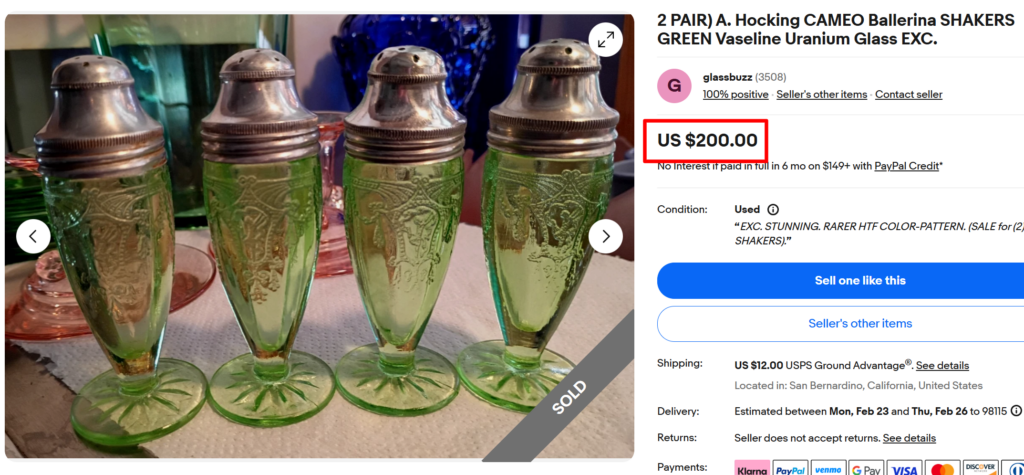
These salt and pepper shakers have the ballerina etch on rare Depression-era uranium/vaseline green glass. Around 4 inches tall, each piece has slight variations in etch details and height, proving they’re handmade and boosting their value.
8. Tiffin’s Cherokee Rose Pattern
Only a few floral etches capture Depression-era elegance quite like Tiffin’s Cherokee Rose. The pattern showcases cameo-type motifs with finely detailed rose blossoms, sweeping foliage, and dotted lines. It also features a small urn set within a cameo etching, surrounded by foliage.
Collectors appreciate it for its classic 1930s styling and Tiffin’s clear, high-quality crystal. While standard stemware holds modest value, larger serving pieces and full dinner sets are harder to find and therefore more desirable.
| Average Price | $7 to $100 (singles, & Small sets) |
| Manufacturing Period | Early-mid 1930s to 1960s |
| Status | Discontinued |
| Etching Style | Acid-etched |
| Design Motifs | Urn inside cameo with rose blooms & foliage |
| Notable Pieces | Glasses, vases, bowls, plates |
Cherokee Rose Etch Bud Vase
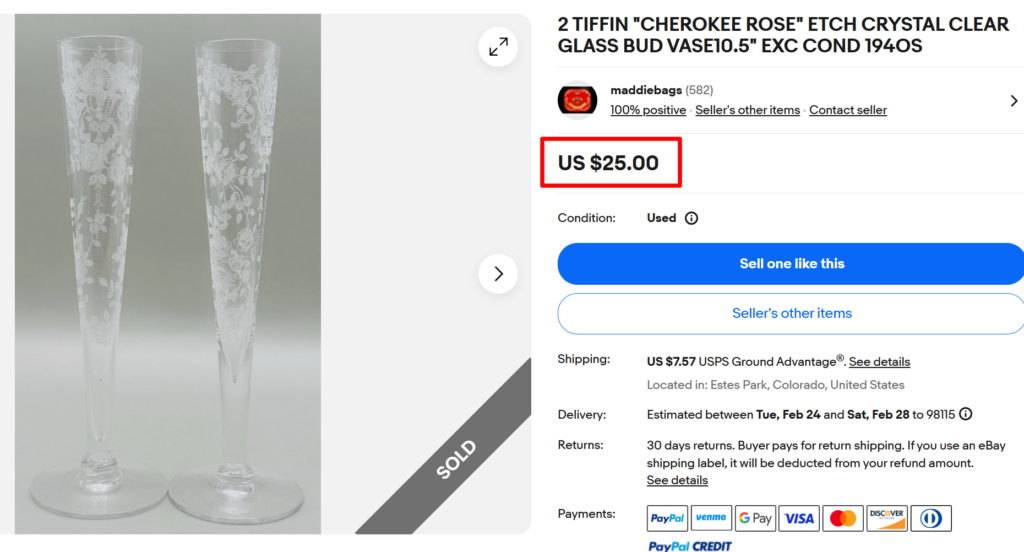
This pair of 6.75-inch Cherokee Rose bud vases with a slender, upright shape is an elegant display piece. A matching pair like this one, in excellent condition, is collectible. Pieces with blank variation, or rarer color production, can add value!
Cherokee Rose Etch Set
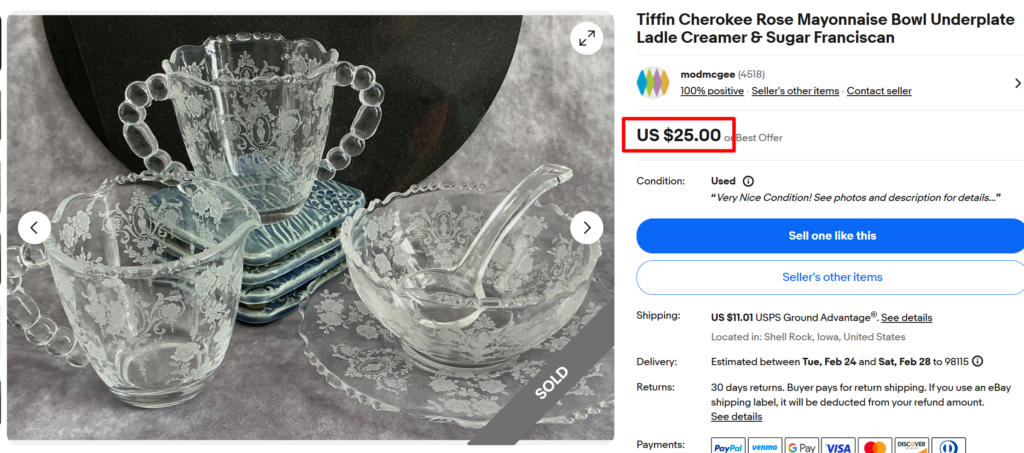
This charming Cherokee Rose set group has a 4⅜-inch bowl, a 6¼-inch underplate, a 4¾-inch ladle, and a 3¼-inch creamer and sugar. Accessory pieces like these are often more desirable than standard stemware!
How to Tell If an Etched Glass Pattern Is Authentic & Valuable?
Learning about collectible Etched glass patterns counts only if you can distinguish them from modern reproductions. Here’s how you can do it:
Etching Depth & Technique
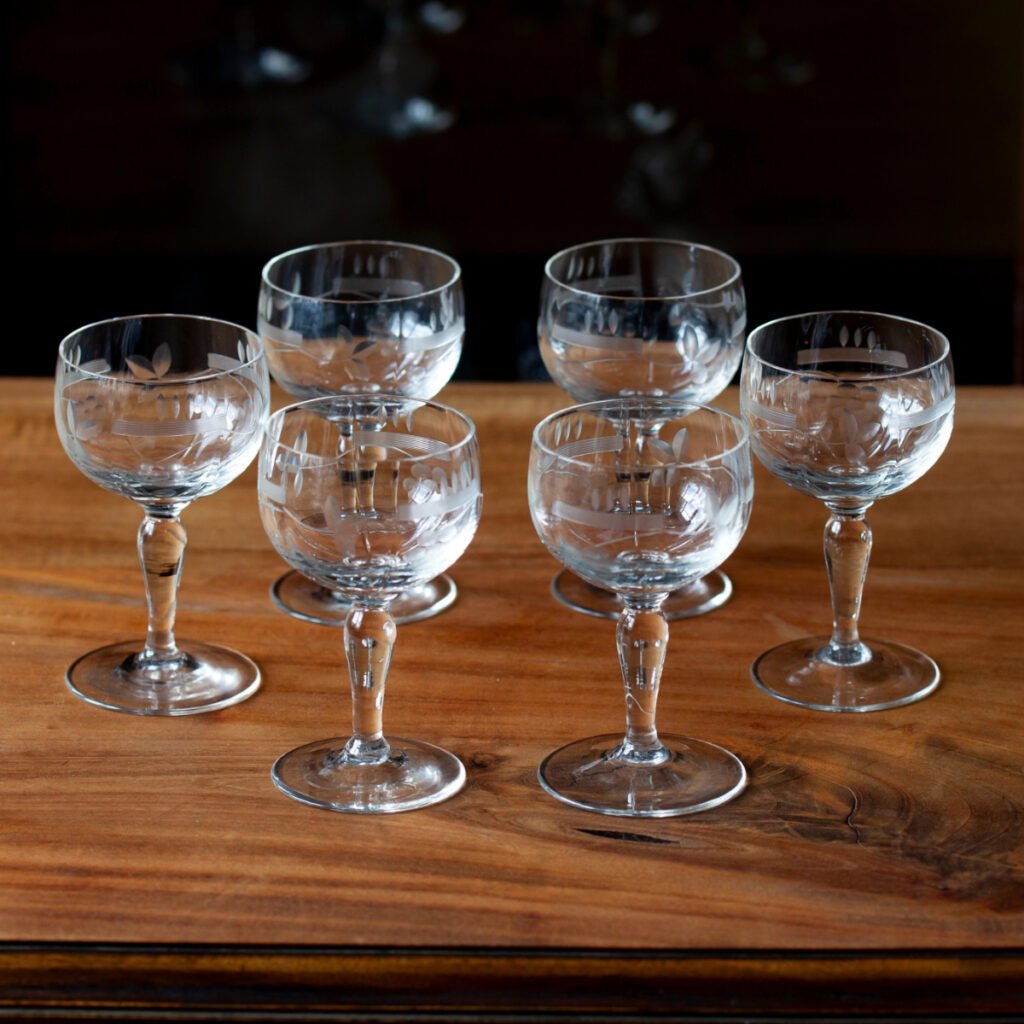
The first clue to identify authentic etched glassware is the etching itself. Hand-etched pieces have a subtle texture that you can feel with your fingertips. You’ll also find small variations, like line or spacing differences, that signal genuine handwork.
The edges also reveal a lot. For instance, crisp, clean edges usually mean wheel or hand engraving. Normally, acid etch is smooth and frosted, but wheel-etch shows shallow grooves.
Look for pontil marks, tiny bubbles, and straw marks. All these are signs of vintage hand-blown or pressed etched glass, which is generally more desirable.
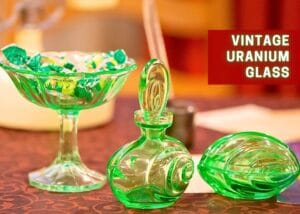
Colored etched glass, like uranium/vaseline or early amber glass, glows under black light and is quite hard to fake.
Glass Quality & Age Indicators
Glass quality tells a lot about authenticity. Generally, older, high-quality etched glass feels heavier and more solid in your hand. Modern reproductions feel lighter and more hollow.
The surface of very old pieces might have a faint patina too, like a soft haze or light dulling from years of use, especially on the base where it sat on tables.
Shelf wear is another clue; soft scratches or softening around edges actually tell that the piece has been around for a while and used, and is truly vintage, not a replica.
Marks, Labels & Paper Tags
Look for maker’s marks, etched logos, embossed marks, or signatures; they’re important for authenticity and value. These marks are generally seen on the base or foot of the stem (in stemware) and are centrally aligned; off-center ones may signal modern reproductions.
Once located, you can verify them quickly online via the company’s catalogs or databases.
However, remember that most vintage glassware doesn’t bear any markings. And some had paper labels, which are usually lost over time. In that case, you need to identify the piece by its etching pattern and overall appearance.
Pattern Placement & Consistency
Once you’ve identified the pattern, observe how consistent it is. Authentic pieces have patterns placed evenly, following the shape of the glass, rather than appearing randomly. So, look for an edge-to-edge design.
But this doesn’t mean uniformity; hand-decorated matching sets may have slight variations, unlike machine-made ones that have a perfectly uniform pattern and details.
Assessing the Value of Vintage Etched Glass
The value of vintage glassware can range from a few bucks to a few hundred dollars! To find the worth of your pieces, check the following aspects:
- Rarity: Hard-to-find etched designs that were made in smaller numbers or produced only on special occasions are always more collectible. Likewise, forms and sizes made in short runs also hold higher value.
- Popularity: Personal tastes strongly drive the market demand of any pattern. So, easily recognizable designs often attract more buyers.
- Complexity & Sharpness of Etching: Intricate, detailed designs with superior craftsmanship command higher prices. You may also find pieces that combine different etching techniques, which are rarer.
- Survival Rate and Condition: Complete sets and super large pieces rarely survive, so intact pieces and sets are more valuable.
- Desirable Forms: Larger or showpiece items, such as ice buckets, pitchers, vases, candleholders, and centerpieces, command higher prices.
- Condition: Condition is the deal-breaker! Look for wear, cracks, stains, chips, and faded etching; all of these can diminish value. Pristine pieces with minimum wear and sharp etches are worth the most.
- Brand reputation: Pieces from established makers automatically hold more trust and higher value. Some even prefer to collect many pieces from a single brand.
Note: This article is intended for informational, educational, and entertainment purposes only. Some images are illustrative and may not represent actual brands, products, or related entities. All trademarks, product names, brand logos, packaging, and other intellectual property referenced remain the exclusive property of their respective owners. Any brand mentions or references are provided solely for descriptive and educational context and do not imply any formal or commercial association.