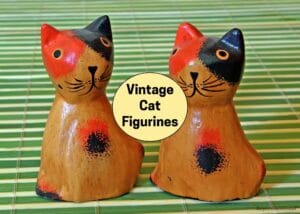
Vintage black cat figurines aren’t just cute shelf fillers; they are serious collectibles today. Some now sell for $50, others clear $500, and a handful of early German and French pieces push into four figures.
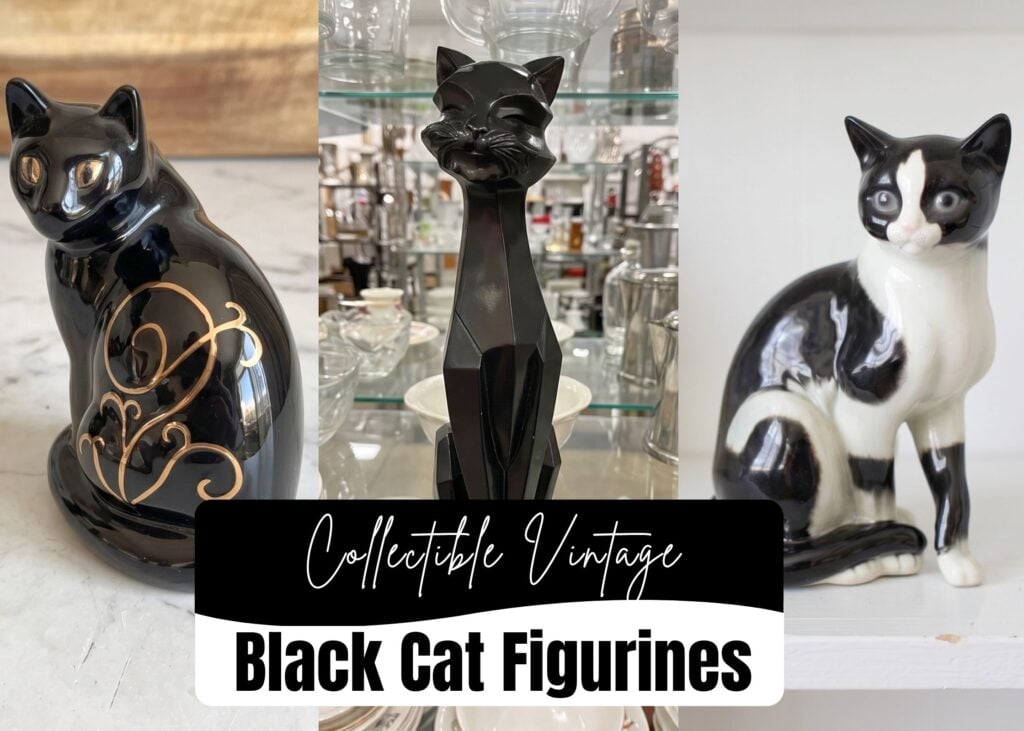
If you have an old ceramic cat sitting in a cabinet, the maker’s mark on the base usually tells you more than the design does.
This guide walks through the fifteen most collectible black cat figurines people search for today, with a quick way to spot the good ones and their real values.
Collectible Black Cat Figurines That Are Worth Real Money
1
Universal Statuary Cubist Black Siamese Cat Statue
Typically sells for $400 to $900
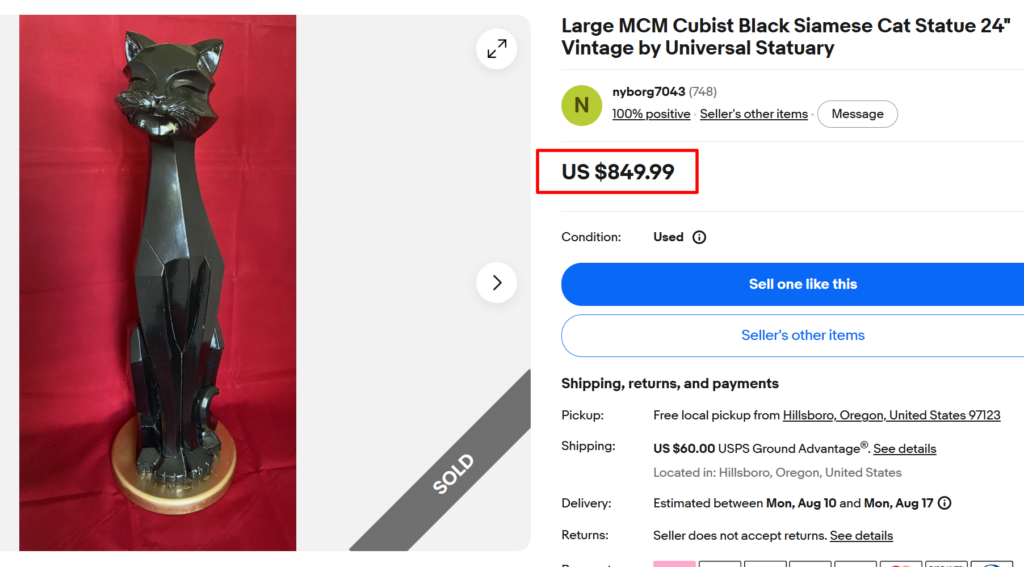
| Manufacturing period | Chicago, USA, 1960s |
| Key features | Cubist form, cast chalkware, 24″ tall |
| Collector notes | Size and clean paint drive premiums |
Universal Statuary of Chicago made these tall, cubist cats in cast chalkware from around 1960 to 1966. You can easily identify them by the angular body standing on a round golden base.
11-to-11.5-inch examples are common and affordable, but larger 24-inch figurines are rarer and more valuable, especially matched pairs.
2
Faïenceries de Longwy Joyaux Black Cat
Typically sells for $350 to $600
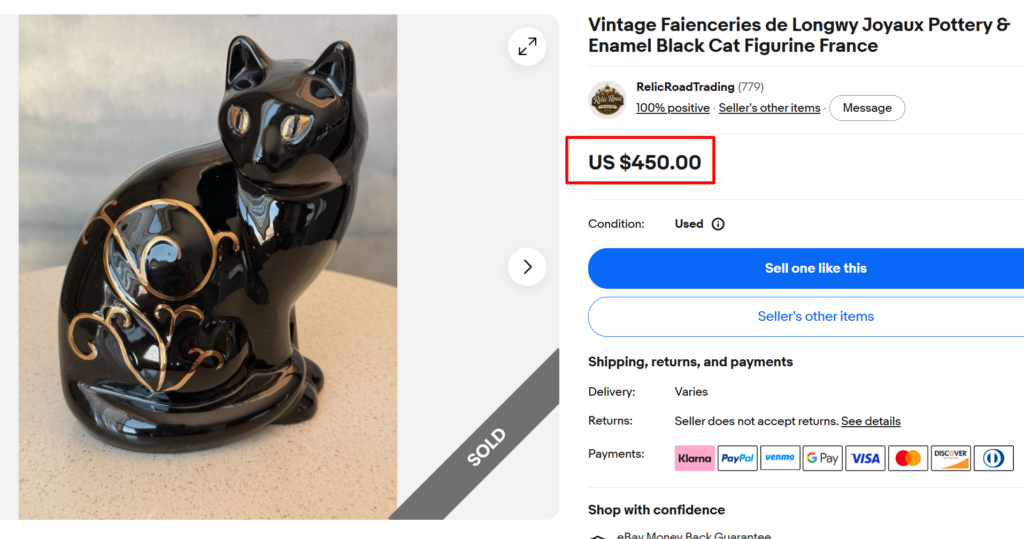
| Manufacturing period | France, 1970 onward |
| Key features | Black enamel, gold scroll detail |
| Collector notes | Signed hallmarks are essential |
Longwy has made French faience since 1798 and is famous for its enamel work. Their “Joyaux” black cat combines a glossy black glaze with hand-painted gold scrollwork on the flank, closer to an art object than a shelf figurine.
Serious collectors treat these figurines as small sculptures. Always check the underside for the Longwy hallmark to verify authentic pieces.
3
Antique Majolica Arched-Back Black Cat
Typically sells for $400 to $900+
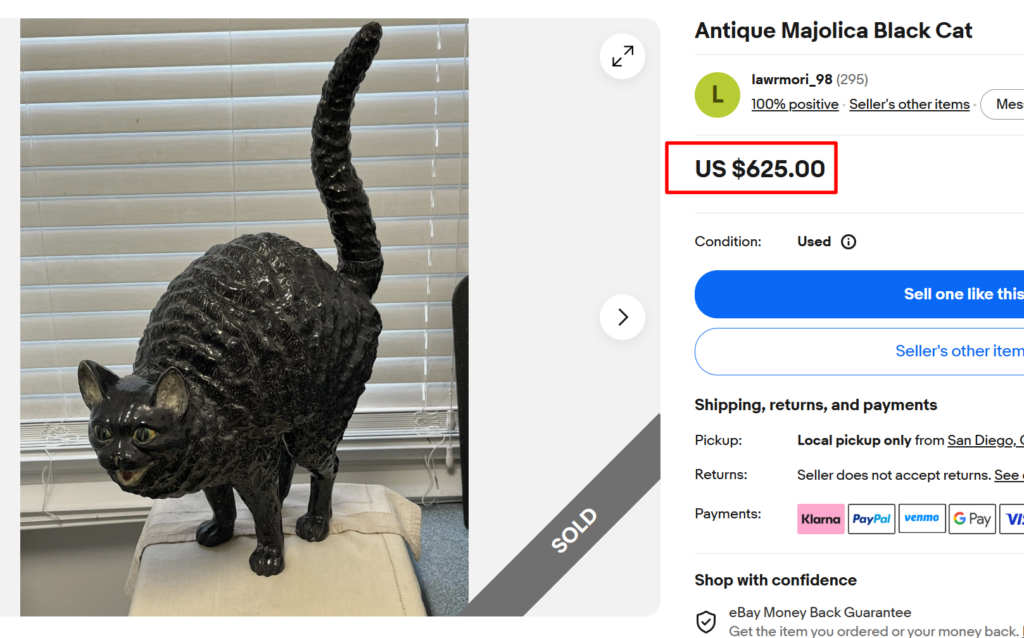
| Manufacturing period | Europe, late 1800s to early 1900s |
| Key features | Arched back, textured glaze, green eyes |
| Collector notes | Size and detail impact value. |
Majolica (tin-glazed earthenware, first developed in Renaissance Italy and revived heavily by 19th-century European potteries) makes for some of the most sculptural black cats on the market.
The arched-back “scaredy cat” pose became a Halloween icon in the late 1800s. Large examples over a foot tall, with detailed fur texture, green glass eyes, and a glossy black glaze, are the most collectible designs today.
4
Shafford Redware Black Cat Figurine
Typically sells for $40 to $90
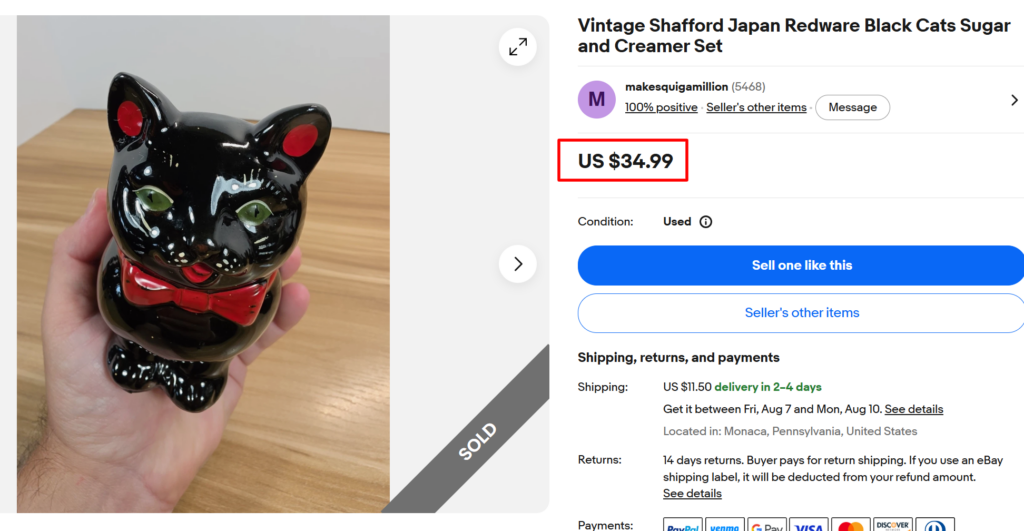
| Manufacturing period | Japan, 1950s to early 1960s |
| Key features | Glossy black glaze, green eyes |
| Collector notes | Matched pairs and original stickers preferred |
These small standing cats with glossy black glaze, green eyes, and painted red bows were imported from Japan by the Shafford company through the 1950s and early 60s.
These were also made as small serveware pieces, like creamers, teapots, etc.; matched pairs and sets bring the strongest prices.
5
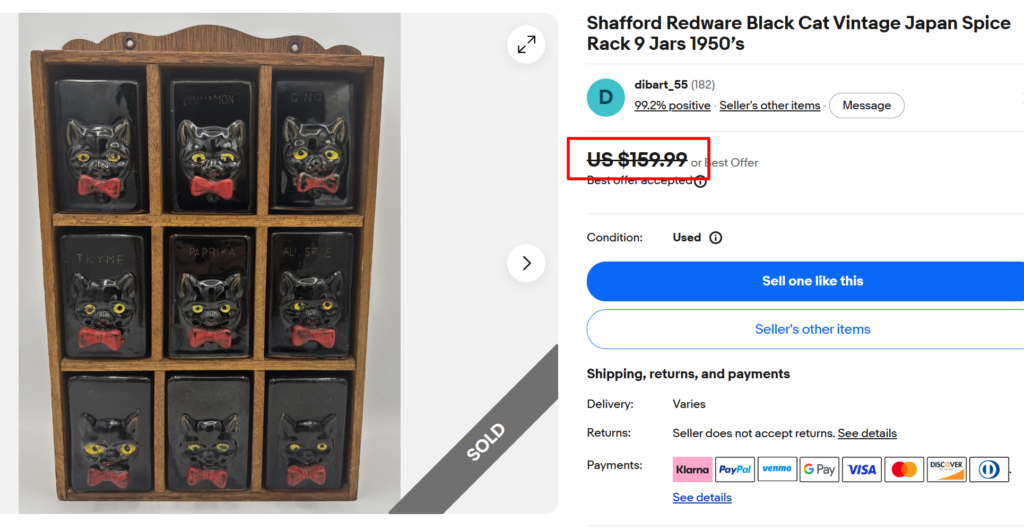
Shafford Black Cat Spice Set
Typically sells for $100 to $200 (full set)
| Manufacturing period | Japan, 1950s |
| Key features | Six labeled jars on wooden rack |
| Collector notes | Completeness is everything here |
Shafford’s spice sets from the 1950s are the crown jewel of the line. A wooden rack holds six small cat-shaped containers, each labeled for a different spice. Complete sets with the rack intact, all six jars, and readable labels are worth the most; loose jars are only worth around $10.
6
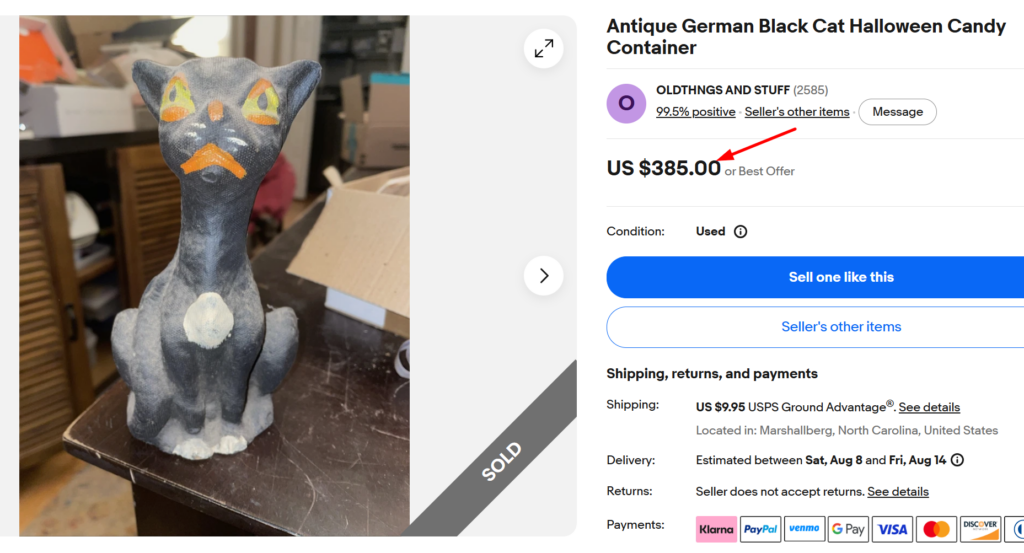
German Papier-Mâché Black Cat Candy Container
Typically sells for $300 to $1,200+
| Manufacturing period | Germany, 1910 to 1935 |
| Key features | Removable head or base, arched back |
| Collector notes | Nodders and unusual poses top the market |
Early German Halloween candy containers are the most valuable black cats a collector can find. Made near Coburg, Germany, from around 1910 to 1935, these have a pull-off head or removable base that once held candy.
Common seated versions run a few hundred dollars, while nodders and rare poses reach four figures at auction.
7
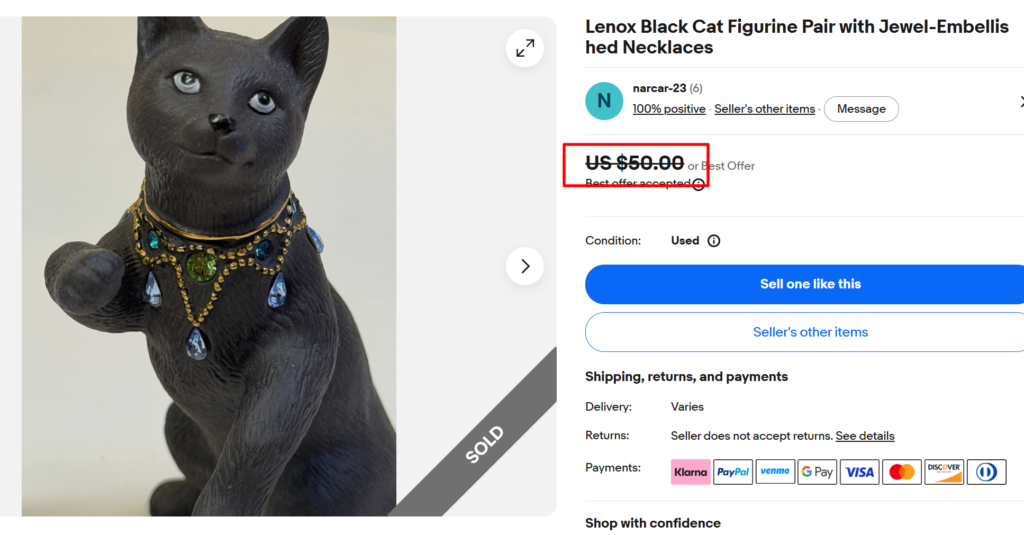
Lenox Black Cat Figurine
Typically sells for $50 to $150
| Manufacturing period | USA, 1990s onward |
| Key features | Ivory bone china, 24k gold trim |
| Collector notes | Discontinued and Halloween editions climb faster |
| ID Tips | Look for green or gold Lenox backstamp. |
Lenox made several black cat pieces in ivory bone china with 24-karat gold and jewel accents from the 1990s onward. Although these are newer than the others on this list, Lenox’s discontinued cats hold value because of the maker’s name and the fragile bone china body.
8
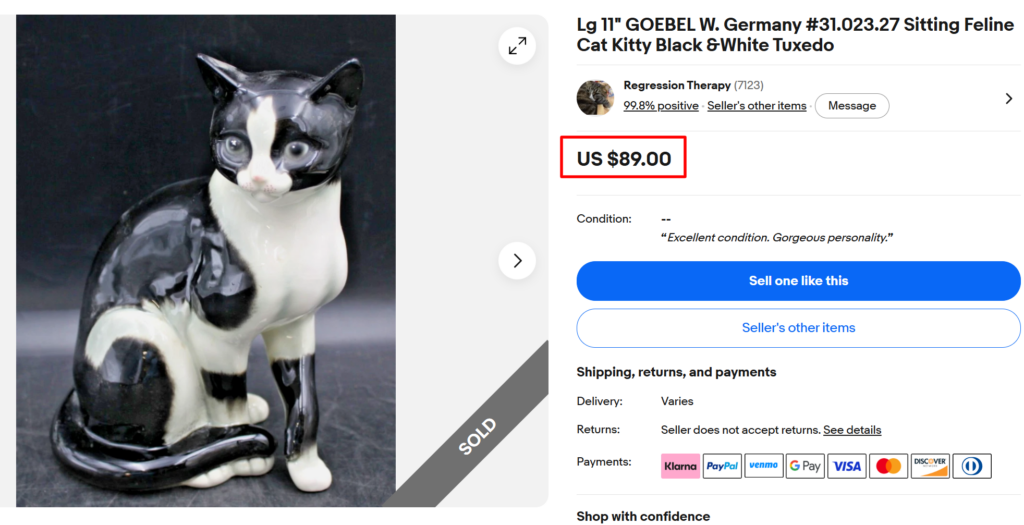
Goebel West Germany Black Cat Figurine
Typically sells for $60 to $180
| Manufacturing period | West Germany, 1950s to 1980s |
| Key features | Impressed bee stamp, mold number |
| Collector notes | Full bee mark commands premium |
Goebel is the same maker behind Hummel figurines, and their black cats carry the same quality standards. This one is the 11-inch tall model “31.023.27,” featuring a glazed black and white body and life-like eyes.
Look for the impressed bee stamp on the base along with a mold number. Earlier full bee marks from the 1950s bring the strongest prices, while stylized bee marks from the 60s and 70s are worth less.
9
Royal Doulton Lucky Ooloo Black Cat Figurine
Typically sells for $50 to $150
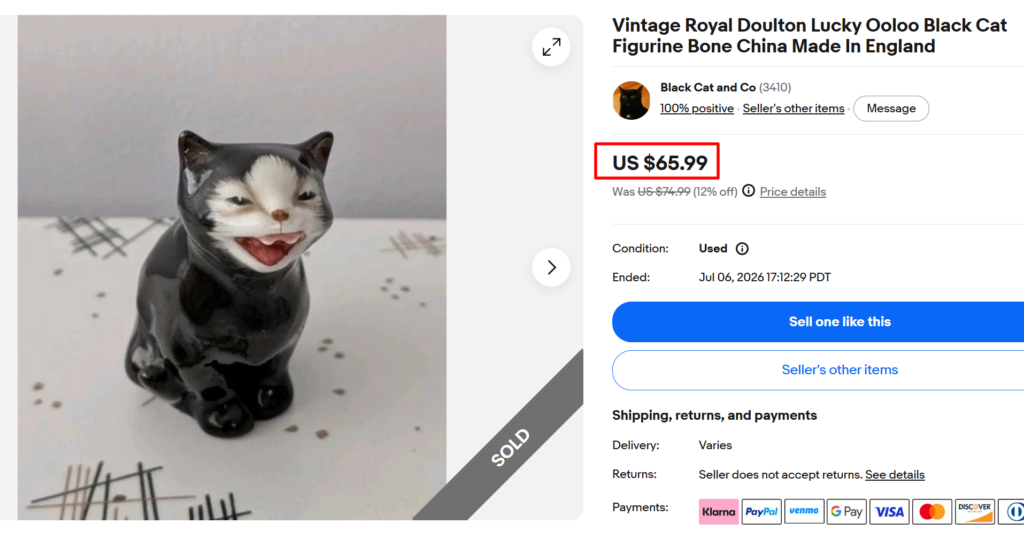
| Manufacturing period | England, 1932 to 1975 |
| Key features | Yawning pose, white face, K12 mark |
| Collector notes | Cartoon character origin drives demand |
Doulton’s “Lucky” is one of the more storied black cats on this list. Designed by Charles J. Noke and based on George Studdy’s 1920s cartoon character Ooloo, this small bone china cat with an open pink mouth was produced from 1932 to 1975.
Look for the green Doulton mark, model number K12, and the hand-painted “Lucky” signature underneath.
10
Hagen-Renaker Black Bisque Cat Figurine
Typically sells for $90 to $200
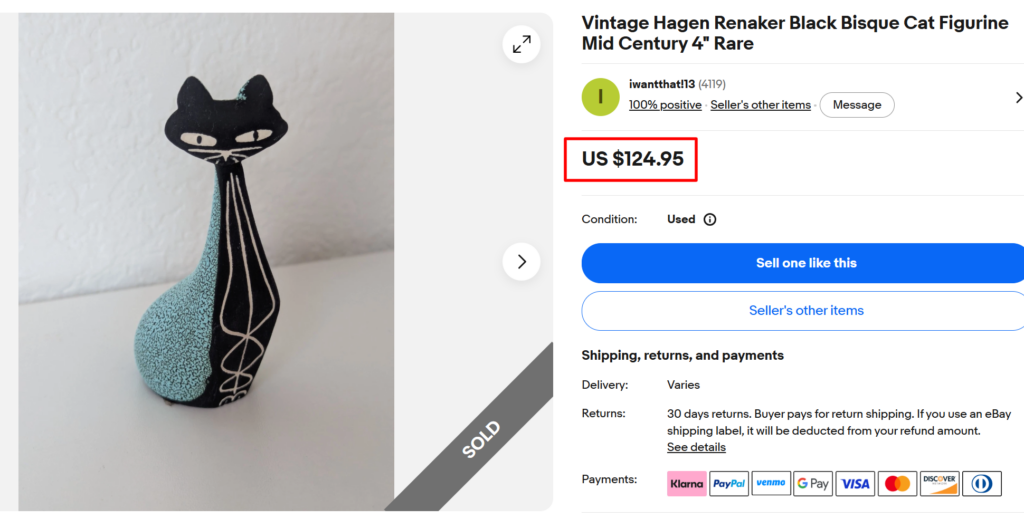
| Manufacturing period | California, USA, 1959 |
| Key features | Matte black finish, teal accents |
| Collector notes | Very short production run |
Hagen-Renaker’s Black Bisque series ran briefly in 1959 out of the company’s Monrovia, California, plant. The figurines feature stylized, elongated bodies finished with matte black and teal glazes.
These cats were made in tiny numbers as the company fought off cheap Japanese imports. That short production window is exactly why collectors chase them.
How to Identify a Valuable Black Cat Figurine?
Start with the base. A red foil “Shafford Japan” sticker, a Lenox gold stamp, a “Made in Occupied Japan” mark, or an impressed Goebel bee stamp instantly tells you what you have.
Unmarked pieces can still be valuable, but you need to check other clues to identify them.
For example, the material narrows the era. Redware (reddish clay under black glaze) points to 1950s Japan. Papier-mâché with a pull-off head means early German Halloween, usually from the 1910s to the 1930s. Bone china with gold trim is Lenox or Royal Doulton. Chalkware feels lighter than ceramic and chips easily along edges.
Collector’s tip: Green glass eyes, red painted bows, and hand-applied whiskers are Shafford tells. Rhinestone eyes usually mean later 1960s and 70s production.
Lastly, assess the condition. Repainted noses, chipped ears, missing eyes, and glued repairs cut value by 40 to 70 percent. Original foil stickers, complete sets, and untouched paint all boost value.
Note: This article is intended for informational, educational, and entertainment purposes only. Some images are illustrative and may not represent actual brands, products, or related entities. All trademarks, product names, brand logos, packaging, and other intellectual property referenced remain the exclusive property of their respective owners. Any brand mentions or references are provided solely for descriptive and educational context and do not imply any formal or commercial association.